

3 Administration of Water Resources Management: Key Facts …
33
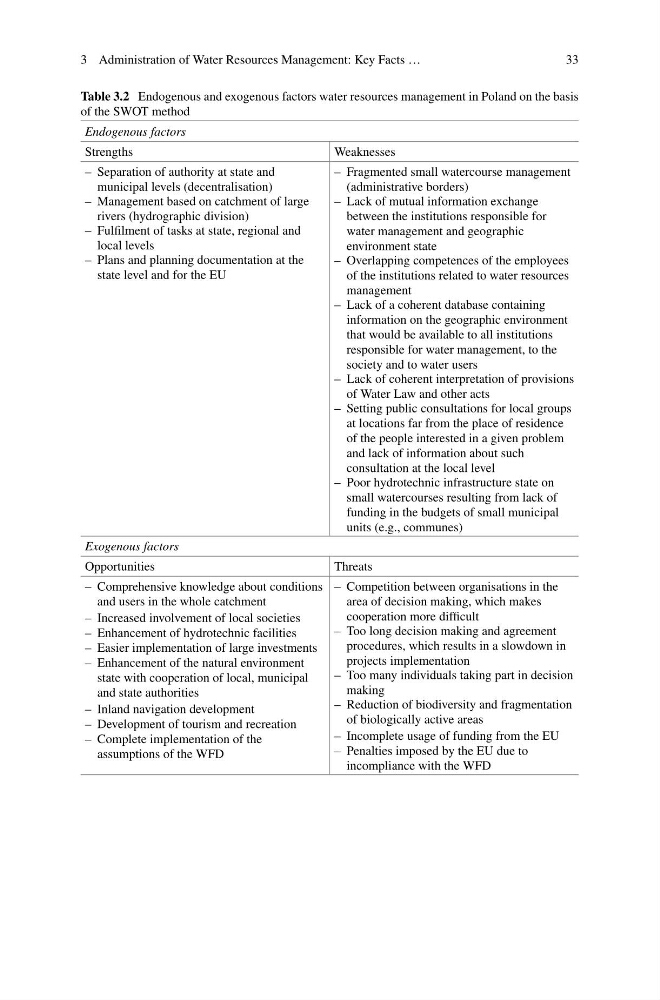
Table 3.2 Endogenous and exogenous factors water resources management in Poland on the basis
of the SWOT method
Endogenous factors
Strengths
Weaknesses
– Separation of authority at state and
municipal levels (decentralisation)
– Management based on catchment of large
rivers (hydrographic division)
– Fulfilment of tasks at state, regional and
local levels
– Plans and planning documentation at the
state level and for the EU
– Fragmented small watercourse management
(administrative borders)
– Lack of mutual information exchange
between the institutions responsible for
water management and geographic
environment state
– Overlapping competences of the employees
of the institutions related to water resources
management
– Lack of a coherent database containing
information on the geographic environment
that would be available to all institutions
responsible for water management, to the
society and to water users
– Lack of coherent interpretation of provisions
of Water Law and other acts
– Setting public consultations for local groups
at locations far from the place of residence
of the people interested in a given problem
and lack of information about such
consultation at the local level
– Poor hydrotechnic infrastructure state on
small watercourses resulting from lack of
funding in the budgets of small municipal
units (e.g., communes)
Exogenous factors
Opportunities
Threats
– Comprehensive knowledge about conditions
and users in the whole catchment
– Increased involvement of local societies
– Enhancement of hydrotechnic facilities
– Easier implementation of large investments
– Enhancement of the natural environment
state with cooperation of local, municipal
and state authorities
– Inland navigation development
– Development of tourism and recreation
– Complete implementation of the
assumptions of the WFD
– Competition between organisations in the
area of decision making, which makes
cooperation more difficult
– Too long decision making and agreement
procedures, which results in a slowdown in
projects implementation
– Too many individuals taking part in decision
making
– Reduction of biodiversity and fragmentation
of biologically active areas
– Incomplete usage of funding from the EU
– Penalties imposed by the EU due to
incompliance with the WFD
33
Table 3.2 Endogenous and exogenous factors water resources management in Poland on the basis
of the SWOT method
Endogenous factors
Strengths
Weaknesses
– Separation of authority at state and
municipal levels (decentralisation)
– Management based on catchment of large
rivers (hydrographic division)
– Fulfilment of tasks at state, regional and
local levels
– Plans and planning documentation at the
state level and for the EU
– Fragmented small watercourse management
(administrative borders)
– Lack of mutual information exchange
between the institutions responsible for
water management and geographic
environment state
– Overlapping competences of the employees
of the institutions related to water resources
management
– Lack of a coherent database containing
information on the geographic environment
that would be available to all institutions
responsible for water management, to the
society and to water users
– Lack of coherent interpretation of provisions
of Water Law and other acts
– Setting public consultations for local groups
at locations far from the place of residence
of the people interested in a given problem
and lack of information about such
consultation at the local level
– Poor hydrotechnic infrastructure state on
small watercourses resulting from lack of
funding in the budgets of small municipal
units (e.g., communes)
Exogenous factors
Opportunities
Threats
– Comprehensive knowledge about conditions
and users in the whole catchment
– Increased involvement of local societies
– Enhancement of hydrotechnic facilities
– Easier implementation of large investments
– Enhancement of the natural environment
state with cooperation of local, municipal
and state authorities
– Inland navigation development
– Development of tourism and recreation
– Complete implementation of the
assumptions of the WFD
– Competition between organisations in the
area of decision making, which makes
cooperation more difficult
– Too long decision making and agreement
procedures, which results in a slowdown in
projects implementation
– Too many individuals taking part in decision
making
– Reduction of biodiversity and fragmentation
of biologically active areas
– Incomplete usage of funding from the EU
– Penalties imposed by the EU due to
incompliance with the WFD