

264
M. Gor˛ aczko
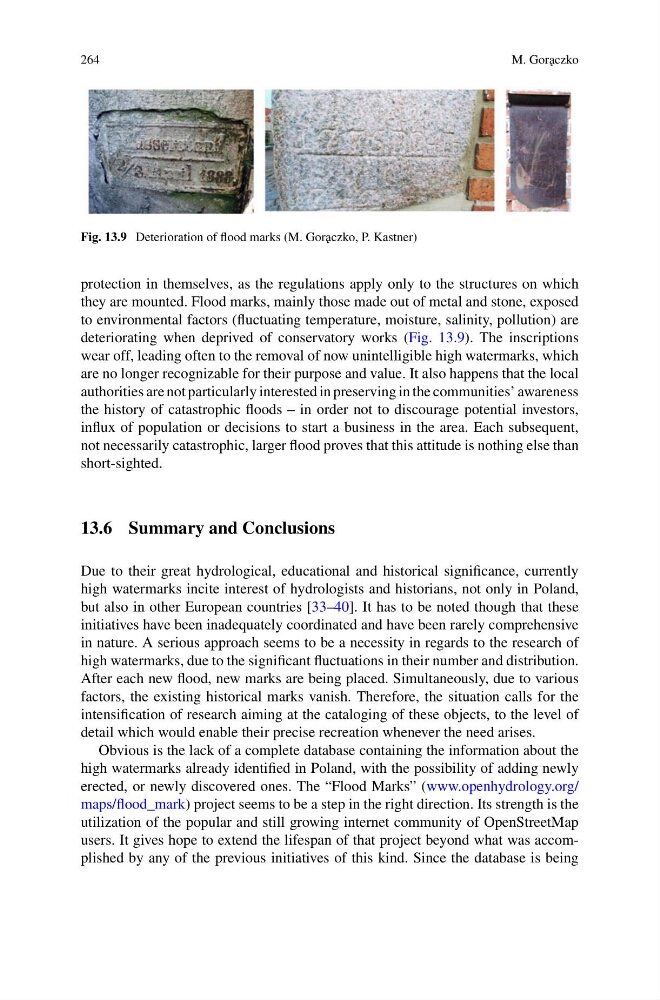
Fig. 13.9 Deterioration of flood marks (M. Gor˛ aczko, P. Kastner)
protection in themselves, as the regulations apply only to the structures on which
they are mounted. Flood marks, mainly those made out of metal and stone, exposed
to environmental factors (fluctuating temperature, moisture, salinity, pollution) are
deteriorating when deprived of conservatory works (Fig. 13.9). The inscriptions
wear off, leading often to the removal of now unintelligible high watermarks, which
are no longer recognizable for their purpose and value. It also happens that the local
authorities are not particularly interested in preserving in the communities’ awareness
the history of catastrophic floods – in order not to discourage potential investors,
influx of population or decisions to start a business in the area. Each subsequent,
not necessarily catastrophic, larger flood proves that this attitude is nothing else than
short-sighted.
13.6 Summary and Conclusions
Due to their great hydrological, educational and historical significance, currently
high watermarks incite interest of hydrologists and historians, not only in Poland,
but also in other European countries [33–40]. It has to be noted though that these
initiatives have been inadequately coordinated and have been rarely comprehensive
in nature. A serious approach seems to be a necessity in regards to the research of
high watermarks, due to the significant fluctuations in their number and distribution.
After each new flood, new marks are being placed. Simultaneously, due to various
factors, the existing historical marks vanish. Therefore, the situation calls for the
intensification of research aiming at the cataloging of these objects, to the level of
detail which would enable their precise recreation whenever the need arises.
Obvious is the lack of a complete database containing the information about the
high watermarks already identified in Poland, with the possibility of adding newly
erected, or newly discovered ones. The “Flood Marks” (www.openhydrology.org/
maps/flood_mark) project seems to be a step in the right direction. Its strength is the
utilization of the popular and still growing internet community of OpenStreetMap
users. It gives hope to extend the lifespan of that project beyond what was accomplished by any of the previous initiatives of this kind. Since the database is being
M. Gor˛ aczko
Fig. 13.9 Deterioration of flood marks (M. Gor˛ aczko, P. Kastner)
protection in themselves, as the regulations apply only to the structures on which
they are mounted. Flood marks, mainly those made out of metal and stone, exposed
to environmental factors (fluctuating temperature, moisture, salinity, pollution) are
deteriorating when deprived of conservatory works (Fig. 13.9). The inscriptions
wear off, leading often to the removal of now unintelligible high watermarks, which
are no longer recognizable for their purpose and value. It also happens that the local
authorities are not particularly interested in preserving in the communities’ awareness
the history of catastrophic floods – in order not to discourage potential investors,
influx of population or decisions to start a business in the area. Each subsequent,
not necessarily catastrophic, larger flood proves that this attitude is nothing else than
short-sighted.
13.6 Summary and Conclusions
Due to their great hydrological, educational and historical significance, currently
high watermarks incite interest of hydrologists and historians, not only in Poland,
but also in other European countries [33–40]. It has to be noted though that these
initiatives have been inadequately coordinated and have been rarely comprehensive
in nature. A serious approach seems to be a necessity in regards to the research of
high watermarks, due to the significant fluctuations in their number and distribution.
After each new flood, new marks are being placed. Simultaneously, due to various
factors, the existing historical marks vanish. Therefore, the situation calls for the
intensification of research aiming at the cataloging of these objects, to the level of
detail which would enable their precise recreation whenever the need arises.
Obvious is the lack of a complete database containing the information about the
high watermarks already identified in Poland, with the possibility of adding newly
erected, or newly discovered ones. The “Flood Marks” (www.openhydrology.org/
maps/flood_mark) project seems to be a step in the right direction. Its strength is the
utilization of the popular and still growing internet community of OpenStreetMap
users. It gives hope to extend the lifespan of that project beyond what was accomplished by any of the previous initiatives of this kind. Since the database is being