

128
P. Jokiel and Z. Michalczyk
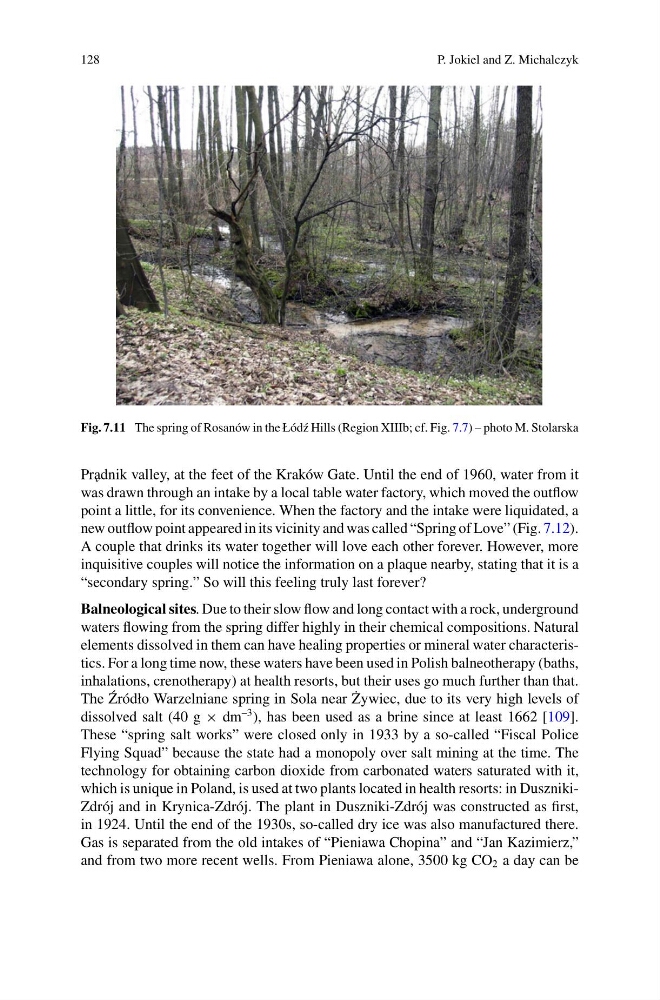
Fig. 7.11 The spring of Rosanów in the Łód´ z Hills (Region XIIIb; cf. Fig. 7.7) – photo M. Stolarska
Pr˛ adnik valley, at the feet of the Kraków Gate. Until the end of 1960, water from it
was drawn through an intake by a local table water factory, which moved the outflow
point a little, for its convenience. When the factory and the intake were liquidated, a
new outflow point appeared in its vicinity and was called “Spring of Love” (Fig. 7.12).
A couple that drinks its water together will love each other forever. However, more
inquisitive couples will notice the information on a plaque nearby, stating that it is a
“secondary spring.” So will this feeling truly last forever?
Balneological sites. Due to their slow flow and long contact with a rock, underground
waters flowing from the spring differ highly in their chemical compositions. Natural
elements dissolved in them can have healing properties or mineral water characteristics. For a long time now, these waters have been used in Polish balneotherapy (baths,
inhalations, crenotherapy) at health resorts, but their uses go much further than that.
The ´
Zródło Warzelniane spring in Sola near ˙
Zywiec, due to its very high levels of
dissolved salt (40 g × dm
–3 ), has been used as a brine since at least 1662 [109].
These “spring salt works” were closed only in 1933 by a so-called “Fiscal Police
Flying Squad” because the state had a monopoly over salt mining at the time. The
technology for obtaining carbon dioxide from carbonated waters saturated with it,
which is unique in Poland, is used at two plants located in health resorts: in DusznikiZdrój and in Krynica-Zdrój. The plant in Duszniki-Zdrój was constructed as first,
in 1924. Until the end of the 1930s, so-called dry ice was also manufactured there.
Gas is separated from the old intakes of “Pieniawa Chopina” and “Jan Kazimierz,”
and from two more recent wells. From Pieniawa alone, 3500 kg CO 2 a day can be
P. Jokiel and Z. Michalczyk
Fig. 7.11 The spring of Rosanów in the Łód´ z Hills (Region XIIIb; cf. Fig. 7.7) – photo M. Stolarska
Pr˛ adnik valley, at the feet of the Kraków Gate. Until the end of 1960, water from it
was drawn through an intake by a local table water factory, which moved the outflow
point a little, for its convenience. When the factory and the intake were liquidated, a
new outflow point appeared in its vicinity and was called “Spring of Love” (Fig. 7.12).
A couple that drinks its water together will love each other forever. However, more
inquisitive couples will notice the information on a plaque nearby, stating that it is a
“secondary spring.” So will this feeling truly last forever?
Balneological sites. Due to their slow flow and long contact with a rock, underground
waters flowing from the spring differ highly in their chemical compositions. Natural
elements dissolved in them can have healing properties or mineral water characteristics. For a long time now, these waters have been used in Polish balneotherapy (baths,
inhalations, crenotherapy) at health resorts, but their uses go much further than that.
The ´
Zródło Warzelniane spring in Sola near ˙
Zywiec, due to its very high levels of
dissolved salt (40 g × dm
–3 ), has been used as a brine since at least 1662 [109].
These “spring salt works” were closed only in 1933 by a so-called “Fiscal Police
Flying Squad” because the state had a monopoly over salt mining at the time. The
technology for obtaining carbon dioxide from carbonated waters saturated with it,
which is unique in Poland, is used at two plants located in health resorts: in DusznikiZdrój and in Krynica-Zdrój. The plant in Duszniki-Zdrój was constructed as first,
in 1924. Until the end of the 1930s, so-called dry ice was also manufactured there.
Gas is separated from the old intakes of “Pieniawa Chopina” and “Jan Kazimierz,”
and from two more recent wells. From Pieniawa alone, 3500 kg CO 2 a day can be