

68
P. Liu
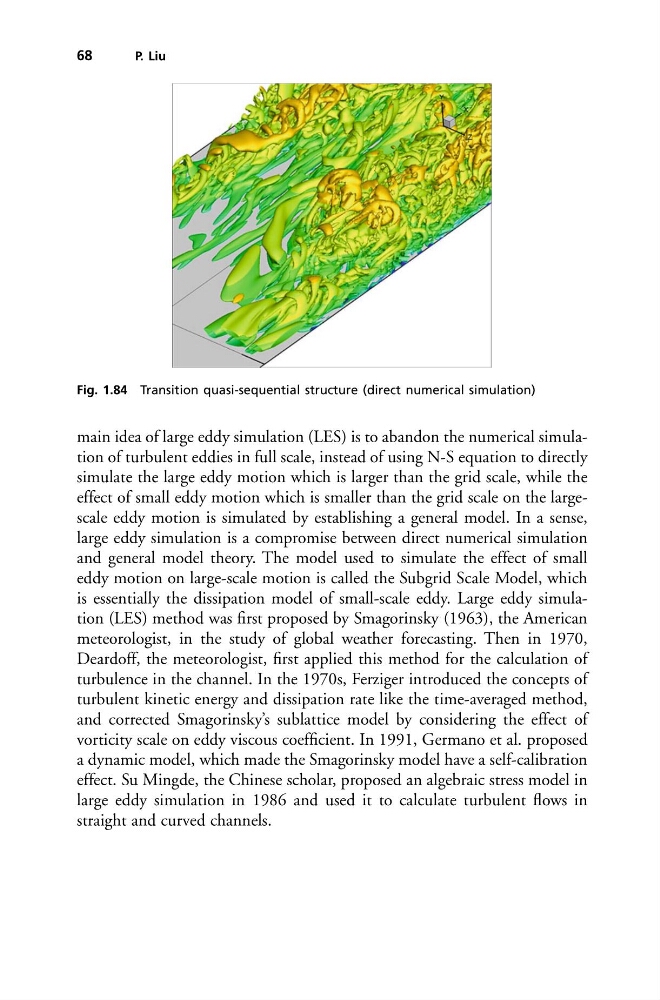
Fig. 1.84 Transition quasi-sequential structure (direct numerical simulation)
main idea of large eddy simulation (LES) is to abandon the numerical simulation of turbulent eddies in full scale, instead of using N-S equation to directly
simulate the large eddy motion which is larger than the grid scale, while the
effect of small eddy motion which is smaller than the grid scale on the largescale eddy motion is simulated by establishing a general model. In a sense,
large eddy simulation is a compromise between direct numerical simulation
and general model theory. The model used to simulate the effect of small
eddy motion on large-scale motion is called the Subgrid Scale Model, which
is essentially the dissipation model of small-scale eddy. Large eddy simulation (LES) method was first proposed by Smagorinsky (1963), the American
meteorologist, in the study of global weather forecasting. Then in 1970,
Deardoff, the meteorologist, first applied this method for the calculation of
turbulence in the channel. In the 1970s, Ferziger introduced the concepts of
turbulent kinetic energy and dissipation rate like the time-averaged method,
and corrected Smagorinsky’s sublattice model by considering the effect of
vorticity scale on eddy viscous coefficient. In 1991, Germano et al. proposed
a dynamic model, which made the Smagorinsky model have a self-calibration
effect. Su Mingde, the Chinese scholar, proposed an algebraic stress model in
large eddy simulation in 1986 and used it to calculate turbulent flows in
straight and curved channels.
P. Liu
Fig. 1.84 Transition quasi-sequential structure (direct numerical simulation)
main idea of large eddy simulation (LES) is to abandon the numerical simulation of turbulent eddies in full scale, instead of using N-S equation to directly
simulate the large eddy motion which is larger than the grid scale, while the
effect of small eddy motion which is smaller than the grid scale on the largescale eddy motion is simulated by establishing a general model. In a sense,
large eddy simulation is a compromise between direct numerical simulation
and general model theory. The model used to simulate the effect of small
eddy motion on large-scale motion is called the Subgrid Scale Model, which
is essentially the dissipation model of small-scale eddy. Large eddy simulation (LES) method was first proposed by Smagorinsky (1963), the American
meteorologist, in the study of global weather forecasting. Then in 1970,
Deardoff, the meteorologist, first applied this method for the calculation of
turbulence in the channel. In the 1970s, Ferziger introduced the concepts of
turbulent kinetic energy and dissipation rate like the time-averaged method,
and corrected Smagorinsky’s sublattice model by considering the effect of
vorticity scale on eddy viscous coefficient. In 1991, Germano et al. proposed
a dynamic model, which made the Smagorinsky model have a self-calibration
effect. Su Mingde, the Chinese scholar, proposed an algebraic stress model in
large eddy simulation in 1986 and used it to calculate turbulent flows in
straight and curved channels.