

1 Foundation of Fluid Mechanics
7
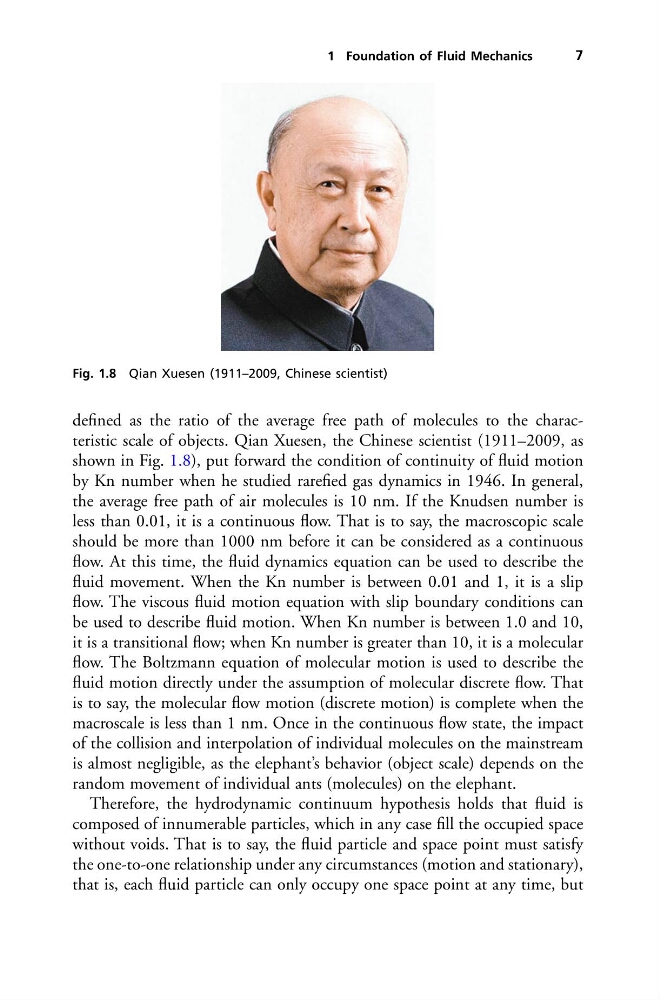
Fig. 1.8 Qian Xuesen (1911–2009, Chinese scientist)
defined as the ratio of the average free path of molecules to the characteristic scale of objects. Qian Xuesen, the Chinese scientist (1911–2009, as
shown in Fig. 1.8), put forward the condition of continuity of fluid motion
by Kn number when he studied rarefied gas dynamics in 1946. In general,
the average free path of air molecules is 10 nm. If the Knudsen number is
less than 0.01, it is a continuous flow. That is to say, the macroscopic scale
should be more than 1000 nm before it can be considered as a continuous
flow. At this time, the fluid dynamics equation can be used to describe the
fluid movement. When the Kn number is between 0.01 and 1, it is a slip
flow. The viscous fluid motion equation with slip boundary conditions can
be used to describe fluid motion. When Kn number is between 1.0 and 10,
it is a transitional flow; when Kn number is greater than 10, it is a molecular
flow. The Boltzmann equation of molecular motion is used to describe the
fluid motion directly under the assumption of molecular discrete flow. That
is to say, the molecular flow motion (discrete motion) is complete when the
macroscale is less than 1 nm. Once in the continuous flow state, the impact
of the collision and interpolation of individual molecules on the mainstream
is almost negligible, as the elephant’s behavior (object scale) depends on the
random movement of individual ants (molecules) on the elephant.
Therefore, the hydrodynamic continuum hypothesis holds that fluid is
composed of innumerable particles, which in any case fill the occupied space
without voids. That is to say, the fluid particle and space point must satisfy
the one-to-one relationship under any circumstances (motion and stationary),
that is, each fluid particle can only occupy one space point at any time, but
7
Fig. 1.8 Qian Xuesen (1911–2009, Chinese scientist)
defined as the ratio of the average free path of molecules to the characteristic scale of objects. Qian Xuesen, the Chinese scientist (1911–2009, as
shown in Fig. 1.8), put forward the condition of continuity of fluid motion
by Kn number when he studied rarefied gas dynamics in 1946. In general,
the average free path of air molecules is 10 nm. If the Knudsen number is
less than 0.01, it is a continuous flow. That is to say, the macroscopic scale
should be more than 1000 nm before it can be considered as a continuous
flow. At this time, the fluid dynamics equation can be used to describe the
fluid movement. When the Kn number is between 0.01 and 1, it is a slip
flow. The viscous fluid motion equation with slip boundary conditions can
be used to describe fluid motion. When Kn number is between 1.0 and 10,
it is a transitional flow; when Kn number is greater than 10, it is a molecular
flow. The Boltzmann equation of molecular motion is used to describe the
fluid motion directly under the assumption of molecular discrete flow. That
is to say, the molecular flow motion (discrete motion) is complete when the
macroscale is less than 1 nm. Once in the continuous flow state, the impact
of the collision and interpolation of individual molecules on the mainstream
is almost negligible, as the elephant’s behavior (object scale) depends on the
random movement of individual ants (molecules) on the elephant.
Therefore, the hydrodynamic continuum hypothesis holds that fluid is
composed of innumerable particles, which in any case fill the occupied space
without voids. That is to say, the fluid particle and space point must satisfy
the one-to-one relationship under any circumstances (motion and stationary),
that is, each fluid particle can only occupy one space point at any time, but