

degradation enrich the soil with elements useful for plant nutrition, while the humic
compounds improve the soil structure and increase its stability, facilitating the
movement of water and air along the soil profile.
The integration of the organic substances into soil aggregates guarantees the
physical protection of organic substances, limiting their mineralisation by microorganisms and enzymes [66]. This increase in structural stability is due to the
cementing action of substances originating from the decomposition of the organic
fraction of wastewater and primarily consists of organic polymers (polysaccharides),
which form bonds between the soil particles.
In Mediterranean agricultural areas, the soils are frequently characterised by low
organic matter contents due to intensive cropping systems and high temperatures that
facilitate organic matter mineralisation. In these agricultural contexts, the use of
wastewater for crop irrigation could reduce the depletion of soil organic matter.
Once applied to the soil, soluble and insoluble compounds contained in wastewater are involved in numerous physicochemical and microbiological processes that
influence their mobility and biodegradability [67].
Field research carried out in the Apulia region of Italy aimed to verify the effect of
secondary and tertiary treated municipal wastewater on artichoke crops in comparison with conventional groundwater. No significant differences were found for
several chemical parameters (pH, EC, NO 3 -N, NH 4 -N, and organic matter content)
in the upper 30 cm layer of the soil irrigated with the three different water sources
[68]. On the contrary, Vergine et al. [20] and Libutti et al. [60] compared the use of
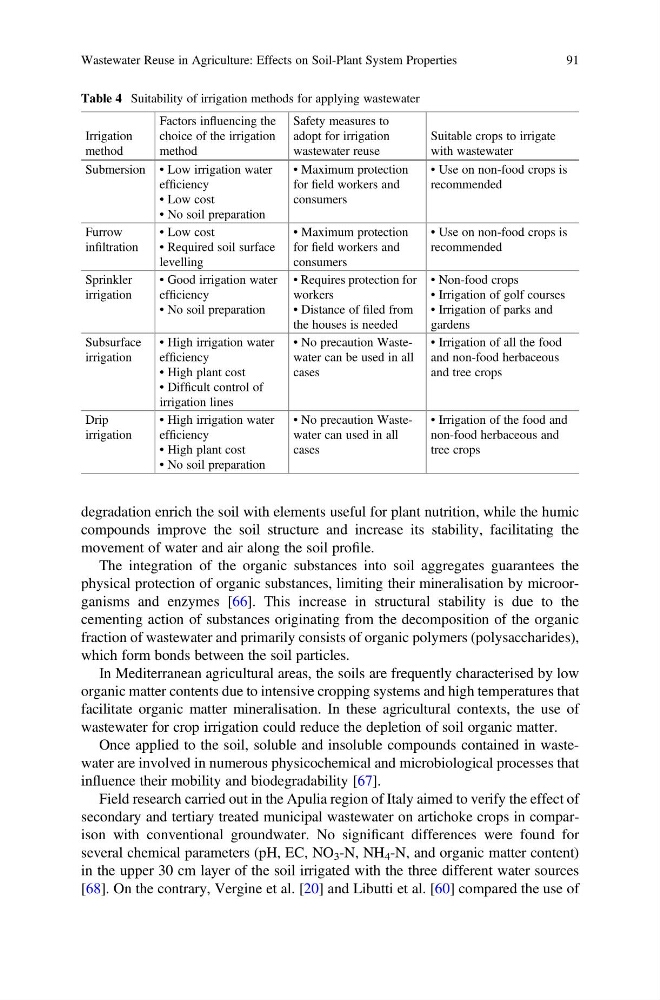
Table 4 Suitability of irrigation methods for applying wastewater
Irrigation
method
Factors influencing the
choice of the irrigation
method
Safety measures to
adopt for irrigation
wastewater reuse
Suitable crops to irrigate
with wastewater
Submersion • Low irrigation water
efficiency
• Low cost
• No soil preparation
• Maximum protection
for field workers and
consumers
• Use on non-food crops is
recommended
Furrow
infiltration
• Low cost
• Required soil surface
levelling
• Maximum protection
for field workers and
consumers
• Use on non-food crops is
recommended
Sprinkler
irrigation
• Good irrigation water
efficiency
• No soil preparation
• Requires protection for
workers
• Distance of filed from
the houses is needed
• Non-food crops
• Irrigation of golf courses
• Irrigation of parks and
gardens
Subsurface
irrigation
• High irrigation water
efficiency
• High plant cost
• Difficult control of
irrigation lines
• No precaution Wastewater can be used in all
cases
• Irrigation of all the food
and non-food herbaceous
and tree crops
Drip
irrigation
• High irrigation water
efficiency
• High plant cost
• No soil preparation
• No precaution Wastewater can used in all
cases
• Irrigation of the food and
non-food herbaceous and
tree crops
Wastewater Reuse in Agriculture: Effects on Soil-Plant System Properties
91
compounds improve the soil structure and increase its stability, facilitating the
movement of water and air along the soil profile.
The integration of the organic substances into soil aggregates guarantees the
physical protection of organic substances, limiting their mineralisation by microorganisms and enzymes [66]. This increase in structural stability is due to the
cementing action of substances originating from the decomposition of the organic
fraction of wastewater and primarily consists of organic polymers (polysaccharides),
which form bonds between the soil particles.
In Mediterranean agricultural areas, the soils are frequently characterised by low
organic matter contents due to intensive cropping systems and high temperatures that
facilitate organic matter mineralisation. In these agricultural contexts, the use of
wastewater for crop irrigation could reduce the depletion of soil organic matter.
Once applied to the soil, soluble and insoluble compounds contained in wastewater are involved in numerous physicochemical and microbiological processes that
influence their mobility and biodegradability [67].
Field research carried out in the Apulia region of Italy aimed to verify the effect of
secondary and tertiary treated municipal wastewater on artichoke crops in comparison with conventional groundwater. No significant differences were found for
several chemical parameters (pH, EC, NO 3 -N, NH 4 -N, and organic matter content)
in the upper 30 cm layer of the soil irrigated with the three different water sources
[68]. On the contrary, Vergine et al. [20] and Libutti et al. [60] compared the use of
Table 4 Suitability of irrigation methods for applying wastewater
Irrigation
method
Factors influencing the
choice of the irrigation
method
Safety measures to
adopt for irrigation
wastewater reuse
Suitable crops to irrigate
with wastewater
Submersion • Low irrigation water
efficiency
• Low cost
• No soil preparation
• Maximum protection
for field workers and
consumers
• Use on non-food crops is
recommended
Furrow
infiltration
• Low cost
• Required soil surface
levelling
• Maximum protection
for field workers and
consumers
• Use on non-food crops is
recommended
Sprinkler
irrigation
• Good irrigation water
efficiency
• No soil preparation
• Requires protection for
workers
• Distance of filed from
the houses is needed
• Non-food crops
• Irrigation of golf courses
• Irrigation of parks and
gardens
Subsurface
irrigation
• High irrigation water
efficiency
• High plant cost
• Difficult control of
irrigation lines
• No precaution Wastewater can be used in all
cases
• Irrigation of all the food
and non-food herbaceous
and tree crops
Drip
irrigation
• High irrigation water
efficiency
• High plant cost
• No soil preparation
• No precaution Wastewater can used in all
cases
• Irrigation of the food and
non-food herbaceous and
tree crops
Wastewater Reuse in Agriculture: Effects on Soil-Plant System Properties
91