

in particular thermolabile ones. In addition, a high amount of solvent is required,
making the procedure more expensive and polluting than modern methods.
Finally, solid-liquid extraction (SLE) is a simple but effective extraction method
used when a liquid matrix contains the target compounds. It is a technique widely
used for water analysis. Although the new methodologies (USE, ASE, QuEChERS,
etc.) are able to provide more selectivity and also great results, SLE can be used in
combination with these techniques as an extract clean-up phase. Despite this, Bartha
et al. managed to analyze the paracetamol from the root and leaves of Brassica
juncea [28].
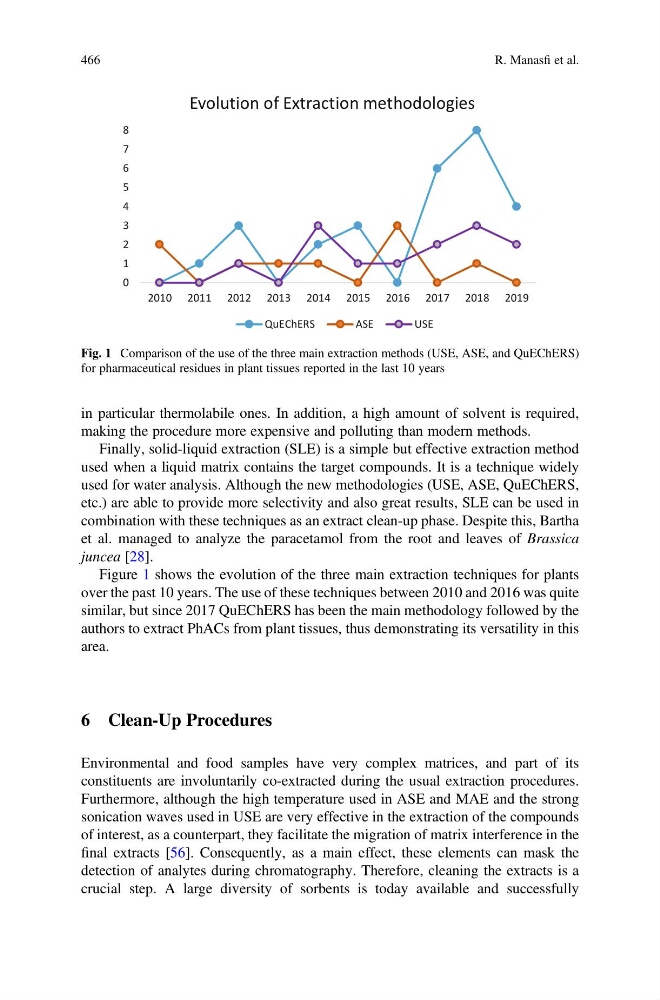
Figure 1 shows the evolution of the three main extraction techniques for plants
over the past 10 years. The use of these techniques between 2010 and 2016 was quite
similar, but since 2017 QuEChERS has been the main methodology followed by the
authors to extract PhACs from plant tissues, thus demonstrating its versatility in this
area.
6 Clean-Up Procedures
Environmental and food samples have very complex matrices, and part of its
constituents are involuntarily co-extracted during the usual extraction procedures.
Furthermore, although the high temperature used in ASE and MAE and the strong
sonication waves used in USE are very effective in the extraction of the compounds
of interest, as a counterpart, they facilitate the migration of matrix interference in the
final extracts [56]. Consequently, as a main effect, these elements can mask the
detection of analytes during chromatography. Therefore, cleaning the extracts is a
crucial step. A large diversity of sorbents is today available and successfully
0
1
2
3
4
5
6
7
8
2010 2011 2012 2013 2014 2015 2016 2017 2018 2019
Evolution of Extraction methodologies
QuEChERS
ASE
USE
Fig. 1 Comparison of the use of the three main extraction methods (USE, ASE, and QuEChERS)
for pharmaceutical residues in plant tissues reported in the last 10 years
466
R. Manasfi et al.
making the procedure more expensive and polluting than modern methods.
Finally, solid-liquid extraction (SLE) is a simple but effective extraction method
used when a liquid matrix contains the target compounds. It is a technique widely
used for water analysis. Although the new methodologies (USE, ASE, QuEChERS,
etc.) are able to provide more selectivity and also great results, SLE can be used in
combination with these techniques as an extract clean-up phase. Despite this, Bartha
et al. managed to analyze the paracetamol from the root and leaves of Brassica
juncea [28].
Figure 1 shows the evolution of the three main extraction techniques for plants
over the past 10 years. The use of these techniques between 2010 and 2016 was quite
similar, but since 2017 QuEChERS has been the main methodology followed by the
authors to extract PhACs from plant tissues, thus demonstrating its versatility in this
area.
6 Clean-Up Procedures
Environmental and food samples have very complex matrices, and part of its
constituents are involuntarily co-extracted during the usual extraction procedures.
Furthermore, although the high temperature used in ASE and MAE and the strong
sonication waves used in USE are very effective in the extraction of the compounds
of interest, as a counterpart, they facilitate the migration of matrix interference in the
final extracts [56]. Consequently, as a main effect, these elements can mask the
detection of analytes during chromatography. Therefore, cleaning the extracts is a
crucial step. A large diversity of sorbents is today available and successfully
0
1
2
3
4
5
6
7
8
2010 2011 2012 2013 2014 2015 2016 2017 2018 2019
Evolution of Extraction methodologies
QuEChERS
ASE
USE
Fig. 1 Comparison of the use of the three main extraction methods (USE, ASE, and QuEChERS)
for pharmaceutical residues in plant tissues reported in the last 10 years
466
R. Manasfi et al.