

ingested material change during the gastrointestinal transit [121, 122]. Some studies
have reported that pathogens generally occurring in cattle manure are significantly
reduced in the earthworm cast probably as a consequence of the digestive processes
occurring in the gastrointestinal tract of earthworms [123, 124]. The CAPs occur in
the earthworm casts, and microorganisms and other decomposer fauna
(e.g. collembolan) actively participate in the further decomposition of more recalcitrant organic wastes such as lignin, cellulose and hemicellulose (maturation stage).
Therefore, CAPs prolong the decomposition of the feedstock although earthworms
are no longer present. Indeed, changes in the enzymatic profile, microbial composition and nutrient concentration still happen in the maturation phase (earthworm
free) of vermicomposting [125, 126].
In summary, it can be postulated that vermicomposting provides a source of
microorganisms and extracellular enzymes with potential capacity for breaking
down organic pollutants present in the feedstock (intrinsic remediation potential)
and to remediate polluted soils when vermicompost is used as a soil amendment
(extrinsic remediation potential).
Vermicomposting of biosolids and manure requires the assessment of three
critical issues: (1) earthworm tolerance to APIs, (2) biodegradation of APIs and
metabolites and (3) development of resistant microbial strains. For example,
Foregut
Cast-associated
processes (CAPs)
Crop Gizzard
Pharynx
Mouth
Hearts
Blood
vessel
Gut-associated
processes (GAPs)
Gut epithelium
Organic
matter
Enzyme
secretion
Mucus
secretion
Enzyme
pool
Gastrointestinal transit
Symbionts
Mucus
Microbes
Organic
matter
Cuticle
Epidermic cells
Mucous cell
Muscle
APIs
APIs
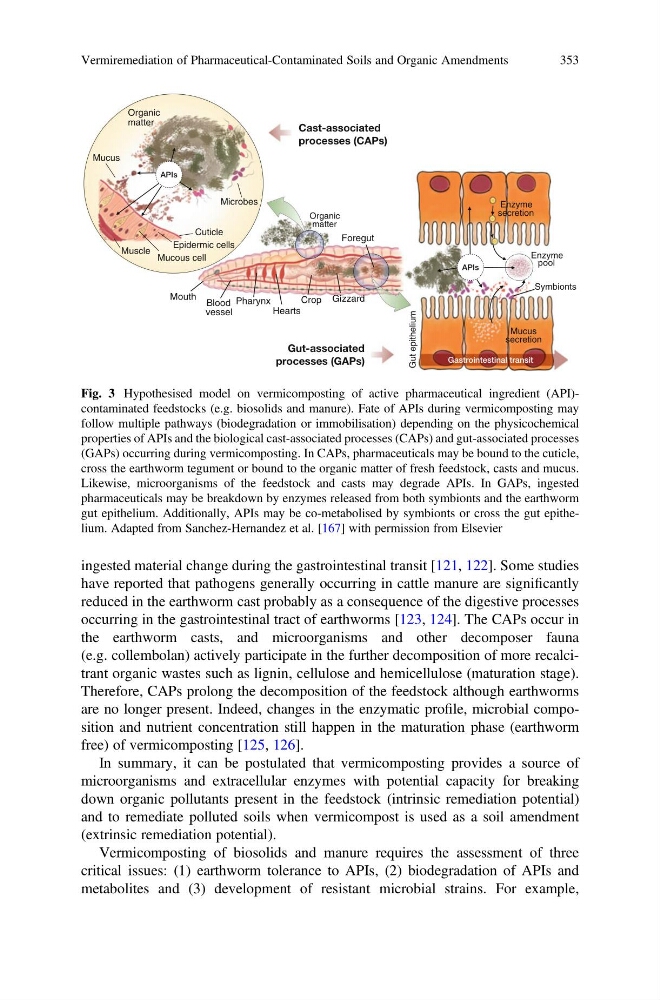
Fig. 3 Hypothesised model on vermicomposting of active pharmaceutical ingredient (API)contaminated feedstocks (e.g. biosolids and manure). Fate of APIs during vermicomposting may
follow multiple pathways (biodegradation or immobilisation) depending on the physicochemical
properties of APIs and the biological cast-associated processes (CAPs) and gut-associated processes
(GAPs) occurring during vermicomposting. In CAPs, pharmaceuticals may be bound to the cuticle,
cross the earthworm tegument or bound to the organic matter of fresh feedstock, casts and mucus.
Likewise, microorganisms of the feedstock and casts may degrade APIs. In GAPs, ingested
pharmaceuticals may be breakdown by enzymes released from both symbionts and the earthworm
gut epithelium. Additionally, APIs may be co-metabolised by symbionts or cross the gut epithelium. Adapted from Sanchez-Hernandez et al. [167] with permission from Elsevier
Vermiremediation of Pharmaceutical-Contaminated Soils and Organic Amendments
353
have reported that pathogens generally occurring in cattle manure are significantly
reduced in the earthworm cast probably as a consequence of the digestive processes
occurring in the gastrointestinal tract of earthworms [123, 124]. The CAPs occur in
the earthworm casts, and microorganisms and other decomposer fauna
(e.g. collembolan) actively participate in the further decomposition of more recalcitrant organic wastes such as lignin, cellulose and hemicellulose (maturation stage).
Therefore, CAPs prolong the decomposition of the feedstock although earthworms
are no longer present. Indeed, changes in the enzymatic profile, microbial composition and nutrient concentration still happen in the maturation phase (earthworm
free) of vermicomposting [125, 126].
In summary, it can be postulated that vermicomposting provides a source of
microorganisms and extracellular enzymes with potential capacity for breaking
down organic pollutants present in the feedstock (intrinsic remediation potential)
and to remediate polluted soils when vermicompost is used as a soil amendment
(extrinsic remediation potential).
Vermicomposting of biosolids and manure requires the assessment of three
critical issues: (1) earthworm tolerance to APIs, (2) biodegradation of APIs and
metabolites and (3) development of resistant microbial strains. For example,
Foregut
Cast-associated
processes (CAPs)
Crop Gizzard
Pharynx
Mouth
Hearts
Blood
vessel
Gut-associated
processes (GAPs)
Gut epithelium
Organic
matter
Enzyme
secretion
Mucus
secretion
Enzyme
pool
Gastrointestinal transit
Symbionts
Mucus
Microbes
Organic
matter
Cuticle
Epidermic cells
Mucous cell
Muscle
APIs
APIs
Fig. 3 Hypothesised model on vermicomposting of active pharmaceutical ingredient (API)contaminated feedstocks (e.g. biosolids and manure). Fate of APIs during vermicomposting may
follow multiple pathways (biodegradation or immobilisation) depending on the physicochemical
properties of APIs and the biological cast-associated processes (CAPs) and gut-associated processes
(GAPs) occurring during vermicomposting. In CAPs, pharmaceuticals may be bound to the cuticle,
cross the earthworm tegument or bound to the organic matter of fresh feedstock, casts and mucus.
Likewise, microorganisms of the feedstock and casts may degrade APIs. In GAPs, ingested
pharmaceuticals may be breakdown by enzymes released from both symbionts and the earthworm
gut epithelium. Additionally, APIs may be co-metabolised by symbionts or cross the gut epithelium. Adapted from Sanchez-Hernandez et al. [167] with permission from Elsevier
Vermiremediation of Pharmaceutical-Contaminated Soils and Organic Amendments
353