

horizontal burrows in the uppermost 10–15 cm of soil. This group is subdivided, in
turn, into polyhumic, mesohumic and oligohumic endogeics, depending on the
amount and quality of organic matter in soil [36]. Polyhumic endogeics are small
filiform earthworms that live in the topsoil (A horizon) feeding on fine, organic
matter-rich soil. Mesohumics are medium-sized endogeic earthworms that ingest
soil with no selection (A and B horizon dwellers), whereas oligohumics are largesized earthworms that live at higher depth soil (30–60 cm, B and C horizon dwellers)
feeding on soil with a low amount and quality of organic matter [50, 56, 57].
3 Impact of Earthworms on Environmental Fate
of Pharmaceuticals
The impact of earthworms on the environmental fate of APIs will depend on their
ecological and biological traits. Many APIs are highly hydrophobic with K OW values
around 3.0 [58], so exposure of epigeic earthworms to APIs will be maximum as
long as these chemicals are present in biosolids and manure applied to soil, or remain
adsorbed to the organic matter-rich A horizon of soil where epigeic earthworms live.
However, anecic and endogeic earthworms are suitable organisms to investigate the
API transport in soil because of their constant burrowing activity. The feeding
Anecic
earthworms
Epigeic
earthworms
Endogeic
earthworms
Casts
Middens
Rhizosphere
Casts
burrows
Leaves litter
Burrows
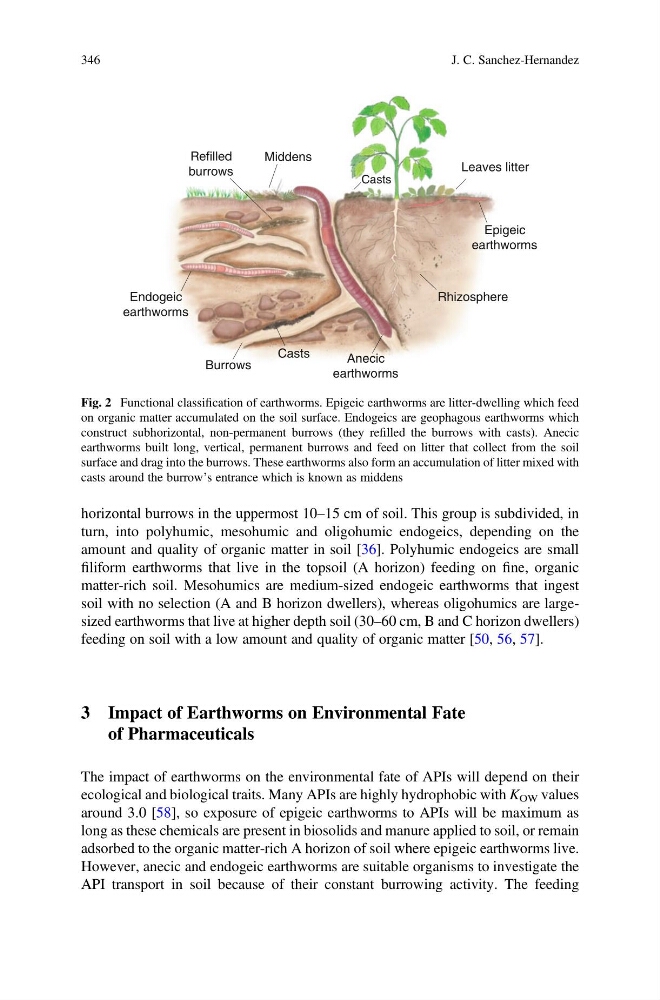
Fig. 2 Functional classification of earthworms. Epigeic earthworms are litter-dwelling which feed
on organic matter accumulated on the soil surface. Endogeics are geophagous earthworms which
construct subhorizontal, non-permanent burrows (they refilled the burrows with casts). Anecic
earthworms built long, vertical, permanent burrows and feed on litter that collect from the soil
surface and drag into the burrows. These earthworms also form an accumulation of litter mixed with
casts around the burrow’s entrance which is known as middens
346
J. C. Sanchez-Hernandez
turn, into polyhumic, mesohumic and oligohumic endogeics, depending on the
amount and quality of organic matter in soil [36]. Polyhumic endogeics are small
filiform earthworms that live in the topsoil (A horizon) feeding on fine, organic
matter-rich soil. Mesohumics are medium-sized endogeic earthworms that ingest
soil with no selection (A and B horizon dwellers), whereas oligohumics are largesized earthworms that live at higher depth soil (30–60 cm, B and C horizon dwellers)
feeding on soil with a low amount and quality of organic matter [50, 56, 57].
3 Impact of Earthworms on Environmental Fate
of Pharmaceuticals
The impact of earthworms on the environmental fate of APIs will depend on their
ecological and biological traits. Many APIs are highly hydrophobic with K OW values
around 3.0 [58], so exposure of epigeic earthworms to APIs will be maximum as
long as these chemicals are present in biosolids and manure applied to soil, or remain
adsorbed to the organic matter-rich A horizon of soil where epigeic earthworms live.
However, anecic and endogeic earthworms are suitable organisms to investigate the
API transport in soil because of their constant burrowing activity. The feeding
Anecic
earthworms
Epigeic
earthworms
Endogeic
earthworms
Casts
Middens
Rhizosphere
Casts
burrows
Leaves litter
Burrows
Fig. 2 Functional classification of earthworms. Epigeic earthworms are litter-dwelling which feed
on organic matter accumulated on the soil surface. Endogeics are geophagous earthworms which
construct subhorizontal, non-permanent burrows (they refilled the burrows with casts). Anecic
earthworms built long, vertical, permanent burrows and feed on litter that collect from the soil
surface and drag into the burrows. These earthworms also form an accumulation of litter mixed with
casts around the burrow’s entrance which is known as middens
346
J. C. Sanchez-Hernandez