

In a field experiment with vegetables grown with reclaimed wastewater, the
distribution of CBZ and nine related metabolites, also found in wastewater, was
studied in different crops and plant tissues [88]. Using this approach, researchers
could establish an accumulation pattern leaves>roots>shoots>fruits for these compounds and could identify tissues where specific metabolites accumulated (e.g.,
acridone in carrot leaves). In another study, a total of 11 metabolites (mainly
phase-I) were quantified in tomato plant tissues grown hydroponically [28]. This
approach concluded that an intensive transformation of CBZ occurred in tomato
fruits in addition to metabolism in roots and leaves and completed the metabolic
pathway for CBZ in plants (Fig. 13).
These findings show that major metabolic pathways of CBZ in plant cell cultures
and in whole plants are similar proving that plant cell cultures can serve as a simple,
rapid tool to study the metabolism of pharmaceuticals in plants. However, studies
with whole plants and soil are needed to identify accumulation and compartmentation of specific metabolites in different plant tissues.
4.4 Hairy Roots as Model for the Study of Root Metabolism
In 1930 a disease called “hairy root” (HR) disease was identified in apple trees. The
causative agent identified by Riker and coworkers was Phytomonas rhizogenes (later
on reclassified as Agrobacterium rhizogenes), a bacterium inducing abnormal
growth of adventitious hairy roots in affected plants [89]. The molecular
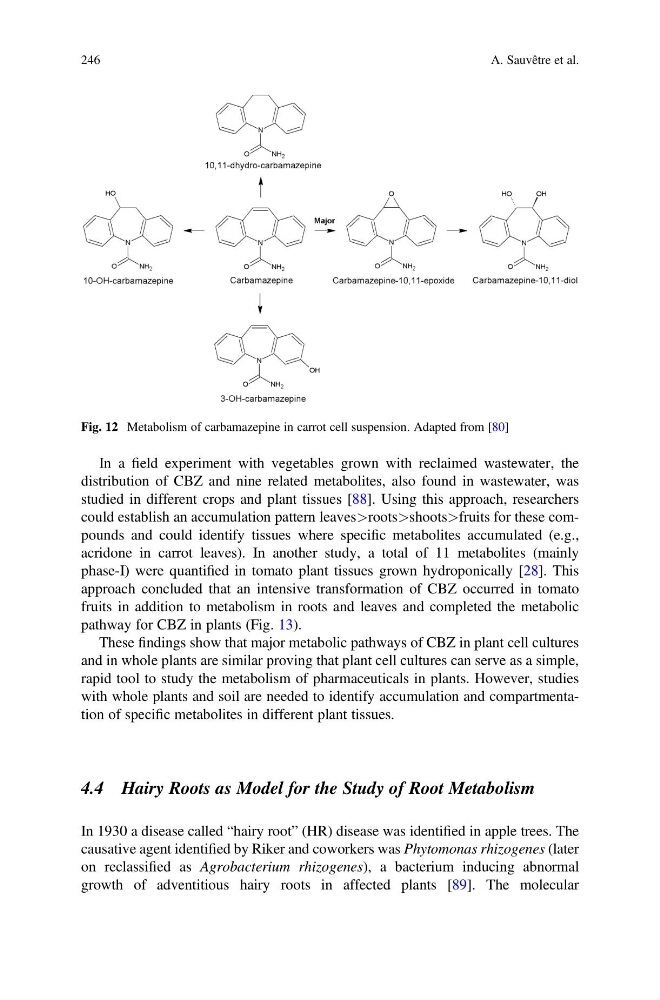
Fig. 12 Metabolism of carbamazepine in carrot cell suspension. Adapted from [80]
246
A. Sauvêtre et al.
distribution of CBZ and nine related metabolites, also found in wastewater, was
studied in different crops and plant tissues [88]. Using this approach, researchers
could establish an accumulation pattern leaves>roots>shoots>fruits for these compounds and could identify tissues where specific metabolites accumulated (e.g.,
acridone in carrot leaves). In another study, a total of 11 metabolites (mainly
phase-I) were quantified in tomato plant tissues grown hydroponically [28]. This
approach concluded that an intensive transformation of CBZ occurred in tomato
fruits in addition to metabolism in roots and leaves and completed the metabolic
pathway for CBZ in plants (Fig. 13).
These findings show that major metabolic pathways of CBZ in plant cell cultures
and in whole plants are similar proving that plant cell cultures can serve as a simple,
rapid tool to study the metabolism of pharmaceuticals in plants. However, studies
with whole plants and soil are needed to identify accumulation and compartmentation of specific metabolites in different plant tissues.
4.4 Hairy Roots as Model for the Study of Root Metabolism
In 1930 a disease called “hairy root” (HR) disease was identified in apple trees. The
causative agent identified by Riker and coworkers was Phytomonas rhizogenes (later
on reclassified as Agrobacterium rhizogenes), a bacterium inducing abnormal
growth of adventitious hairy roots in affected plants [89]. The molecular
Fig. 12 Metabolism of carbamazepine in carrot cell suspension. Adapted from [80]
246
A. Sauvêtre et al.