

composition, moisture, and pH to the physiology of each plant species or the
associated plant microbiota. This complexity can be simplified by using models
allowing to answer basic mechanistic questions.
4.1 Whole Plants
Metabolism of xenobiotics can be studied by using whole plants. This approach
involves long growth periods and complex matrices to analyze, being necessary the
development of specific extraction and cleanup methods adapted to each situation in
particular [78]. Moreover, the formation and distribution of metabolites in different
parts of the plant are the result of complex interactions between the physicochemical
properties of the molecule, the soil characteristics, the rhizosphere microbiome, the
plant species, the plant physiological and health status, and the endophytic
microbiota. Hydroponically grown plants are a good compromise between field
conditions and the use of a real model. Hydroponics have the advantage of working
in controlled conditions, limiting the interferences with the pharmaceutical applied
and the soil matrix and its microbiota and the possibility to clean the roots prior to
extraction. Additionally, the remaining growth solution used to provide water and
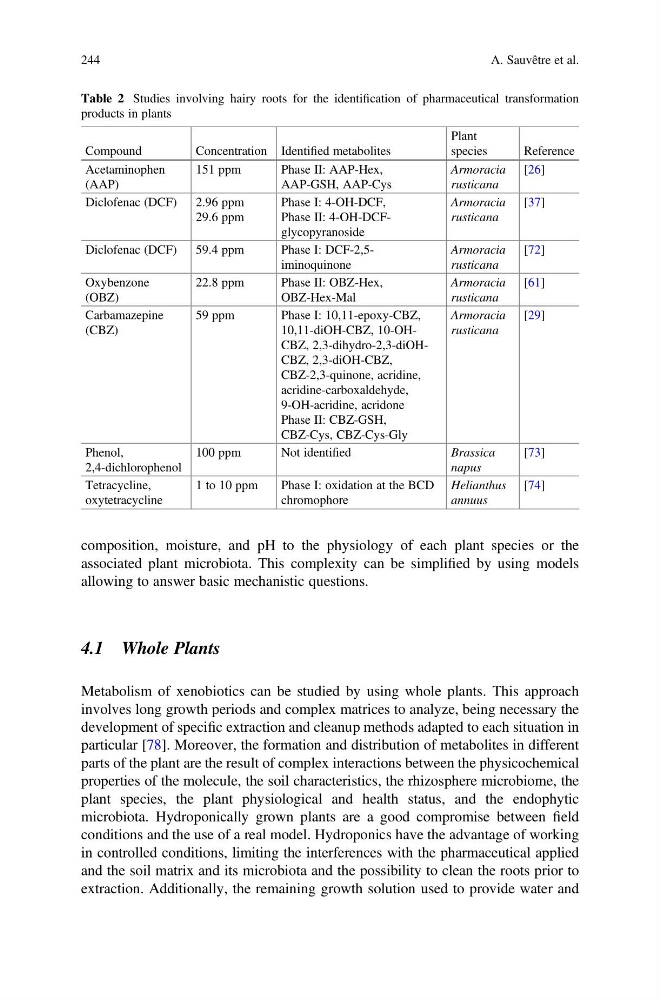
Table 2 Studies involving hairy roots for the identification of pharmaceutical transformation
products in plants
Compound
Concentration Identified metabolites
Plant
species
Reference
Acetaminophen
(AAP)
151 ppm
Phase II: AAP-Hex,
AAP-GSH, AAP-Cys
Armoracia
rusticana
[26]
Diclofenac (DCF) 2.96 ppm
29.6 ppm
Phase I: 4-OH-DCF,
Phase II: 4-OH-DCFglycopyranoside
Armoracia
rusticana
[37]
Diclofenac (DCF) 59.4 ppm
Phase I: DCF-2,5iminoquinone
Armoracia
rusticana
[72]
Oxybenzone
(OBZ)
22.8 ppm
Phase II: OBZ-Hex,
OBZ-Hex-Mal
Armoracia
rusticana
[61]
Carbamazepine
(CBZ)
59 ppm
Phase I: 10,11-epoxy-CBZ,
10,11-diOH-CBZ, 10-OHCBZ, 2,3-dihydro-2,3-diOHCBZ, 2,3-diOH-CBZ,
CBZ-2,3-quinone, acridine,
acridine-carboxaldehyde,
9-OH-acridine, acridone
Phase II: CBZ-GSH,
CBZ-Cys, CBZ-Cys-Gly
Armoracia
rusticana
[29]
Phenol,
2,4-dichlorophenol
100 ppm
Not identified
Brassica
napus
[73]
Tetracycline,
oxytetracycline
1 to 10 ppm
Phase I: oxidation at the BCD
chromophore
Helianthus
annuus
[74]
244
A. Sauvêtre et al.
associated plant microbiota. This complexity can be simplified by using models
allowing to answer basic mechanistic questions.
4.1 Whole Plants
Metabolism of xenobiotics can be studied by using whole plants. This approach
involves long growth periods and complex matrices to analyze, being necessary the
development of specific extraction and cleanup methods adapted to each situation in
particular [78]. Moreover, the formation and distribution of metabolites in different
parts of the plant are the result of complex interactions between the physicochemical
properties of the molecule, the soil characteristics, the rhizosphere microbiome, the
plant species, the plant physiological and health status, and the endophytic
microbiota. Hydroponically grown plants are a good compromise between field
conditions and the use of a real model. Hydroponics have the advantage of working
in controlled conditions, limiting the interferences with the pharmaceutical applied
and the soil matrix and its microbiota and the possibility to clean the roots prior to
extraction. Additionally, the remaining growth solution used to provide water and
Table 2 Studies involving hairy roots for the identification of pharmaceutical transformation
products in plants
Compound
Concentration Identified metabolites
Plant
species
Reference
Acetaminophen
(AAP)
151 ppm
Phase II: AAP-Hex,
AAP-GSH, AAP-Cys
Armoracia
rusticana
[26]
Diclofenac (DCF) 2.96 ppm
29.6 ppm
Phase I: 4-OH-DCF,
Phase II: 4-OH-DCFglycopyranoside
Armoracia
rusticana
[37]
Diclofenac (DCF) 59.4 ppm
Phase I: DCF-2,5iminoquinone
Armoracia
rusticana
[72]
Oxybenzone
(OBZ)
22.8 ppm
Phase II: OBZ-Hex,
OBZ-Hex-Mal
Armoracia
rusticana
[61]
Carbamazepine
(CBZ)
59 ppm
Phase I: 10,11-epoxy-CBZ,
10,11-diOH-CBZ, 10-OHCBZ, 2,3-dihydro-2,3-diOHCBZ, 2,3-diOH-CBZ,
CBZ-2,3-quinone, acridine,
acridine-carboxaldehyde,
9-OH-acridine, acridone
Phase II: CBZ-GSH,
CBZ-Cys, CBZ-Cys-Gly
Armoracia
rusticana
[29]
Phenol,
2,4-dichlorophenol
100 ppm
Not identified
Brassica
napus
[73]
Tetracycline,
oxytetracycline
1 to 10 ppm
Phase I: oxidation at the BCD
chromophore
Helianthus
annuus
[74]
244
A. Sauvêtre et al.