

714
stability could reduce if one operates under basic condition because of the reduction
in interfacial tension. In the presence of brine, better separation of water is reported
to be achieved in the pH 6–7. An increase in water and demulsifier concentration in
the emulsion also leads to better separation. The author also suggested some limitation such as controlled supervision is required to maintain pH since the change in
pH may lead to lower efficiency of separation and corrosion.
Specific ions in the brine composition can also influence the film stability.
Strassner et al. [12] have studied the effect of constituent ions in the brine present in
crude emulsions and investigated the optimum pH and demulsifier concentration for
better separation of water. According to Strassner et al. [12], optimum pH for getting better separation of water, when brine is contained in the crude, is low (pH 6–8)
as compared to non-brine crude pH which is higher (pH 9–10). This may be because
the interfacial pH of brine may be higher as compared to bulk concentration. The
brine which contains high Ca
2+
ions or high Ca
2+
/Mg
2+
ratio makes a rigid (solid)
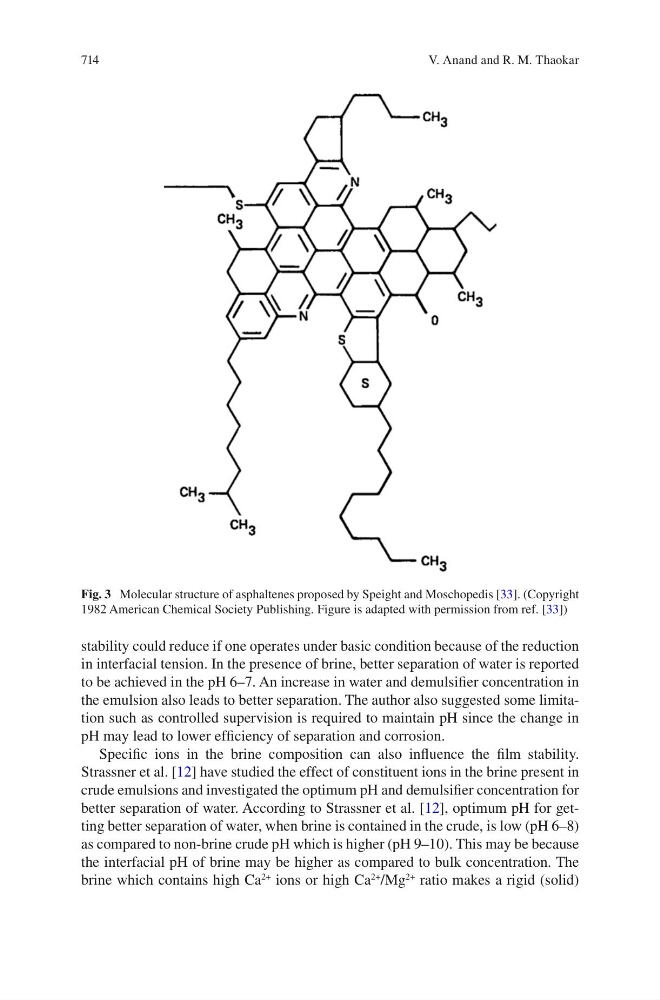
Fig. 3 Molecular structure of asphaltenes proposed by Speight and Moschopedis [33]. (Copyright
1982 American Chemical Society Publishing. Figure is adapted with permission from ref. [33])
V. Anand and R. M. Thaokar