

559
These processes require high energy for carbon oxide reduction; hence, utilization
of nonrenewable sources of energy such as sunlight can be considered as one of the
alternative approaches for carbon oxide conversion process. There exist a lot of
other reduction techniques that could be implemented on various scales [10].
However, the main aim of all these techniques should focus on reducing the carbon
footprints in the environment. Conversion of these carbon oxides follows “two flies
with one flap” approach so that energy scarcity and environmental security can be
tackled at the same platform.
In view of this, the subsequent sections of this chapter provides a brief overview
about all the technical aspects related to the synthesis process of methanol and DME
from the carbon-rich source gases, viz., CO and CO 2 together known as carbon
oxides. Also, a small description of methanol history is included.
1.1 Methanol: Historical Background
Many processes have been established in the past decades for production of methanol from different carbon source feedstocks such as natural gas, coal, biomass, catalytic hydrogenation of carbon oxides, etc. During the growing industrial era before
the 1600s, methanol was discovered as “wood spirit.” This was synthesized by heating of wood in the lack of free oxygen atoms, a process called wood distillation.
Wood spirit consisted of many impurities along with the methanol. In the 1660s, Sir
Robert Boyle attempted to separate methanol from the impurities, and pure methanol was known as “wood vinegar.” However, wood vinegar was not known in the
market for about two centuries; until in the 1800sss, methanol was identified by
Liebig and J.B.A. Dumas. During the same time, chemical name of methanol
“methyl alcohol” was recognized.
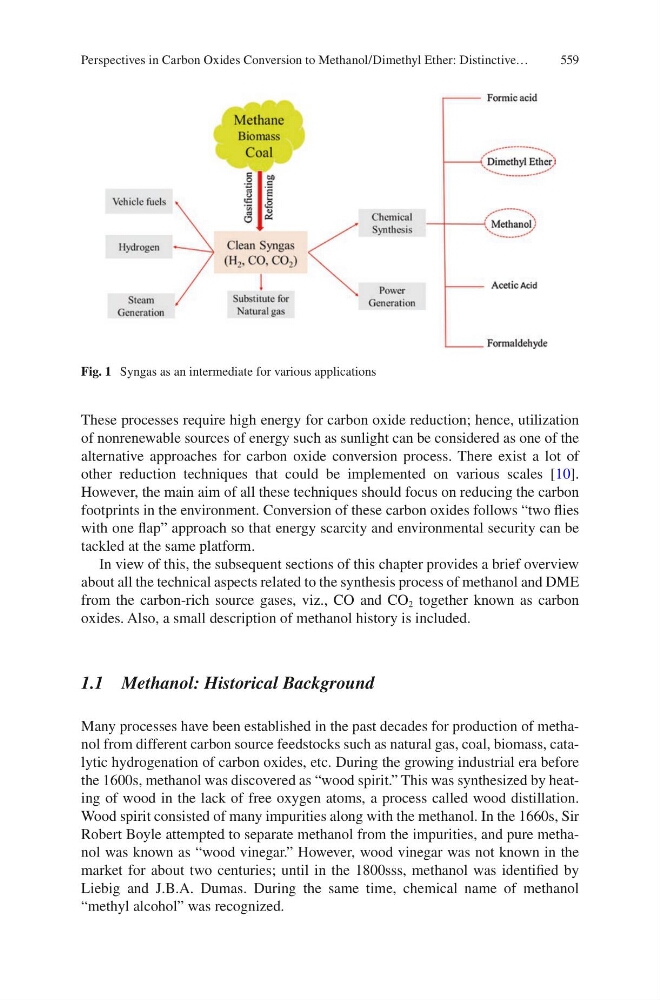
Fig. 1 Syngas as an intermediate for various applications
Perspectives in Carbon Oxides Conversion to Methanol/Dimethyl Ether: Distinctive…
These processes require high energy for carbon oxide reduction; hence, utilization
of nonrenewable sources of energy such as sunlight can be considered as one of the
alternative approaches for carbon oxide conversion process. There exist a lot of
other reduction techniques that could be implemented on various scales [10].
However, the main aim of all these techniques should focus on reducing the carbon
footprints in the environment. Conversion of these carbon oxides follows “two flies
with one flap” approach so that energy scarcity and environmental security can be
tackled at the same platform.
In view of this, the subsequent sections of this chapter provides a brief overview
about all the technical aspects related to the synthesis process of methanol and DME
from the carbon-rich source gases, viz., CO and CO 2 together known as carbon
oxides. Also, a small description of methanol history is included.
1.1 Methanol: Historical Background
Many processes have been established in the past decades for production of methanol from different carbon source feedstocks such as natural gas, coal, biomass, catalytic hydrogenation of carbon oxides, etc. During the growing industrial era before
the 1600s, methanol was discovered as “wood spirit.” This was synthesized by heating of wood in the lack of free oxygen atoms, a process called wood distillation.
Wood spirit consisted of many impurities along with the methanol. In the 1660s, Sir
Robert Boyle attempted to separate methanol from the impurities, and pure methanol was known as “wood vinegar.” However, wood vinegar was not known in the
market for about two centuries; until in the 1800sss, methanol was identified by
Liebig and J.B.A. Dumas. During the same time, chemical name of methanol
“methyl alcohol” was recognized.
Fig. 1 Syngas as an intermediate for various applications
Perspectives in Carbon Oxides Conversion to Methanol/Dimethyl Ether: Distinctive…