

513
crystallite size showed lesser deactivation due to easy diffusion whereas the other
catalyst showed hindered diffusion of reactant molecules.
Kumar et al. [60] studied the effect on the alumina source in the synthesis of
SAPO-5. The different alumina sources used were aluminium sulphate, sodium aluminate, aluminium oxide, and pseudo-boehmite. The use of aluminium phosphate
or sodium aluminate yielded only quartz and berlinite forms whereas the purest
structure was obtained with pseudo-boehmite and possessed the highest number of
Lewis and Brönsted acidic sites. To study the catalytic activity, i.e., isomerization of
n-butane, the catalyst was loaded with 2 wt% Pt using impregnation methods. For
temperature from 673 to 723 K, 5% increase in the conversion was reported with a
slight decrease in the selectivity towards product. However increased WHSV
showed a decrease in the conversion which was due to a decrease in the contact time
of reactant with the catalyst surface.
To alter the acidic properties of molecular sieves, the amount of silica in the
molecular sieves composition can be adjusted. Wang et al. [61] reported SAPO-5
with Si/Al ratio of 0.25 and 0.42. The catalyst with Si/Al of 0.25 showed higher
total acidity of 0.54 mmol/g whereas the other catalyst showed 0.48 mmol/g. The
decrease in the acidity with an increase in the molar ratio was reported due to the
replacement of P and Al with Si as reported by
29
Si MAS NMR spectra. To study the
catalytic activity, the catalyst (1 wt% Pd/SAPO-5) was applied to hydroconversion
of n-C 7 , n-C 8 , n-C 10 , n-C 12 , n-C 16 over the temperature range of 550–625 K. The
catalytic activity increases with an increase in temperature and carbon chain respectively. At 598 K and above 100% conversion and selectivity was recorded for nC 12 , n-C 16 .
Hulea at al [27] studied the trans-alkylation of toluene with different trimethylbenzenes (TMB). Among all the reactions with 1,2,3-TMB, 1,2,4-TMB, and 1,3,5TMB as alkylation agents, 1,2,3-TMB showed the highest conversion over SAPO-5
prepared with lower silica content. All different reactions including trans-alkylation,
isomerization, and disproportionation were reported; and the catalyst was active
with all alkylating agents. Also at 548 K, 1,2,4-TMB was reported with highest
yield of xylenes.
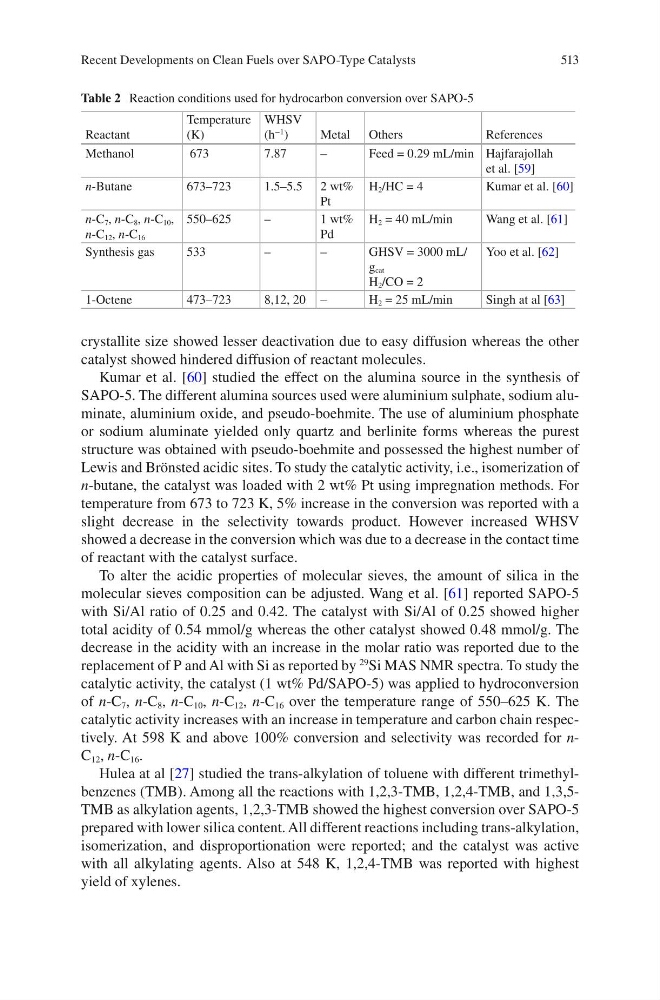
Table 2 Reaction conditions used for hydrocarbon conversion over SAPO-5
Reactant
Temperature
(K)
WHSV
(h
−1 )
Metal Others
References
Methanol
673
7.87
–
Feed = 0.29 mL/min Hajfarajollah
et al. [59]
n-Butane
673–723
1.5–5.5 2 wt%
Pt
H 2 /HC = 4
Kumar et al. [60]
n-C 7 , n-C 8 , n-C 10 ,
n-C 12 , n-C 16
550–625
–
1 wt%
Pd
H 2 = 40 mL/min
Wang et al. [61]
Synthesis gas
533
–
–
GHSV = 3000 mL/
g cat
H 2 /CO = 2
Yoo et al. [62]
1-Octene
473–723
8,12, 20 –
H 2 = 25 mL/min
Singh at al [63]
Recent Developments on Clean Fuels over SAPO-Type Catalysts
crystallite size showed lesser deactivation due to easy diffusion whereas the other
catalyst showed hindered diffusion of reactant molecules.
Kumar et al. [60] studied the effect on the alumina source in the synthesis of
SAPO-5. The different alumina sources used were aluminium sulphate, sodium aluminate, aluminium oxide, and pseudo-boehmite. The use of aluminium phosphate
or sodium aluminate yielded only quartz and berlinite forms whereas the purest
structure was obtained with pseudo-boehmite and possessed the highest number of
Lewis and Brönsted acidic sites. To study the catalytic activity, i.e., isomerization of
n-butane, the catalyst was loaded with 2 wt% Pt using impregnation methods. For
temperature from 673 to 723 K, 5% increase in the conversion was reported with a
slight decrease in the selectivity towards product. However increased WHSV
showed a decrease in the conversion which was due to a decrease in the contact time
of reactant with the catalyst surface.
To alter the acidic properties of molecular sieves, the amount of silica in the
molecular sieves composition can be adjusted. Wang et al. [61] reported SAPO-5
with Si/Al ratio of 0.25 and 0.42. The catalyst with Si/Al of 0.25 showed higher
total acidity of 0.54 mmol/g whereas the other catalyst showed 0.48 mmol/g. The
decrease in the acidity with an increase in the molar ratio was reported due to the
replacement of P and Al with Si as reported by
29
Si MAS NMR spectra. To study the
catalytic activity, the catalyst (1 wt% Pd/SAPO-5) was applied to hydroconversion
of n-C 7 , n-C 8 , n-C 10 , n-C 12 , n-C 16 over the temperature range of 550–625 K. The
catalytic activity increases with an increase in temperature and carbon chain respectively. At 598 K and above 100% conversion and selectivity was recorded for nC 12 , n-C 16 .
Hulea at al [27] studied the trans-alkylation of toluene with different trimethylbenzenes (TMB). Among all the reactions with 1,2,3-TMB, 1,2,4-TMB, and 1,3,5TMB as alkylation agents, 1,2,3-TMB showed the highest conversion over SAPO-5
prepared with lower silica content. All different reactions including trans-alkylation,
isomerization, and disproportionation were reported; and the catalyst was active
with all alkylating agents. Also at 548 K, 1,2,4-TMB was reported with highest
yield of xylenes.
Table 2 Reaction conditions used for hydrocarbon conversion over SAPO-5
Reactant
Temperature
(K)
WHSV
(h
−1 )
Metal Others
References
Methanol
673
7.87
–
Feed = 0.29 mL/min Hajfarajollah
et al. [59]
n-Butane
673–723
1.5–5.5 2 wt%
Pt
H 2 /HC = 4
Kumar et al. [60]
n-C 7 , n-C 8 , n-C 10 ,
n-C 12 , n-C 16
550–625
–
1 wt%
Pd
H 2 = 40 mL/min
Wang et al. [61]
Synthesis gas
533
–
–
GHSV = 3000 mL/
g cat
H 2 /CO = 2
Yoo et al. [62]
1-Octene
473–723
8,12, 20 –
H 2 = 25 mL/min
Singh at al [63]
Recent Developments on Clean Fuels over SAPO-Type Catalysts