

448
All the catalysts showed significant selectivity toward methane, but the highest
selectivity toward butane (11%) and propane (39%) was observed for CoRuMCM- 41 at 240 °C and CoFe-MCM-41 at 210 °C, respectively. Figure 14 shows
the effect of temperature on CO conversion and the selectivity to hydrocarbons in
FT synthesis using four catalysts in a 3D printed stainless steel microreactor with
H 2 :CO molar ratio of 3:1. Deactivation studies performed at 240 °C show that CoFeMCM- 41 is more stable and it is followed by Co-MCM-41 and CoNi-MCM-41.
CoRu-MCM-41 was found to have the least resistance to catalyst deactivation; however, it showed the highest selectivity towards propane and butane of all the four
catalysts. Results show that the selectivity toward hydrocarbons for each catalyst
was greatly dependent on metal-support interactions as supported by various characterizations studies such as TPR and XPS.
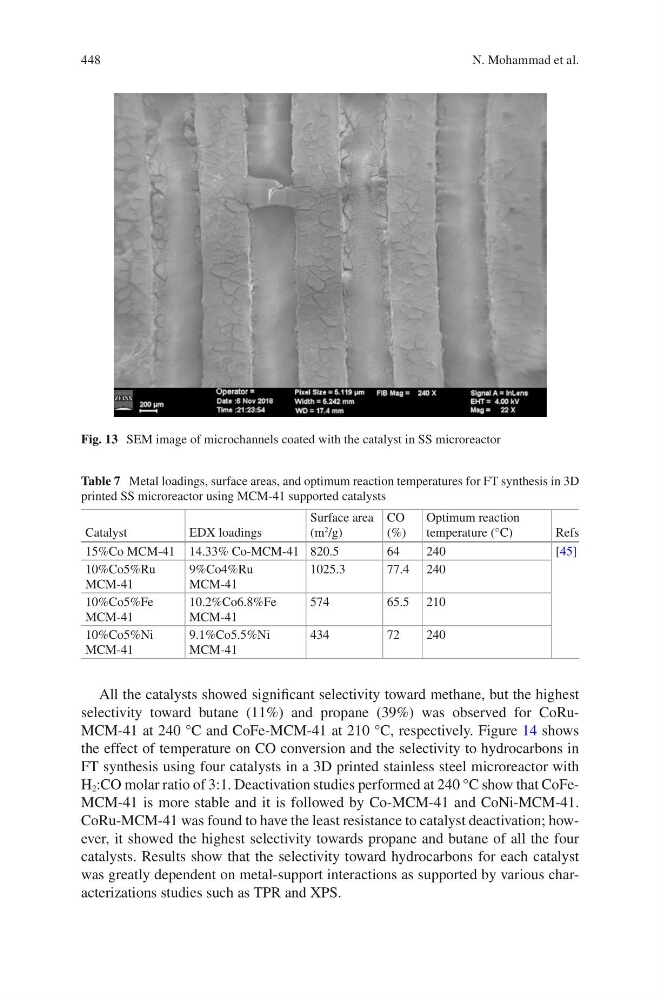
Fig. 13 SEM image of microchannels coated with the catalyst in SS microreactor
Table 7 Metal loadings, surface areas, and optimum reaction temperatures for FT synthesis in 3D
printed SS microreactor using MCM-41 supported catalysts
Catalyst
EDX loadings
Surface area
(m
2
/g)
CO
(%)
Optimum reaction
temperature (°C)
Refs
15%Co MCM-41 14.33% Co-MCM-41 820.5
64
240
[45]
10%Co5%Ru
MCM-41
9%Co4%Ru
MCM-41
1025.3
77.4 240
10%Co5%Fe
MCM-41
10.2%Co6.8%Fe
MCM-41
574
65.5 210
10%Co5%Ni
MCM-41
9.1%Co5.5%Ni
MCM-41
434
72
240
N. Mohammad et al.
All the catalysts showed significant selectivity toward methane, but the highest
selectivity toward butane (11%) and propane (39%) was observed for CoRuMCM- 41 at 240 °C and CoFe-MCM-41 at 210 °C, respectively. Figure 14 shows
the effect of temperature on CO conversion and the selectivity to hydrocarbons in
FT synthesis using four catalysts in a 3D printed stainless steel microreactor with
H 2 :CO molar ratio of 3:1. Deactivation studies performed at 240 °C show that CoFeMCM- 41 is more stable and it is followed by Co-MCM-41 and CoNi-MCM-41.
CoRu-MCM-41 was found to have the least resistance to catalyst deactivation; however, it showed the highest selectivity towards propane and butane of all the four
catalysts. Results show that the selectivity toward hydrocarbons for each catalyst
was greatly dependent on metal-support interactions as supported by various characterizations studies such as TPR and XPS.
Fig. 13 SEM image of microchannels coated with the catalyst in SS microreactor
Table 7 Metal loadings, surface areas, and optimum reaction temperatures for FT synthesis in 3D
printed SS microreactor using MCM-41 supported catalysts
Catalyst
EDX loadings
Surface area
(m
2
/g)
CO
(%)
Optimum reaction
temperature (°C)
Refs
15%Co MCM-41 14.33% Co-MCM-41 820.5
64
240
[45]
10%Co5%Ru
MCM-41
9%Co4%Ru
MCM-41
1025.3
77.4 240
10%Co5%Fe
MCM-41
10.2%Co6.8%Fe
MCM-41
574
65.5 210
10%Co5%Ni
MCM-41
9.1%Co5.5%Ni
MCM-41
434
72
240
N. Mohammad et al.