

393
M
AlO
SiO
H O
x n
x
y z
/
•
2
2
2
(
) (
)
é ë
ù û
(1)
where M represents the cation (alkali or alkaline earth metal), n is the charge of
the cation, x, y, and z represent the number of Al per unit cell, the number of Si, and
water molecules entrapped in the channel system, respectively. Here, the cation
counterbalances the negative charge correlated to framework aluminium ions.
2.3 Zeolites: Exceptional Heterogeneous Catalysts
The significant traits that make zeolites outstanding heterogeneous catalysts, molecular sieves, and ion exchangers [20] are:
• Crystalline porous structure with varying dimensions, geometry, and pore
connectivity.
• Dynamic chemical composition that can be varied in any desired ratio of Si/Al
ranging from 1 to infinity. In addition to their vast applications in wide-ranging
D6Rs
Can-cage
LTL
D4Rs
TO 4
Linked TO 4
Sod-cage
LTA
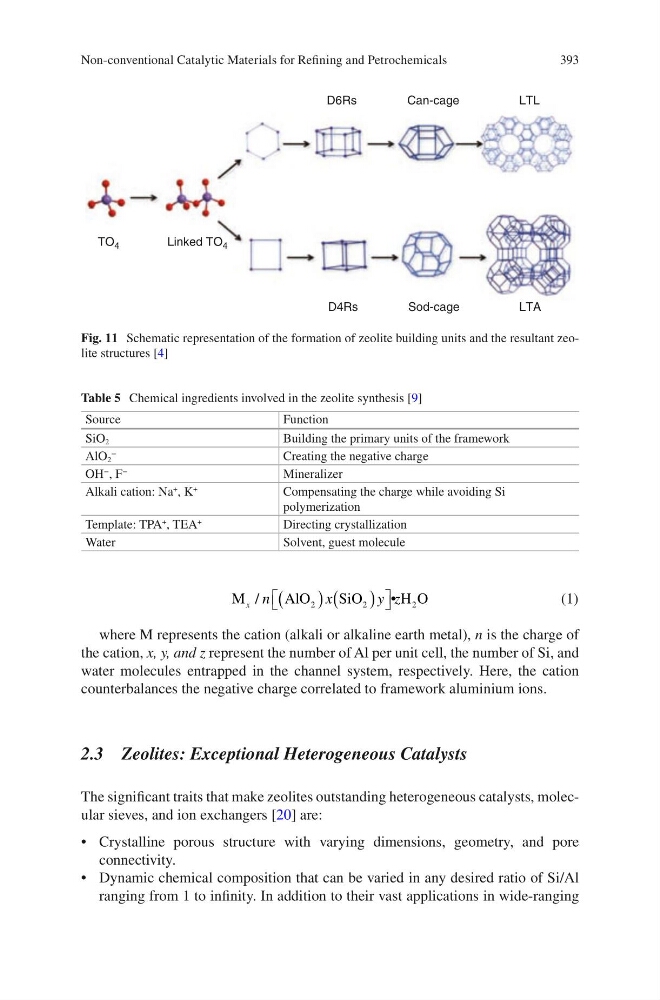
Fig. 11 Schematic representation of the formation of zeolite building units and the resultant zeolite structures [4]
Table 5 Chemical ingredients involved in the zeolite synthesis [9]
Source
Function
SiO 2
Building the primary units of the framework
AlO 2
−
Creating the negative charge
OH
−
, F
−
Mineralizer
Alkali cation: Na
+
, K
+
Compensating the charge while avoiding Si
polymerization
Template: TPA
+
, TEA
+
Directing crystallization
Water
Solvent, guest molecule
Non-conventional Catalytic Materials for Refining and Petrochemicals
M
AlO
SiO
H O
x n
x
y z
/
•
2
2
2
(
) (
)
é ë
ù û
(1)
where M represents the cation (alkali or alkaline earth metal), n is the charge of
the cation, x, y, and z represent the number of Al per unit cell, the number of Si, and
water molecules entrapped in the channel system, respectively. Here, the cation
counterbalances the negative charge correlated to framework aluminium ions.
2.3 Zeolites: Exceptional Heterogeneous Catalysts
The significant traits that make zeolites outstanding heterogeneous catalysts, molecular sieves, and ion exchangers [20] are:
• Crystalline porous structure with varying dimensions, geometry, and pore
connectivity.
• Dynamic chemical composition that can be varied in any desired ratio of Si/Al
ranging from 1 to infinity. In addition to their vast applications in wide-ranging
D6Rs
Can-cage
LTL
D4Rs
TO 4
Linked TO 4
Sod-cage
LTA
Fig. 11 Schematic representation of the formation of zeolite building units and the resultant zeolite structures [4]
Table 5 Chemical ingredients involved in the zeolite synthesis [9]
Source
Function
SiO 2
Building the primary units of the framework
AlO 2
−
Creating the negative charge
OH
−
, F
−
Mineralizer
Alkali cation: Na
+
, K
+
Compensating the charge while avoiding Si
polymerization
Template: TPA
+
, TEA
+
Directing crystallization
Water
Solvent, guest molecule
Non-conventional Catalytic Materials for Refining and Petrochemicals