

327
3.3 More Carbon Formed on Catalyst at Low Temperature
Solid-carbon is often detected on Ni-based catalysts [12]. To qualitatively analyse the
carbon formed, the FESEM image of the fresh and spent catalysts after 4 h of TOS
were obtained. Images show a significantly higher amount of carbon formation at
600 °C than at 750 °C (Fig. 7). Furthermore, the solid-carbon formed was whisker
type. Quantitative TGA and CHN/O analysis of the spent catalyst (Table 4) also confirms that higher amounts of carbon were formed at lower temperatures for 4 h TOS.
3.4 Adding O 2 Reduces CO 2 Conversion Without Affecting CH 4
Conversion Significantly
Another strategy to decrease the amount of solid-carbon deposited on the catalyst is
the use of oxygen as a co-feed along with the reactants (CH 4 and CO 2 ). Such an
operation is referred to as oxidative dry reforming of methane (ODRM). Oxygen
and carbon dioxide can both oxidize methane by two different reactions. It is
desirable that oxygen preferably oxidizes the solid-carbon so that the solid-carbon
formed would decrease. Adding O 2 slightly increases the methane conversion, and
this conversion continues to increase as the oxygen amount in the feed increases
though the initial increase is insignificant (Figs. 8 and 9). In contrast, the
CO 2 conversion decreases since it appears that the presence of oxygen facilitates
methane complete combustion instead of partial oxidation (Figs. 10 and 11).
However, the oxidation of solid-carbon would also give rise to a decrease in CO 2
conversion and is discussed below.
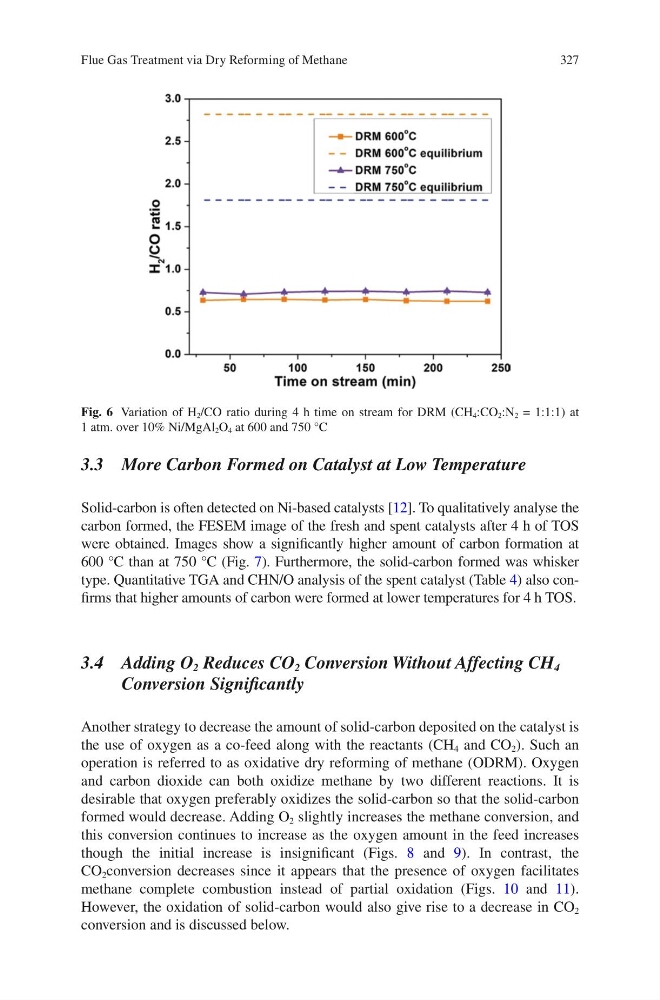
Fig. 6 Variation of H 2 /CO ratio during 4 h time on stream for DRM (CH 4 :CO 2 :N 2 = 1:1:1) at
1 atm. over 10% Ni/MgAl 2 O 4 at 600 and 750 °C
Flue Gas Treatment via Dry Reforming of Methane
3.3 More Carbon Formed on Catalyst at Low Temperature
Solid-carbon is often detected on Ni-based catalysts [12]. To qualitatively analyse the
carbon formed, the FESEM image of the fresh and spent catalysts after 4 h of TOS
were obtained. Images show a significantly higher amount of carbon formation at
600 °C than at 750 °C (Fig. 7). Furthermore, the solid-carbon formed was whisker
type. Quantitative TGA and CHN/O analysis of the spent catalyst (Table 4) also confirms that higher amounts of carbon were formed at lower temperatures for 4 h TOS.
3.4 Adding O 2 Reduces CO 2 Conversion Without Affecting CH 4
Conversion Significantly
Another strategy to decrease the amount of solid-carbon deposited on the catalyst is
the use of oxygen as a co-feed along with the reactants (CH 4 and CO 2 ). Such an
operation is referred to as oxidative dry reforming of methane (ODRM). Oxygen
and carbon dioxide can both oxidize methane by two different reactions. It is
desirable that oxygen preferably oxidizes the solid-carbon so that the solid-carbon
formed would decrease. Adding O 2 slightly increases the methane conversion, and
this conversion continues to increase as the oxygen amount in the feed increases
though the initial increase is insignificant (Figs. 8 and 9). In contrast, the
CO 2 conversion decreases since it appears that the presence of oxygen facilitates
methane complete combustion instead of partial oxidation (Figs. 10 and 11).
However, the oxidation of solid-carbon would also give rise to a decrease in CO 2
conversion and is discussed below.
Fig. 6 Variation of H 2 /CO ratio during 4 h time on stream for DRM (CH 4 :CO 2 :N 2 = 1:1:1) at
1 atm. over 10% Ni/MgAl 2 O 4 at 600 and 750 °C
Flue Gas Treatment via Dry Reforming of Methane