

138
The effect of ZnO and other additives like Cs2O and ZrB2O5 on the side-chain
methylation of toluene has been reported to substantially increase both toluene conversion and styrene selectivity by promoting the formation of formaldehyde from
methanol, which in turn increases styrene formation and reduces the transfer hydrogenation of styrene to ethylbenzene [174]. High toluene conversion of 4.6% and
styrene selectivity of 76.1% were obtained over ZnO/Cs-X and ZrB2O5/Cs-X,
respectively.
1.3.4 Industrial Process for Toluene Alkylation with Methanol to Styrene:
Exelus Process
The researchers at Exelus have developed a new process named ExSyM for producing styrene monomer from toluene and methanol. This has been accomplished by
integrating principles of process design and reaction engineering with advances in
zeolite catalyst science and has been instrumental in achieving significantly higher
selectivities (>80%) for EB/SM at 698 K and 1 atm. pressure by reduction in methanol decomposition rates and enhanced conversions. The flow scheme is shown in
Fig. 14. Hence, the catalyst designed for the new ExSyM process system is much
superior as compared to other catalyst systems designed for the side-chain alkylation reaction in terms of its performance. The developed catalyst is currently being
tested for its long-term stability.
1.4 Future Prospective
The following section gives a way forward and proposes certain future directions
for the process discussed in the aforementioned sections.
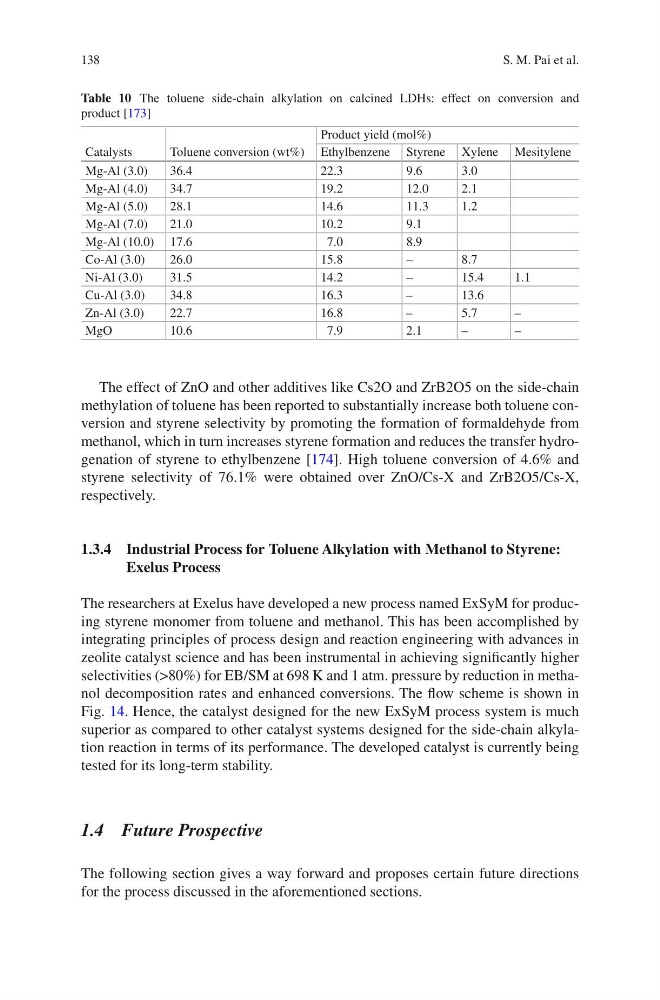
Table 10 The toluene side-chain alkylation on calcined LDHs: effect on conversion and
product [173]
Catalysts
Toluene conversion (wt%)
Product yield (mol%)
Ethylbenzene Styrene Xylene Mesitylene
Mg-Al (3.0)
36.4
22.3
9.6
3.0
Mg-Al (4.0)
34.7
19.2
12.0
2.1
Mg-Al (5.0)
28.1
14.6
11.3
1.2
Mg-Al (7.0)
21.0
10.2
9.1
Mg-Al (10.0) 17.6
7.0
8.9
Co-Al (3.0)
26.0
15.8
–
8.7
Ni-Al (3.0)
31.5
14.2
–
15.4
1.1
Cu-Al (3.0)
34.8
16.3
–
13.6
Zn-Al (3.0)
22.7
16.8
–
5.7
–
MgO
10.6
7.9
2.1
–
–
S. M. Pai et al.
The effect of ZnO and other additives like Cs2O and ZrB2O5 on the side-chain
methylation of toluene has been reported to substantially increase both toluene conversion and styrene selectivity by promoting the formation of formaldehyde from
methanol, which in turn increases styrene formation and reduces the transfer hydrogenation of styrene to ethylbenzene [174]. High toluene conversion of 4.6% and
styrene selectivity of 76.1% were obtained over ZnO/Cs-X and ZrB2O5/Cs-X,
respectively.
1.3.4 Industrial Process for Toluene Alkylation with Methanol to Styrene:
Exelus Process
The researchers at Exelus have developed a new process named ExSyM for producing styrene monomer from toluene and methanol. This has been accomplished by
integrating principles of process design and reaction engineering with advances in
zeolite catalyst science and has been instrumental in achieving significantly higher
selectivities (>80%) for EB/SM at 698 K and 1 atm. pressure by reduction in methanol decomposition rates and enhanced conversions. The flow scheme is shown in
Fig. 14. Hence, the catalyst designed for the new ExSyM process system is much
superior as compared to other catalyst systems designed for the side-chain alkylation reaction in terms of its performance. The developed catalyst is currently being
tested for its long-term stability.
1.4 Future Prospective
The following section gives a way forward and proposes certain future directions
for the process discussed in the aforementioned sections.
Table 10 The toluene side-chain alkylation on calcined LDHs: effect on conversion and
product [173]
Catalysts
Toluene conversion (wt%)
Product yield (mol%)
Ethylbenzene Styrene Xylene Mesitylene
Mg-Al (3.0)
36.4
22.3
9.6
3.0
Mg-Al (4.0)
34.7
19.2
12.0
2.1
Mg-Al (5.0)
28.1
14.6
11.3
1.2
Mg-Al (7.0)
21.0
10.2
9.1
Mg-Al (10.0) 17.6
7.0
8.9
Co-Al (3.0)
26.0
15.8
–
8.7
Ni-Al (3.0)
31.5
14.2
–
15.4
1.1
Cu-Al (3.0)
34.8
16.3
–
13.6
Zn-Al (3.0)
22.7
16.8
–
5.7
–
MgO
10.6
7.9
2.1
–
–
S. M. Pai et al.