

carbon cycle, atmospheric chemistry, and aerosols or the effects of stratospheric
ozone or the El Niño–Southern Oscillation.
The atmospheric layer is opaque to infrared radiation but transparent to visible
radiation. As mentioned in Chaps. 4 and 6, terrestrial bodies absorb solar radiation
with small wavelengths, and radiant energy is then emitted from the surface to the
atmosphere as thermal radiation with longer wavelengths absorbed by GHG. GHG
allows downward transmission of solar radiation but traps a significant fraction of
upward infrared radiation, thus exerting a critical influence on the Earth’s global
energy budget. Furthermore, accumulations of GHG as carbon dioxide, nitrous
oxide (N 2 O), methane (CH 4 ), and chlorofluorocarbons can close the atmospheric
window referred to in Chap. 6, by absorbing more infrared radiation emitted from
the Earth’s surface, enhancing the global warming effect.
Improved experimentation on climate change is possible with numerical weather
forecast complex models, designated as global climate models (GCM). Insights into
topics such as atmospheric physics and feedback processes were improved with
these models, although many rough assumptions in most GCMs turn forecasts of
climate change somewhat uncertain (Stull 2000). A thorough discussion about these
issues is necessary, and scientists should have a responsibility in this discussion, to
avoid distortion of facts by political, industrial, and commercial interests.
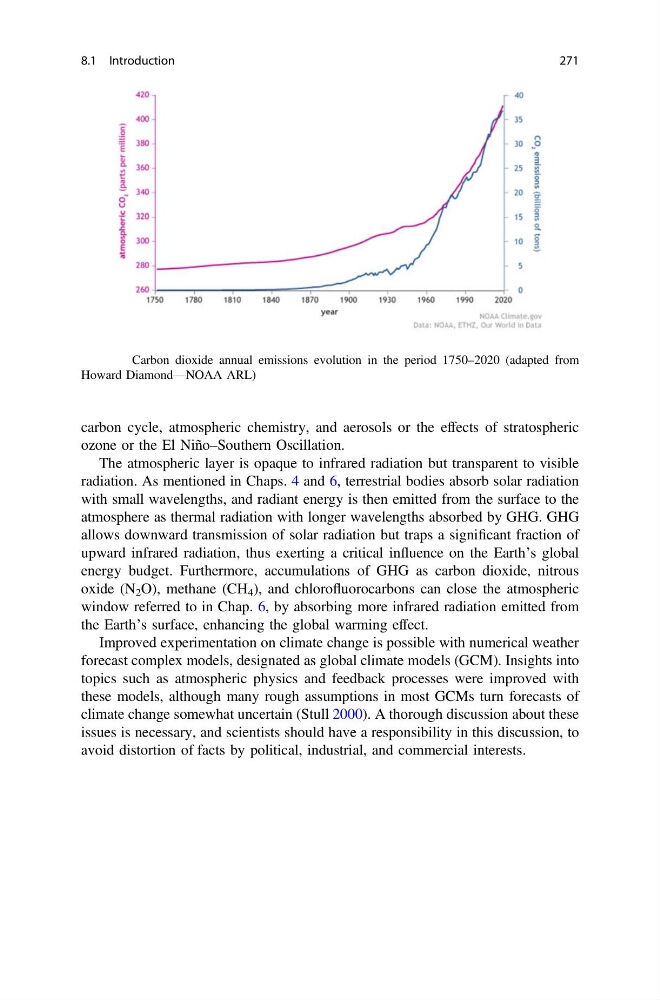
Fig. 8.2 Carbon dioxide annual emissions evolution in the period 1750–2020 (adapted from
Howard Diamond—NOAA ARL)
8.1 Introduction
271
ozone or the El Niño–Southern Oscillation.
The atmospheric layer is opaque to infrared radiation but transparent to visible
radiation. As mentioned in Chaps. 4 and 6, terrestrial bodies absorb solar radiation
with small wavelengths, and radiant energy is then emitted from the surface to the
atmosphere as thermal radiation with longer wavelengths absorbed by GHG. GHG
allows downward transmission of solar radiation but traps a significant fraction of
upward infrared radiation, thus exerting a critical influence on the Earth’s global
energy budget. Furthermore, accumulations of GHG as carbon dioxide, nitrous
oxide (N 2 O), methane (CH 4 ), and chlorofluorocarbons can close the atmospheric
window referred to in Chap. 6, by absorbing more infrared radiation emitted from
the Earth’s surface, enhancing the global warming effect.
Improved experimentation on climate change is possible with numerical weather
forecast complex models, designated as global climate models (GCM). Insights into
topics such as atmospheric physics and feedback processes were improved with
these models, although many rough assumptions in most GCMs turn forecasts of
climate change somewhat uncertain (Stull 2000). A thorough discussion about these
issues is necessary, and scientists should have a responsibility in this discussion, to
avoid distortion of facts by political, industrial, and commercial interests.
Fig. 8.2 Carbon dioxide annual emissions evolution in the period 1750–2020 (adapted from
Howard Diamond—NOAA ARL)
8.1 Introduction
271