

372
6.4. PHYSICS APPLICATIONS: WORK, FORCE, AND PRESSURE
described task. In parts (b) and (c), a key step is to find a formula for a function that
describes the curve that forms the side boundary of the tank.
x +
y +
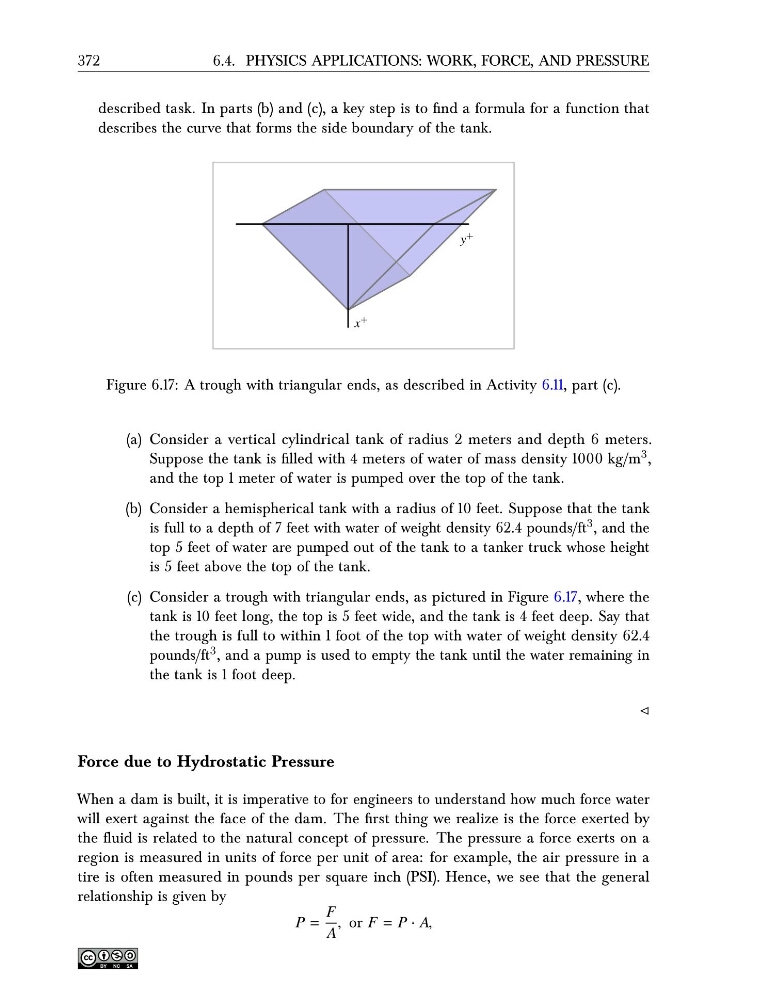
Figure 6.17: A trough with triangular ends, as described in Activity 6.11, part (c).
(a) Consider a vertical cylindrical tank of radius 2 meters and depth 6 meters.
Suppose the tank is filled with 4 meters of water of mass density 1000 kg/m 3 ,
and the top 1 meter of water is pumped over the top of the tank.
(b) Consider a hemispherical tank with a radius of 10 feet. Suppose that the tank
is full to a depth of 7 feet with water of weight density 62.4 pounds/ft 3 , and the
top 5 feet of water are pumped out of the tank to a tanker truck whose height
is 5 feet above the top of the tank.
(c) Consider a trough with triangular ends, as pictured in Figure 6.17, where the
tank is 10 feet long, the top is 5 feet wide, and the tank is 4 feet deep. Say that
the trough is full to within 1 foot of the top with water of weight density 62.4
pounds/ft 3 , and a pump is used to empty the tank until the water remaining in
the tank is 1 foot deep.
⊳
Force due to Hydrostatic Pressure
When a dam is built, it is imperative to for engineers to understand how much force water
will exert against the face of the dam. The first thing we realize is the force exerted by
the fluid is related to the natural concept of pressure. The pressure a force exerts on a
region is measured in units of force per unit of area: for example, the air pressure in a
tire is often measured in pounds per square inch (PSI). Hence, we see that the general
relationship is given by
P =
F
A
, or F = P · A,
6.4. PHYSICS APPLICATIONS: WORK, FORCE, AND PRESSURE
described task. In parts (b) and (c), a key step is to find a formula for a function that
describes the curve that forms the side boundary of the tank.
x +
y +
Figure 6.17: A trough with triangular ends, as described in Activity 6.11, part (c).
(a) Consider a vertical cylindrical tank of radius 2 meters and depth 6 meters.
Suppose the tank is filled with 4 meters of water of mass density 1000 kg/m 3 ,
and the top 1 meter of water is pumped over the top of the tank.
(b) Consider a hemispherical tank with a radius of 10 feet. Suppose that the tank
is full to a depth of 7 feet with water of weight density 62.4 pounds/ft 3 , and the
top 5 feet of water are pumped out of the tank to a tanker truck whose height
is 5 feet above the top of the tank.
(c) Consider a trough with triangular ends, as pictured in Figure 6.17, where the
tank is 10 feet long, the top is 5 feet wide, and the tank is 4 feet deep. Say that
the trough is full to within 1 foot of the top with water of weight density 62.4
pounds/ft 3 , and a pump is used to empty the tank until the water remaining in
the tank is 1 foot deep.
⊳
Force due to Hydrostatic Pressure
When a dam is built, it is imperative to for engineers to understand how much force water
will exert against the face of the dam. The first thing we realize is the force exerted by
the fluid is related to the natural concept of pressure. The pressure a force exerts on a
region is measured in units of force per unit of area: for example, the air pressure in a
tire is often measured in pounds per square inch (PSI). Hence, we see that the general
relationship is given by
P =
F
A
, or F = P · A,