

3.4. APPLIED OPTIMIZATION
195
3
2
P
Q
Z
cabin
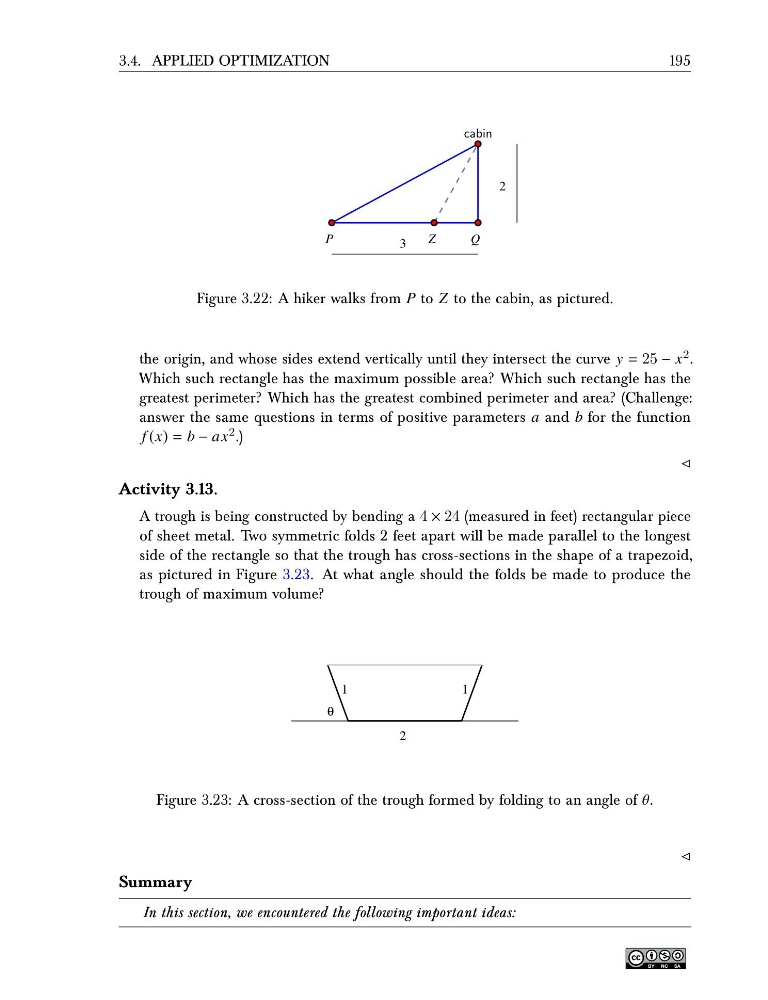
Figure 3.22: A hiker walks from P to Z to the cabin, as pictured.
the origin, and whose sides extend vertically until they intersect the curve y = 25 − x 2 .
Which such rectangle has the maximum possible area? Which such rectangle has the
greatest perimeter? Which has the greatest combined perimeter and area? (Challenge:
answer the same questions in terms of positive parameters a and b for the function
f (x) = b − ax 2 .)
⊳
Activity 3.13.
A trough is being constructed by bending a 4 × 24 (measured in feet) rectangular piece
of sheet metal. Two symmetric folds 2 feet apart will be made parallel to the longest
side of the rectangle so that the trough has cross-sections in the shape of a trapezoid,
as pictured in Figure 3.23. At what angle should the folds be made to produce the
trough of maximum volume?
2
1
1
θ
Figure 3.23: A cross-section of the trough formed by folding to an angle of θ.
⊳
Summary
In this section, we encountered the following important ideas:
195
3
2
P
Q
Z
cabin
Figure 3.22: A hiker walks from P to Z to the cabin, as pictured.
the origin, and whose sides extend vertically until they intersect the curve y = 25 − x 2 .
Which such rectangle has the maximum possible area? Which such rectangle has the
greatest perimeter? Which has the greatest combined perimeter and area? (Challenge:
answer the same questions in terms of positive parameters a and b for the function
f (x) = b − ax 2 .)
⊳
Activity 3.13.
A trough is being constructed by bending a 4 × 24 (measured in feet) rectangular piece
of sheet metal. Two symmetric folds 2 feet apart will be made parallel to the longest
side of the rectangle so that the trough has cross-sections in the shape of a trapezoid,
as pictured in Figure 3.23. At what angle should the folds be made to produce the
trough of maximum volume?
2
1
1
θ
Figure 3.23: A cross-section of the trough formed by folding to an angle of θ.
⊳
Summary
In this section, we encountered the following important ideas: