

128
2.5. THE CHAIN RULE
-3 -2 -1
1
2
3
-3
-2
-1
1
2
3
p
q
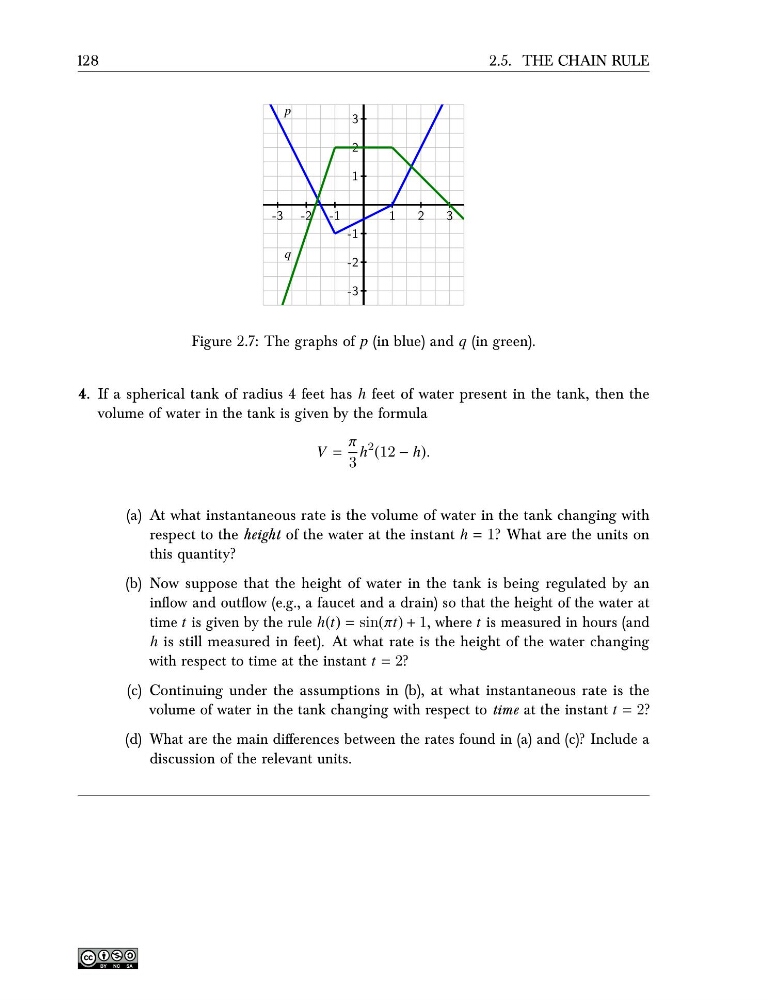
Figure 2.7: The graphs of p (in blue) and q (in green).
4. If a spherical tank of radius 4 feet has h feet of water present in the tank, then the
volume of water in the tank is given by the formula
V =
π
3
h
2 (12 − h).
(a) At what instantaneous rate is the volume of water in the tank changing with
respect to the height of the water at the instant h = 1? What are the units on
this quantity?
(b) Now suppose that the height of water in the tank is being regulated by an
inflow and outflow (e.g., a faucet and a drain) so that the height of the water at
time t is given by the rule h(t) = sin(πt) + 1, where t is measured in hours (and
h is still measured in feet). At what rate is the height of the water changing
with respect to time at the instant t = 2?
(c) Continuing under the assumptions in (b), at what instantaneous rate is the
volume of water in the tank changing with respect to time at the instant t = 2?
(d) What are the main differences between the rates found in (a) and (c)? Include a
discussion of the relevant units.
2.5. THE CHAIN RULE
-3 -2 -1
1
2
3
-3
-2
-1
1
2
3
p
q
Figure 2.7: The graphs of p (in blue) and q (in green).
4. If a spherical tank of radius 4 feet has h feet of water present in the tank, then the
volume of water in the tank is given by the formula
V =
π
3
h
2 (12 − h).
(a) At what instantaneous rate is the volume of water in the tank changing with
respect to the height of the water at the instant h = 1? What are the units on
this quantity?
(b) Now suppose that the height of water in the tank is being regulated by an
inflow and outflow (e.g., a faucet and a drain) so that the height of the water at
time t is given by the rule h(t) = sin(πt) + 1, where t is measured in hours (and
h is still measured in feet). At what rate is the height of the water changing
with respect to time at the instant t = 2?
(c) Continuing under the assumptions in (b), at what instantaneous rate is the
volume of water in the tank changing with respect to time at the instant t = 2?
(d) What are the main differences between the rates found in (a) and (c)? Include a
discussion of the relevant units.