

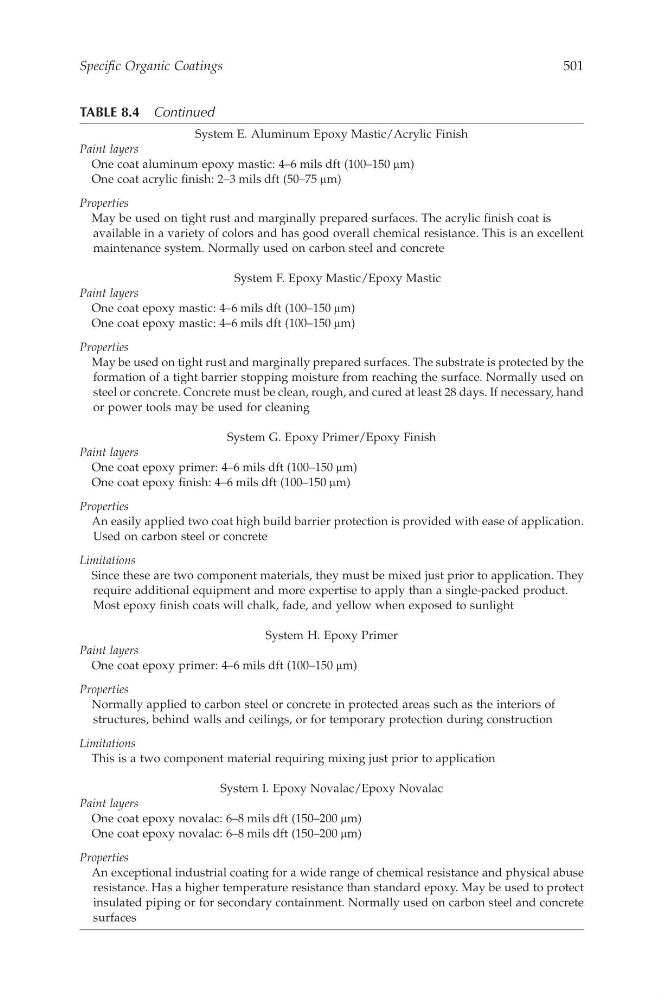
TABLE 8.4 Continued
System E. AluminumE poxy Mastic/Acrylic Finish
Paint layers
One coat aluminum epoxy mastic: 4–6 mils dft (100–150 m m)
One coat acrylic finish: 2–3 mils dft (50–75 m m)
Properties
May be used on tight rust and marginally prepared surfaces. The acrylic finish coat is
available in avariety of colors and has good overall chemicalresistance. This is an excellent
maintenance system. Normally used on carbon steel and concrete
System F. Epoxy Mastic/Epoxy Mastic
Paint layers
One coat epoxy mastic: 4–6 mils dft (100–150 m m)
One coat epoxy mastic: 4–6 mils dft (100–150 m m)
Properties
May be used on tight rust and marginally prepared surfaces. The substrate is protected by the
formation of at ight barrier stopping moisturefrom reaching the surface. Normally used on
steel or concrete. Concrete must be clean, rough, and cured at least 28 days. If necessary,hand
or power tools may be used for cleaning
System G. Epoxy Primer/Epoxy Finish
Paint layers
One coat epoxy primer: 4–6 mils dft (100–150 m m)
One coat epoxy finish: 4–6 mils dft (100–150 m m)
Properties
An easily applied two coat high build barrier protection is provided with ease of application.
Used on carbon steel or concrete
Limitations
Since these are two component materials, they must be mixed just prior to application. They
require additional equipment and moree xpertise to apply than asingle-packedproduct.
Most epoxy finish coats will chalk, fade, and yellow when exposed to sunlight
System H. Epoxy Primer
Paint layers
One coat epoxy primer: 4–6 mils dft (100–150 m m)
Properties
Normally applied to carbon steel or concrete in protected areas such as the interiorsof
structures, behind walls and ceilings,o rfor temporary protection during construction
Limitations
This is at wo component material requiring mixing just prior to application
System I. Epoxy Novalac/Epoxy Novalac
Paint layers
One coat epoxy novalac: 6–8 mils dft (150–200 m m)
One coat epoxy novalac: 6–8 mils dft (150–200 m m)
Properties
An exceptional industrial coating for awide range of chemical resistance and physical abuse
resistance. Has ahigher temperatureresistance than standardepoxy.May be used to protect
insulated piping or for secondary containment. Normally used on carbon steel and concrete
surfaces
Specific Organic Coatings
501
CAT8247—CHAPTER 8—17/10/2006—14:20—SRIDHAR—XML MODEL B–pp. 487–507
System E. AluminumE poxy Mastic/Acrylic Finish
Paint layers
One coat aluminum epoxy mastic: 4–6 mils dft (100–150 m m)
One coat acrylic finish: 2–3 mils dft (50–75 m m)
Properties
May be used on tight rust and marginally prepared surfaces. The acrylic finish coat is
available in avariety of colors and has good overall chemicalresistance. This is an excellent
maintenance system. Normally used on carbon steel and concrete
System F. Epoxy Mastic/Epoxy Mastic
Paint layers
One coat epoxy mastic: 4–6 mils dft (100–150 m m)
One coat epoxy mastic: 4–6 mils dft (100–150 m m)
Properties
May be used on tight rust and marginally prepared surfaces. The substrate is protected by the
formation of at ight barrier stopping moisturefrom reaching the surface. Normally used on
steel or concrete. Concrete must be clean, rough, and cured at least 28 days. If necessary,hand
or power tools may be used for cleaning
System G. Epoxy Primer/Epoxy Finish
Paint layers
One coat epoxy primer: 4–6 mils dft (100–150 m m)
One coat epoxy finish: 4–6 mils dft (100–150 m m)
Properties
An easily applied two coat high build barrier protection is provided with ease of application.
Used on carbon steel or concrete
Limitations
Since these are two component materials, they must be mixed just prior to application. They
require additional equipment and moree xpertise to apply than asingle-packedproduct.
Most epoxy finish coats will chalk, fade, and yellow when exposed to sunlight
System H. Epoxy Primer
Paint layers
One coat epoxy primer: 4–6 mils dft (100–150 m m)
Properties
Normally applied to carbon steel or concrete in protected areas such as the interiorsof
structures, behind walls and ceilings,o rfor temporary protection during construction
Limitations
This is at wo component material requiring mixing just prior to application
System I. Epoxy Novalac/Epoxy Novalac
Paint layers
One coat epoxy novalac: 6–8 mils dft (150–200 m m)
One coat epoxy novalac: 6–8 mils dft (150–200 m m)
Properties
An exceptional industrial coating for awide range of chemical resistance and physical abuse
resistance. Has ahigher temperatureresistance than standardepoxy.May be used to protect
insulated piping or for secondary containment. Normally used on carbon steel and concrete
surfaces
Specific Organic Coatings
501
CAT8247—CHAPTER 8—17/10/2006—14:20—SRIDHAR—XML MODEL B–pp. 487–507