

necessary to prevent in-plant ventilating systemsf romc arrying
the aromatic odor through the facility.
2. Shelf life limitations of the resin requirerefrigerated storage below
608 F( 158 C) to extend useful life.
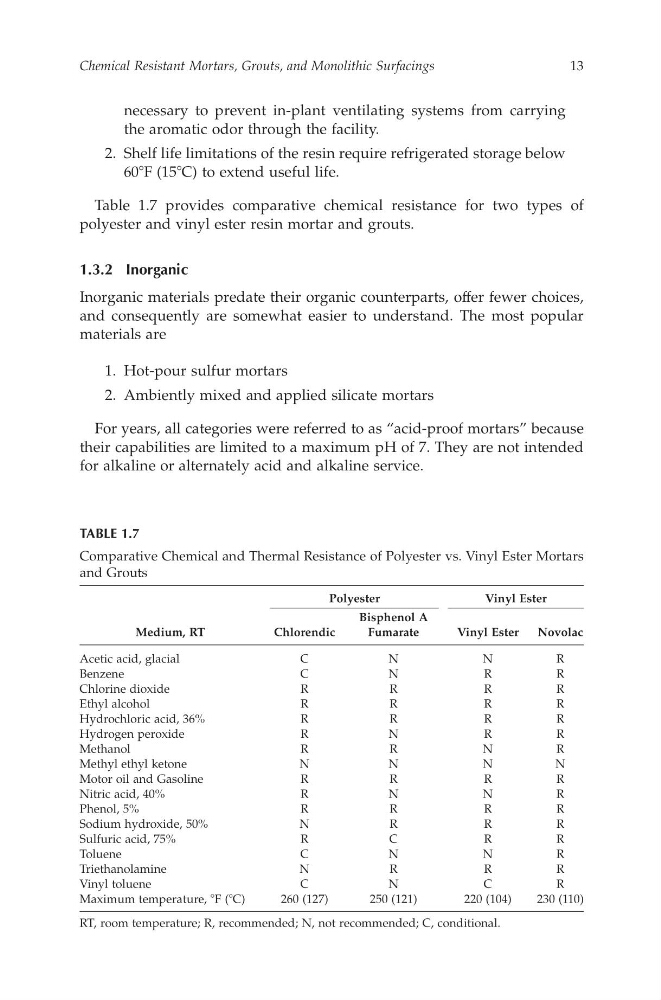
Table 1.7 provides comparative chemical resistance for two types of
polyester and vinyl ester resinm ortarand grouts.
1.3.2 Inorganic
Inorganic materials predate their organic counterparts, offer fewer choices,
and consequently are somewhat easiert ou nderstand. The most popular
materials are
1. Hot-pour sulfur mortars
2. Ambientlym ixed and applied silicate mortars
For years,all categorieswere referred to as “acid-proof mortars” because
their capabilities are limited to am aximum pH of 7. They are not intended
for alkaline or alternately acid and alkaline service.
TABLE 1.7
Comparative Chemical and Thermal Resistance of Polyester vs. Vinyl Ester Mortars
and Grouts
Polyester
Vinyl Ester
Medium,R TC hlorendic
Bisphenol A
FumarateV inyl Ester
Novolac
Acetic acid, glacial
CN
NR
Benzene
CN
RR
Chlorine dioxide
RR
RR
Ethyl alcohol
RR
RR
Hydrochloric acid, 36%
RR
RR
Hydrogen peroxide
RN
RR
Methanol
RR
NR
Methyl ethyl ketone
NN
NN
Motor oil and Gasoline
RR
RR
Nitric acid, 40%
RN
NR
Phenol, 5%
RR
RR
Sodium hydroxide, 50%
NR
RR
Sulfuric acid, 75%
RC
RR
Toluene
CN
NR
Triethanolamine
NR
RR
Vinyl toluene
CN
CR
Maximum temperature, 8 F( 8 C)
260 (127)
250 (121)
220 (104)
230 (110)
RT,room temperature; R, recommended; N, not recommended; C, conditional.
Chemical Resistant Mortars, Grouts, and Monolithic Surfacings
13
CAT8247—CHAPTER 1—6/10/2006—11:59—SRIDHAR—XML MODEL B–pp. 1–42
the aromatic odor through the facility.
2. Shelf life limitations of the resin requirerefrigerated storage below
608 F( 158 C) to extend useful life.
Table 1.7 provides comparative chemical resistance for two types of
polyester and vinyl ester resinm ortarand grouts.
1.3.2 Inorganic
Inorganic materials predate their organic counterparts, offer fewer choices,
and consequently are somewhat easiert ou nderstand. The most popular
materials are
1. Hot-pour sulfur mortars
2. Ambientlym ixed and applied silicate mortars
For years,all categorieswere referred to as “acid-proof mortars” because
their capabilities are limited to am aximum pH of 7. They are not intended
for alkaline or alternately acid and alkaline service.
TABLE 1.7
Comparative Chemical and Thermal Resistance of Polyester vs. Vinyl Ester Mortars
and Grouts
Polyester
Vinyl Ester
Medium,R TC hlorendic
Bisphenol A
FumarateV inyl Ester
Novolac
Acetic acid, glacial
CN
NR
Benzene
CN
RR
Chlorine dioxide
RR
RR
Ethyl alcohol
RR
RR
Hydrochloric acid, 36%
RR
RR
Hydrogen peroxide
RN
RR
Methanol
RR
NR
Methyl ethyl ketone
NN
NN
Motor oil and Gasoline
RR
RR
Nitric acid, 40%
RN
NR
Phenol, 5%
RR
RR
Sodium hydroxide, 50%
NR
RR
Sulfuric acid, 75%
RC
RR
Toluene
CN
NR
Triethanolamine
NR
RR
Vinyl toluene
CN
CR
Maximum temperature, 8 F( 8 C)
260 (127)
250 (121)
220 (104)
230 (110)
RT,room temperature; R, recommended; N, not recommended; C, conditional.
Chemical Resistant Mortars, Grouts, and Monolithic Surfacings
13
CAT8247—CHAPTER 1—6/10/2006—11:59—SRIDHAR—XML MODEL B–pp. 1–42