

56
2 Water Resources Management Framework
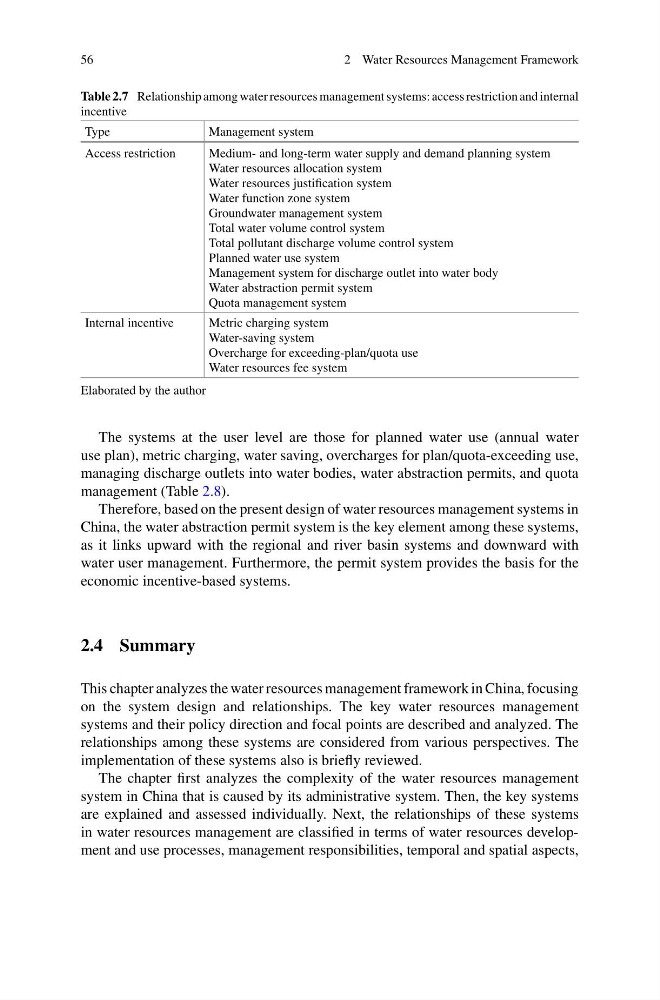
Table 2.7 Relationship among water resources management systems: access restriction and internal
incentive
Type
Management system
Access restriction
Medium- and long-term water supply and demand planning system
Water resources allocation system
Water resources justification system
Water function zone system
Groundwater management system
Total water volume control system
Total pollutant discharge volume control system
Planned water use system
Management system for discharge outlet into water body
Water abstraction permit system
Quota management system
Internal incentive
Metric charging system
Water-saving system
Overcharge for exceeding-plan/quota use
Water resources fee system
Elaborated by the author
The systems at the user level are those for planned water use (annual water
use plan), metric charging, water saving, overcharges for plan/quota-exceeding use,
managing discharge outlets into water bodies, water abstraction permits, and quota
management (Table 2.8).
Therefore, based on the present design of water resources management systems in
China, the water abstraction permit system is the key element among these systems,
as it links upward with the regional and river basin systems and downward with
water user management. Furthermore, the permit system provides the basis for the
economic incentive-based systems.
2.4 Summary
This chapter analyzes the water resources management framework in China, focusing
on the system design and relationships. The key water resources management
systems and their policy direction and focal points are described and analyzed. The
relationships among these systems are considered from various perspectives. The
implementation of these systems also is briefly reviewed.
The chapter first analyzes the complexity of the water resources management
system in China that is caused by its administrative system. Then, the key systems
are explained and assessed individually. Next, the relationships of these systems
in water resources management are classified in terms of water resources development and use processes, management responsibilities, temporal and spatial aspects,
2 Water Resources Management Framework
Table 2.7 Relationship among water resources management systems: access restriction and internal
incentive
Type
Management system
Access restriction
Medium- and long-term water supply and demand planning system
Water resources allocation system
Water resources justification system
Water function zone system
Groundwater management system
Total water volume control system
Total pollutant discharge volume control system
Planned water use system
Management system for discharge outlet into water body
Water abstraction permit system
Quota management system
Internal incentive
Metric charging system
Water-saving system
Overcharge for exceeding-plan/quota use
Water resources fee system
Elaborated by the author
The systems at the user level are those for planned water use (annual water
use plan), metric charging, water saving, overcharges for plan/quota-exceeding use,
managing discharge outlets into water bodies, water abstraction permits, and quota
management (Table 2.8).
Therefore, based on the present design of water resources management systems in
China, the water abstraction permit system is the key element among these systems,
as it links upward with the regional and river basin systems and downward with
water user management. Furthermore, the permit system provides the basis for the
economic incentive-based systems.
2.4 Summary
This chapter analyzes the water resources management framework in China, focusing
on the system design and relationships. The key water resources management
systems and their policy direction and focal points are described and analyzed. The
relationships among these systems are considered from various perspectives. The
implementation of these systems also is briefly reviewed.
The chapter first analyzes the complexity of the water resources management
system in China that is caused by its administrative system. Then, the key systems
are explained and assessed individually. Next, the relationships of these systems
in water resources management are classified in terms of water resources development and use processes, management responsibilities, temporal and spatial aspects,