

17.3 Environmental Flow Assessment and Water Resources…
391
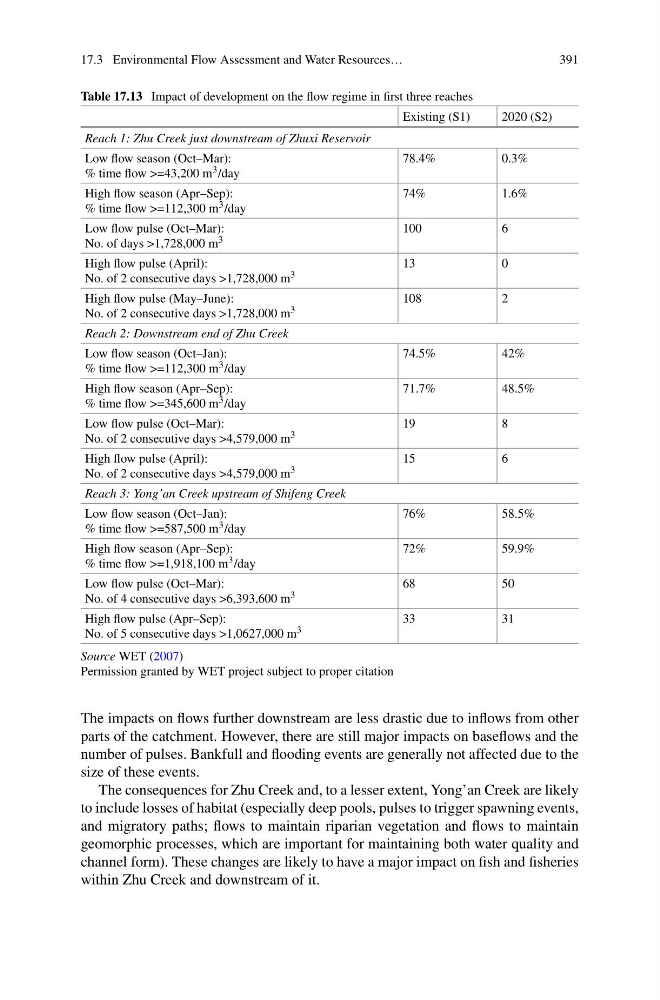
Table 17.13 Impact of development on the flow regime in first three reaches
Existing (S1)
2020 (S2)
Reach 1: Zhu Creek just downstream of Zhuxi Reservoir
Low flow season (Oct–Mar):
% time flow >=43,200 m 3 /day
78.4%
0.3%
High flow season (Apr–Sep):
% time flow >=112,300 m 3 /day
74%
1.6%
Low flow pulse (Oct–Mar):
No. of days >1,728,000 m 3
100
6
High flow pulse (April):
No. of 2 consecutive days >1,728,000 m 3
13
0
High flow pulse (May–June):
No. of 2 consecutive days >1,728,000 m 3
108
2
Reach 2: Downstream end of Zhu Creek
Low flow season (Oct–Jan):
% time flow >=112,300 m 3 /day
74.5%
42%
High flow season (Apr–Sep):
% time flow >=345,600 m 3 /day
71.7%
48.5%
Low flow pulse (Oct–Mar):
No. of 2 consecutive days >4,579,000 m 3
19
8
High flow pulse (April):
No. of 2 consecutive days >4,579,000 m 3
15
6
Reach 3: Yong’an Creek upstream of Shifeng Creek
Low flow season (Oct–Jan):
% time flow >=587,500 m 3 /day
76%
58.5%
High flow season (Apr–Sep):
% time flow >=1,918,100 m 3 /day
72%
59.9%
Low flow pulse (Oct–Mar):
No. of 4 consecutive days >6,393,600 m 3
68
50
High flow pulse (Apr–Sep):
No. of 5 consecutive days >1,0627,000 m 3
33
31
Source WET (2007)
Permission granted by WET project subject to proper citation
The impacts on flows further downstream are less drastic due to inflows from other
parts of the catchment. However, there are still major impacts on baseflows and the
number of pulses. Bankfull and flooding events are generally not affected due to the
size of these events.
The consequences for Zhu Creek and, to a lesser extent, Yong’an Creek are likely
to include losses of habitat (especially deep pools, pulses to trigger spawning events,
and migratory paths; flows to maintain riparian vegetation and flows to maintain
geomorphic processes, which are important for maintaining both water quality and
channel form). These changes are likely to have a major impact on fish and fisheries
within Zhu Creek and downstream of it.
391
Table 17.13 Impact of development on the flow regime in first three reaches
Existing (S1)
2020 (S2)
Reach 1: Zhu Creek just downstream of Zhuxi Reservoir
Low flow season (Oct–Mar):
% time flow >=43,200 m 3 /day
78.4%
0.3%
High flow season (Apr–Sep):
% time flow >=112,300 m 3 /day
74%
1.6%
Low flow pulse (Oct–Mar):
No. of days >1,728,000 m 3
100
6
High flow pulse (April):
No. of 2 consecutive days >1,728,000 m 3
13
0
High flow pulse (May–June):
No. of 2 consecutive days >1,728,000 m 3
108
2
Reach 2: Downstream end of Zhu Creek
Low flow season (Oct–Jan):
% time flow >=112,300 m 3 /day
74.5%
42%
High flow season (Apr–Sep):
% time flow >=345,600 m 3 /day
71.7%
48.5%
Low flow pulse (Oct–Mar):
No. of 2 consecutive days >4,579,000 m 3
19
8
High flow pulse (April):
No. of 2 consecutive days >4,579,000 m 3
15
6
Reach 3: Yong’an Creek upstream of Shifeng Creek
Low flow season (Oct–Jan):
% time flow >=587,500 m 3 /day
76%
58.5%
High flow season (Apr–Sep):
% time flow >=1,918,100 m 3 /day
72%
59.9%
Low flow pulse (Oct–Mar):
No. of 4 consecutive days >6,393,600 m 3
68
50
High flow pulse (Apr–Sep):
No. of 5 consecutive days >1,0627,000 m 3
33
31
Source WET (2007)
Permission granted by WET project subject to proper citation
The impacts on flows further downstream are less drastic due to inflows from other
parts of the catchment. However, there are still major impacts on baseflows and the
number of pulses. Bankfull and flooding events are generally not affected due to the
size of these events.
The consequences for Zhu Creek and, to a lesser extent, Yong’an Creek are likely
to include losses of habitat (especially deep pools, pulses to trigger spawning events,
and migratory paths; flows to maintain riparian vegetation and flows to maintain
geomorphic processes, which are important for maintaining both water quality and
channel form). These changes are likely to have a major impact on fish and fisheries
within Zhu Creek and downstream of it.