

51
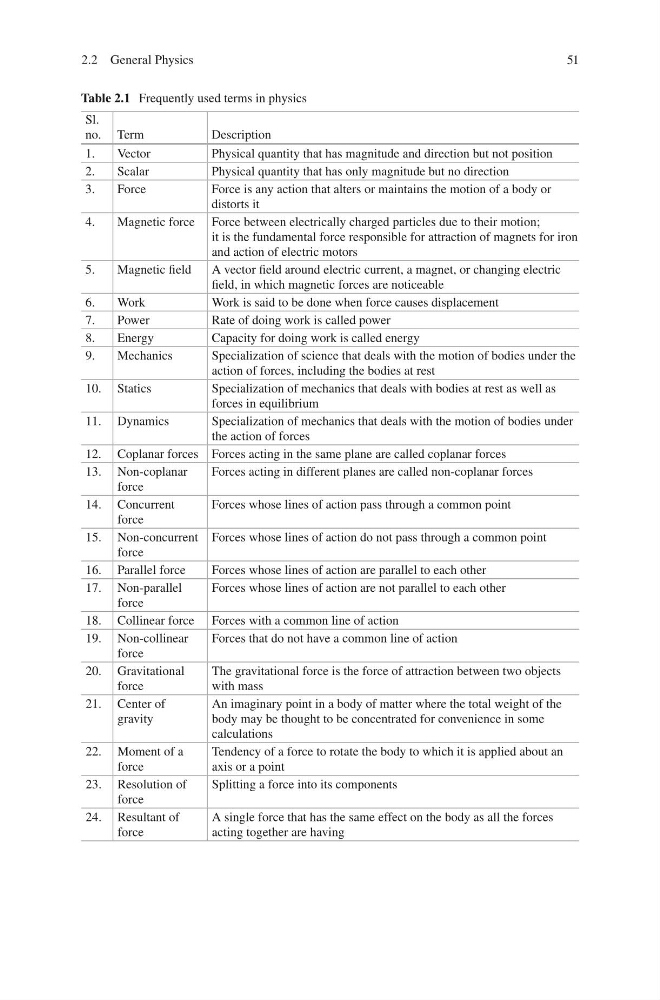
Table 2.1 Frequently used terms in physics
Sl.
no. Term
Description
1.
Vector
Physical quantity that has magnitude and direction but not position
2.
Scalar
Physical quantity that has only magnitude but no direction
3.
Force
Force is any action that alters or maintains the motion of a body or
distorts it
4.
Magnetic force Force between electrically charged particles due to their motion;
it is the fundamental force responsible for attraction of magnets for iron
and action of electric motors
5.
Magnetic field
A vector field around electric current, a magnet, or changing electric
field, in which magnetic forces are noticeable
6.
Work
Work is said to be done when force causes displacement
7.
Power
Rate of doing work is called power
8.
Energy
Capacity for doing work is called energy
9.
Mechanics
Specialization of science that deals with the motion of bodies under the
action of forces, including the bodies at rest
10. Statics
Specialization of mechanics that deals with bodies at rest as well as
forces in equilibrium
11. Dynamics
Specialization of mechanics that deals with the motion of bodies under
the action of forces
12. Coplanar forces Forces acting in the same plane are called coplanar forces
13. Non-coplanar
force
Forces acting in different planes are called non-coplanar forces
14. Concurrent
force
Forces whose lines of action pass through a common point
15. Non-concurrent
force
Forces whose lines of action do not pass through a common point
16. Parallel force
Forces whose lines of action are parallel to each other
17. Non-parallel
force
Forces whose lines of action are not parallel to each other
18. Collinear force Forces with a common line of action
19. Non-collinear
force
Forces that do not have a common line of action
20. Gravitational
force
The gravitational force is the force of attraction between two objects
with mass
21. Center of
gravity
An imaginary point in a body of matter where the total weight of the
body may be thought to be concentrated for convenience in some
calculations
22. Moment of a
force
Tendency of a force to rotate the body to which it is applied about an
axis or a point
23. Resolution of
force
Splitting a force into its components
24. Resultant of
force
A single force that has the same effect on the body as all the forces
acting together are having
2.2 General Physics
Table 2.1 Frequently used terms in physics
Sl.
no. Term
Description
1.
Vector
Physical quantity that has magnitude and direction but not position
2.
Scalar
Physical quantity that has only magnitude but no direction
3.
Force
Force is any action that alters or maintains the motion of a body or
distorts it
4.
Magnetic force Force between electrically charged particles due to their motion;
it is the fundamental force responsible for attraction of magnets for iron
and action of electric motors
5.
Magnetic field
A vector field around electric current, a magnet, or changing electric
field, in which magnetic forces are noticeable
6.
Work
Work is said to be done when force causes displacement
7.
Power
Rate of doing work is called power
8.
Energy
Capacity for doing work is called energy
9.
Mechanics
Specialization of science that deals with the motion of bodies under the
action of forces, including the bodies at rest
10. Statics
Specialization of mechanics that deals with bodies at rest as well as
forces in equilibrium
11. Dynamics
Specialization of mechanics that deals with the motion of bodies under
the action of forces
12. Coplanar forces Forces acting in the same plane are called coplanar forces
13. Non-coplanar
force
Forces acting in different planes are called non-coplanar forces
14. Concurrent
force
Forces whose lines of action pass through a common point
15. Non-concurrent
force
Forces whose lines of action do not pass through a common point
16. Parallel force
Forces whose lines of action are parallel to each other
17. Non-parallel
force
Forces whose lines of action are not parallel to each other
18. Collinear force Forces with a common line of action
19. Non-collinear
force
Forces that do not have a common line of action
20. Gravitational
force
The gravitational force is the force of attraction between two objects
with mass
21. Center of
gravity
An imaginary point in a body of matter where the total weight of the
body may be thought to be concentrated for convenience in some
calculations
22. Moment of a
force
Tendency of a force to rotate the body to which it is applied about an
axis or a point
23. Resolution of
force
Splitting a force into its components
24. Resultant of
force
A single force that has the same effect on the body as all the forces
acting together are having
2.2 General Physics