

33
1.9 Biochemistry
Biochemistry is a specialization of chemistry concerned with chemical processes in
living organisms.
The biochemical reactions that usually occur at 0–60°C, outside or inside the
cell, play a significant role in health of humans and environment. Cells of living
organisms oxidize inorganic as well as organic materials for energy, and bacteria are
not an exception. Bacteria that oxidize organic matter for energy are called heterotrophic bacteria and those that oxidize inorganic matter are called autotrophic
bacteria.
The elements required by living organisms in large quantities are called bulk elements and include carbon, hydrogen, oxygen, nitrogen, sulfur, and phosphorus. The
elements required by living organisms in small quantities are called trace elements
and are important parts of enzymes. Some elements such as arsenic that are toxic in
large quantities are vital in very small amounts, and they are called ultratrace
elements.
Chemicals, in human body, include organic and inorganic compounds. Inorganic
substances normally disintegrate in water, forming ions. Most of the organic matters
dissolve in ether or alcohol and certain organic compounds dissolve in water but do
not release ions.
Common inorganic compounds in living organisms include water, oxygen, carbon dioxide, as well as inorganic salts, and its availability in sufficient quality and
quantity in environment is essential for health of an organism and so humans.
Important groups of biochemicals in cells include lipids, carbohydrates, and proteins, besides nucleic acids.
Carbohydrates
Carbohydrates are biochemical molecules made up of carbon, oxygen, and hydrogen. They are water-soluble biochemicals that provide most of the energy required
by cells. They also supply building blocks to build certain cell structures.
Carbohydrates are often stored as reserve energy supplies. They usually have hydrogen–oxygen atom ratio of 2:1. Examples of carbohydrates include starch, sugar, and
cellulose.
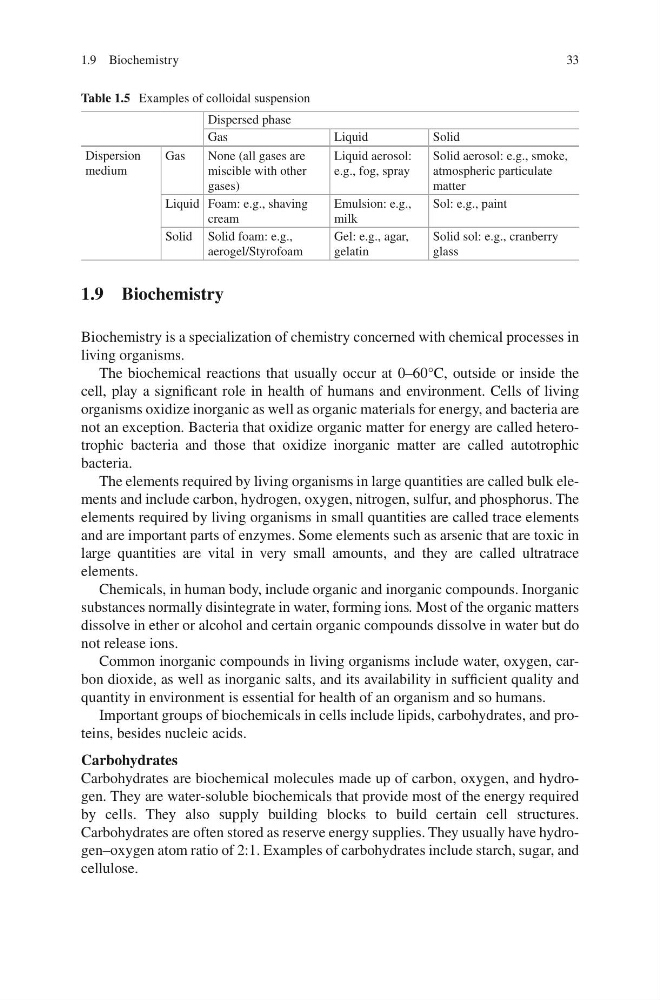
Table 1.5 Examples of colloidal suspension
Dispersed phase
Gas
Liquid
Solid
Dispersion
medium
Gas
None (all gases are
miscible with other
gases)
Liquid aerosol:
e.g., fog, spray
Solid aerosol: e.g., smoke,
atmospheric particulate
matter
Liquid Foam: e.g., shaving
cream
Emulsion: e.g.,
milk
Sol: e.g., paint
Solid Solid foam: e.g.,
aerogel/Styrofoam
Gel: e.g., agar,
gelatin
Solid sol: e.g., cranberry
glass
1.9 Biochemistry
1.9 Biochemistry
Biochemistry is a specialization of chemistry concerned with chemical processes in
living organisms.
The biochemical reactions that usually occur at 0–60°C, outside or inside the
cell, play a significant role in health of humans and environment. Cells of living
organisms oxidize inorganic as well as organic materials for energy, and bacteria are
not an exception. Bacteria that oxidize organic matter for energy are called heterotrophic bacteria and those that oxidize inorganic matter are called autotrophic
bacteria.
The elements required by living organisms in large quantities are called bulk elements and include carbon, hydrogen, oxygen, nitrogen, sulfur, and phosphorus. The
elements required by living organisms in small quantities are called trace elements
and are important parts of enzymes. Some elements such as arsenic that are toxic in
large quantities are vital in very small amounts, and they are called ultratrace
elements.
Chemicals, in human body, include organic and inorganic compounds. Inorganic
substances normally disintegrate in water, forming ions. Most of the organic matters
dissolve in ether or alcohol and certain organic compounds dissolve in water but do
not release ions.
Common inorganic compounds in living organisms include water, oxygen, carbon dioxide, as well as inorganic salts, and its availability in sufficient quality and
quantity in environment is essential for health of an organism and so humans.
Important groups of biochemicals in cells include lipids, carbohydrates, and proteins, besides nucleic acids.
Carbohydrates
Carbohydrates are biochemical molecules made up of carbon, oxygen, and hydrogen. They are water-soluble biochemicals that provide most of the energy required
by cells. They also supply building blocks to build certain cell structures.
Carbohydrates are often stored as reserve energy supplies. They usually have hydrogen–oxygen atom ratio of 2:1. Examples of carbohydrates include starch, sugar, and
cellulose.
Table 1.5 Examples of colloidal suspension
Dispersed phase
Gas
Liquid
Solid
Dispersion
medium
Gas
None (all gases are
miscible with other
gases)
Liquid aerosol:
e.g., fog, spray
Solid aerosol: e.g., smoke,
atmospheric particulate
matter
Liquid Foam: e.g., shaving
cream
Emulsion: e.g.,
milk
Sol: e.g., paint
Solid Solid foam: e.g.,
aerogel/Styrofoam
Gel: e.g., agar,
gelatin
Solid sol: e.g., cranberry
glass
1.9 Biochemistry