

82
Three basic descriptions used in electrical and electronics sciences is given in
Table 2.11.
Ohm’s Law
Ohm’s law states that electric current is inversely proportional to electrical resistance and directly proportional to the potential difference amid two points.
Mathematically:
I V R
= /
Where
I = electric current
V = potential difference between two points
Table 2.11 (continued)
Sl.
no. Term
Description
18. Electronics
Specialization of science that is concerned with control of the
motion of electrons
19. Diode
Electronic device that permits electric current to move
through it in single direction
20. Capacitor
Electronic device that stores electrons
21. Transistor
Device used to regulate electric current or potential difference
and that acts as a gate for electronic signals
22. Transformer
Electrical device used to transfer electrical energy among two
or more circuits
23. Step-up transformer
Transformer in which the output electric potential difference
is greater than its input
24. Step-down transformer
Transformer in which the output electric potential difference
is less than that of the input
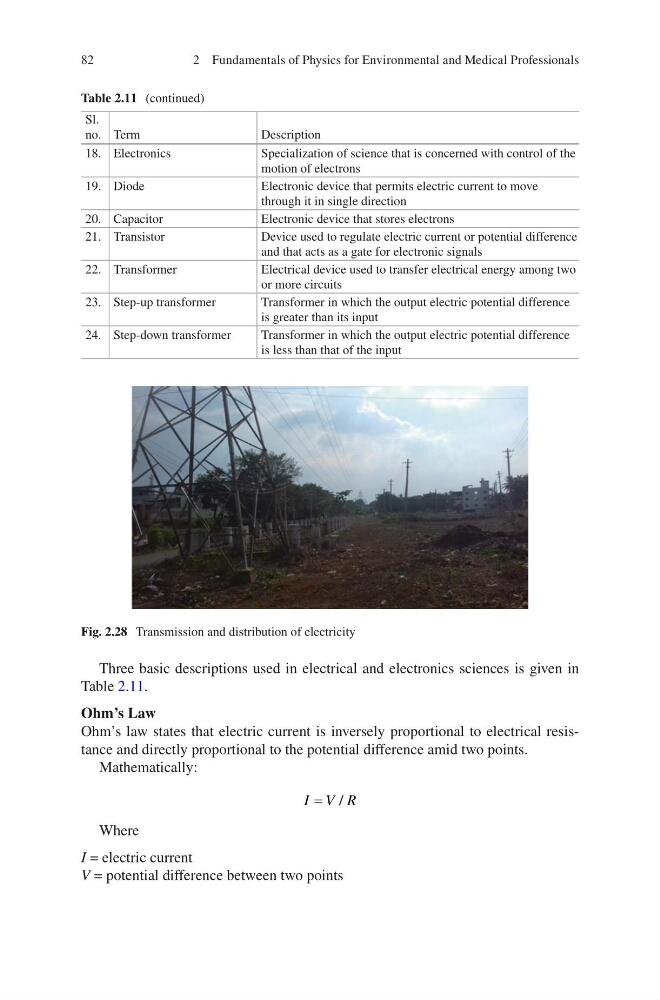
Fig. 2.28 Transmission and distribution of electricity
2 Fundamentals of Physics for Environmental and Medical Professionals
Three basic descriptions used in electrical and electronics sciences is given in
Table 2.11.
Ohm’s Law
Ohm’s law states that electric current is inversely proportional to electrical resistance and directly proportional to the potential difference amid two points.
Mathematically:
I V R
= /
Where
I = electric current
V = potential difference between two points
Table 2.11 (continued)
Sl.
no. Term
Description
18. Electronics
Specialization of science that is concerned with control of the
motion of electrons
19. Diode
Electronic device that permits electric current to move
through it in single direction
20. Capacitor
Electronic device that stores electrons
21. Transistor
Device used to regulate electric current or potential difference
and that acts as a gate for electronic signals
22. Transformer
Electrical device used to transfer electrical energy among two
or more circuits
23. Step-up transformer
Transformer in which the output electric potential difference
is greater than its input
24. Step-down transformer
Transformer in which the output electric potential difference
is less than that of the input
Fig. 2.28 Transmission and distribution of electricity
2 Fundamentals of Physics for Environmental and Medical Professionals