

Corrosion of Metallic Coatings
279
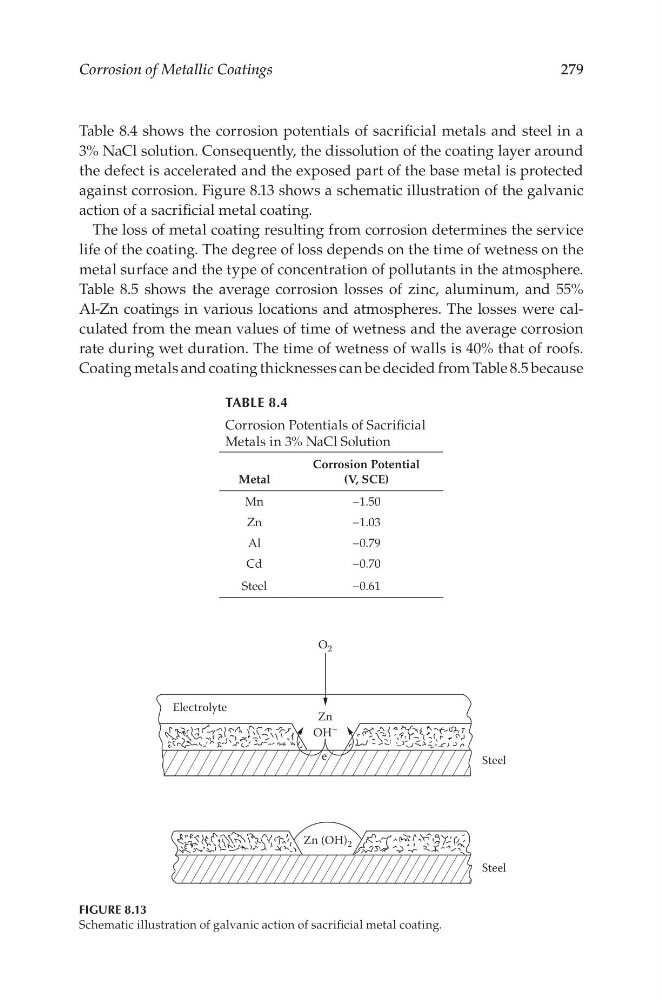
Table 8.4 shows the corrosion potentials of sacrificial metals and steel in a
3% NaCl solution. Consequently, the dissolution of the coating layer around
the defect is accelerated and the exposed part of the base metal is protected
against corrosion. Figure 8.13 shows a schematic illustration of the galvanic
action of a sacrificial metal coating.
The loss of metal coating resulting from corrosion determines the service
life of the coating. The degree of loss depends on the time of wetness on the
metal surface and the type of concentration of pollutants in the atmosphere.
Table 8.5 shows the average corrosion losses of zinc, aluminum, and 55%
Al-Zn coatings in various locations and atmospheres. The losses were calculated from the mean values of time of wetness and the average corrosion
rate during wet duration. The time of wetness of walls is 40% that of roofs.
Coating metals and coating thicknesses can be decided from Table 8.5 because
Steel
Zn (OH) 2
Steel
Electrolyte
e
OH –
Zn
O 2
FigurE 8.13
Schematic illustration of galvanic action of sacrificial metal coating.
TabLE 8.4
Corrosion Potentials of Sacrificial
Metals in 3% NaCl Solution
Metal
Corrosion Potential
(V, SCE)
Mn
−1.50
Zn
−1.03
Al
−0.79
Cd
−0.70
Steel
−0.61
279
Table 8.4 shows the corrosion potentials of sacrificial metals and steel in a
3% NaCl solution. Consequently, the dissolution of the coating layer around
the defect is accelerated and the exposed part of the base metal is protected
against corrosion. Figure 8.13 shows a schematic illustration of the galvanic
action of a sacrificial metal coating.
The loss of metal coating resulting from corrosion determines the service
life of the coating. The degree of loss depends on the time of wetness on the
metal surface and the type of concentration of pollutants in the atmosphere.
Table 8.5 shows the average corrosion losses of zinc, aluminum, and 55%
Al-Zn coatings in various locations and atmospheres. The losses were calculated from the mean values of time of wetness and the average corrosion
rate during wet duration. The time of wetness of walls is 40% that of roofs.
Coating metals and coating thicknesses can be decided from Table 8.5 because
Steel
Zn (OH) 2
Steel
Electrolyte
e
OH –
Zn
O 2
FigurE 8.13
Schematic illustration of galvanic action of sacrificial metal coating.
TabLE 8.4
Corrosion Potentials of Sacrificial
Metals in 3% NaCl Solution
Metal
Corrosion Potential
(V, SCE)
Mn
−1.50
Zn
−1.03
Al
−0.79
Cd
−0.70
Steel
−0.61