

because it is applicable to any area in the world with the help of geographical
information system (GIS) data of the LandScan population grid (ORNL 2016).
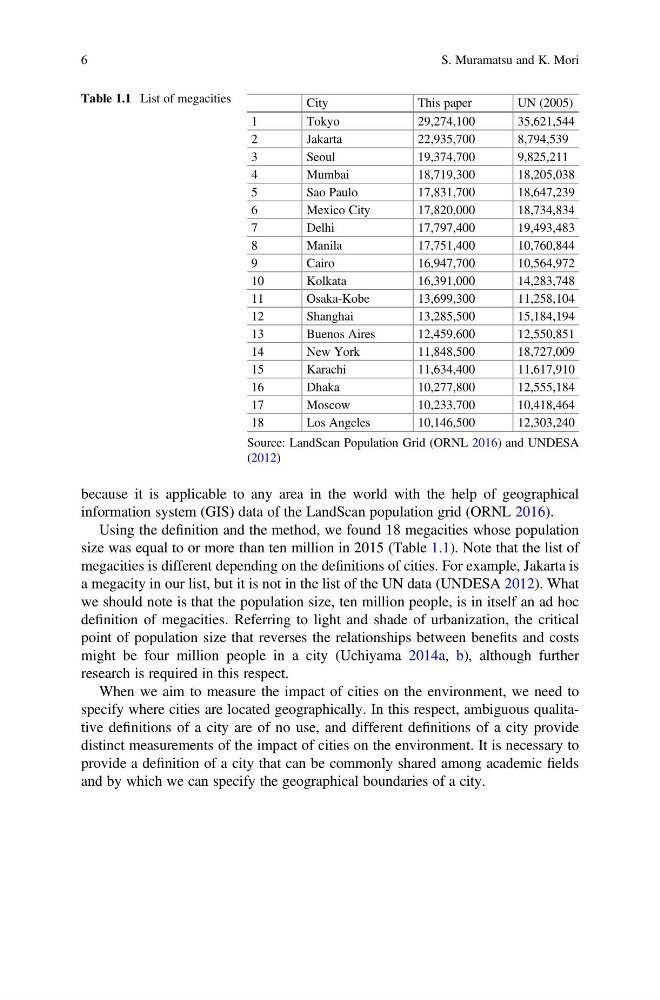
Using the definition and the method, we found 18 megacities whose population
size was equal to or more than ten million in 2015 (Table 1.1). Note that the list of
megacities is different depending on the definitions of cities. For example, Jakarta is
a megacity in our list, but it is not in the list of the UN data (UNDESA 2012). What
we should note is that the population size, ten million people, is in itself an ad hoc
definition of megacities. Referring to light and shade of urbanization, the critical
point of population size that reverses the relationships between benefits and costs
might be four million people in a city (Uchiyama 2014a, b), although further
research is required in this respect.
When we aim to measure the impact of cities on the environment, we need to
specify where cities are located geographically. In this respect, ambiguous qualitative definitions of a city are of no use, and different definitions of a city provide
distinct measurements of the impact of cities on the environment. It is necessary to
provide a definition of a city that can be commonly shared among academic fields
and by which we can specify the geographical boundaries of a city.
Table 1.1 List of megacities
City
This paper
UN (2005)
1
Tokyo
29,274,100
35,621,544
2
Jakarta
22,935,700
8,794,539
3
Seoul
19,374,700
9,825,211
4
Mumbai
18,719,300
18,205,038
5
Sao Paulo
17,831,700
18,647,239
6
Mexico City
17,820,000
18,734,834
7
Delhi
17,797,400
19,493,483
8
Manila
17,751,400
10,760,844
9
Cairo
16,947,700
10,564,972
10
Kolkata
16,391,000
14,283,748
11
Osaka-Kobe
13,699,300
11,258,104
12
Shanghai
13,285,500
15,184,194
13
Buenos Aires
12,459,600
12,550,851
14
New York
11,848,500
18,727,009
15
Karachi
11,634,400
11,617,910
16
Dhaka
10,277,800
12,555,184
17
Moscow
10,233,700
10,418,464
18
Los Angeles
10,146,500
12,303,240
Source: LandScan Population Grid (ORNL 2016) and UNDESA
(2012)
6
S. Muramatsu and K. Mori
information system (GIS) data of the LandScan population grid (ORNL 2016).
Using the definition and the method, we found 18 megacities whose population
size was equal to or more than ten million in 2015 (Table 1.1). Note that the list of
megacities is different depending on the definitions of cities. For example, Jakarta is
a megacity in our list, but it is not in the list of the UN data (UNDESA 2012). What
we should note is that the population size, ten million people, is in itself an ad hoc
definition of megacities. Referring to light and shade of urbanization, the critical
point of population size that reverses the relationships between benefits and costs
might be four million people in a city (Uchiyama 2014a, b), although further
research is required in this respect.
When we aim to measure the impact of cities on the environment, we need to
specify where cities are located geographically. In this respect, ambiguous qualitative definitions of a city are of no use, and different definitions of a city provide
distinct measurements of the impact of cities on the environment. It is necessary to
provide a definition of a city that can be commonly shared among academic fields
and by which we can specify the geographical boundaries of a city.
Table 1.1 List of megacities
City
This paper
UN (2005)
1
Tokyo
29,274,100
35,621,544
2
Jakarta
22,935,700
8,794,539
3
Seoul
19,374,700
9,825,211
4
Mumbai
18,719,300
18,205,038
5
Sao Paulo
17,831,700
18,647,239
6
Mexico City
17,820,000
18,734,834
7
Delhi
17,797,400
19,493,483
8
Manila
17,751,400
10,760,844
9
Cairo
16,947,700
10,564,972
10
Kolkata
16,391,000
14,283,748
11
Osaka-Kobe
13,699,300
11,258,104
12
Shanghai
13,285,500
15,184,194
13
Buenos Aires
12,459,600
12,550,851
14
New York
11,848,500
18,727,009
15
Karachi
11,634,400
11,617,910
16
Dhaka
10,277,800
12,555,184
17
Moscow
10,233,700
10,418,464
18
Los Angeles
10,146,500
12,303,240
Source: LandScan Population Grid (ORNL 2016) and UNDESA
(2012)
6
S. Muramatsu and K. Mori