

10.9% were 25–29, 9.9% were 30–34, 12.6% were 35–39, 10.8% were 40–44, 9.8%
were 45–49, 11.5% were 50–54, 7.4% were 55–59, and 21.3% were 60 or older. The
sample has a gender balance of 49.8% male respondents and 50.2% female
respondents.
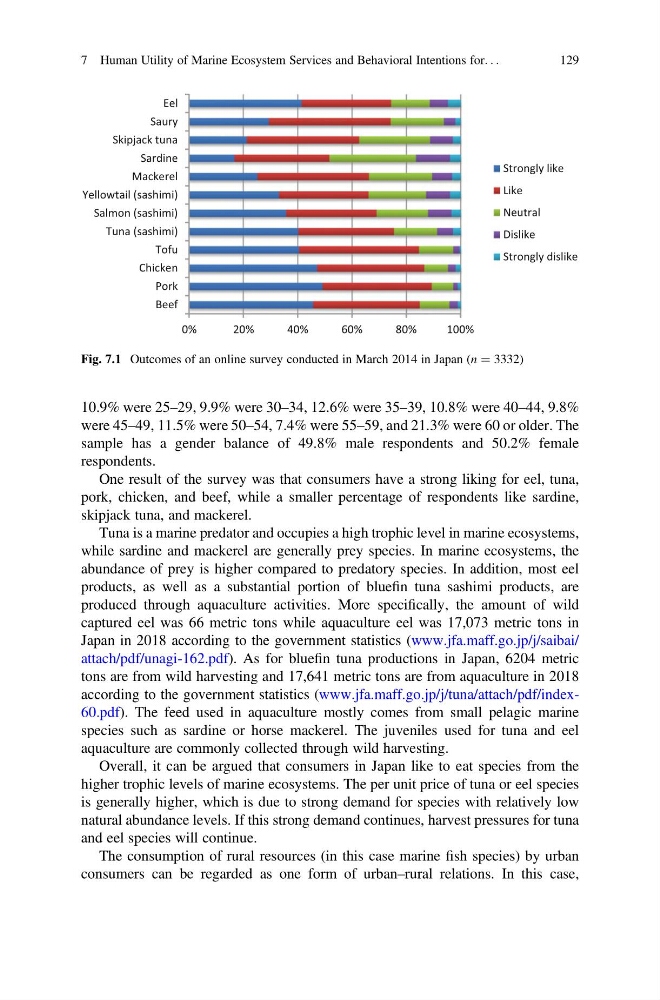
One result of the survey was that consumers have a strong liking for eel, tuna,
pork, chicken, and beef, while a smaller percentage of respondents like sardine,
skipjack tuna, and mackerel.
Tuna is a marine predator and occupies a high trophic level in marine ecosystems,
while sardine and mackerel are generally prey species. In marine ecosystems, the
abundance of prey is higher compared to predatory species. In addition, most eel
products, as well as a substantial portion of bluefin tuna sashimi products, are
produced through aquaculture activities. More specifically, the amount of wild
captured eel was 66 metric tons while aquaculture eel was 17,073 metric tons in
Japan in 2018 according to the government statistics (www.jfa.maff.go.jp/j/saibai/
attach/pdf/unagi-162.pdf). As for bluefin tuna productions in Japan, 6204 metric
tons are from wild harvesting and 17,641 metric tons are from aquaculture in 2018
according to the government statistics (www.jfa.maff.go.jp/j/tuna/attach/pdf/index60.pdf). The feed used in aquaculture mostly comes from small pelagic marine
species such as sardine or horse mackerel. The juveniles used for tuna and eel
aquaculture are commonly collected through wild harvesting.
Overall, it can be argued that consumers in Japan like to eat species from the
higher trophic levels of marine ecosystems. The per unit price of tuna or eel species
is generally higher, which is due to strong demand for species with relatively low
natural abundance levels. If this strong demand continues, harvest pressures for tuna
and eel species will continue.
The consumption of rural resources (in this case marine fish species) by urban
consumers can be regarded as one form of urban–rural relations. In this case,
0%
20%
40%
60%
80%
100%
Beef
Pork
Chicken
Tofu
Tuna (sashimi)
Salmon (sashimi)
Yellowtail (sashimi)
Mackerel
Sardine
Skipjack tuna
Saury
Eel
Strongly like
Like
Neutral
Dislike
Strongly dislike
Fig. 7.1 Outcomes of an online survey conducted in March 2014 in Japan (n ¼ 3332)
7 Human Utility of Marine Ecosystem Services and Behavioral Intentions for. . .
129
were 45–49, 11.5% were 50–54, 7.4% were 55–59, and 21.3% were 60 or older. The
sample has a gender balance of 49.8% male respondents and 50.2% female
respondents.
One result of the survey was that consumers have a strong liking for eel, tuna,
pork, chicken, and beef, while a smaller percentage of respondents like sardine,
skipjack tuna, and mackerel.
Tuna is a marine predator and occupies a high trophic level in marine ecosystems,
while sardine and mackerel are generally prey species. In marine ecosystems, the
abundance of prey is higher compared to predatory species. In addition, most eel
products, as well as a substantial portion of bluefin tuna sashimi products, are
produced through aquaculture activities. More specifically, the amount of wild
captured eel was 66 metric tons while aquaculture eel was 17,073 metric tons in
Japan in 2018 according to the government statistics (www.jfa.maff.go.jp/j/saibai/
attach/pdf/unagi-162.pdf). As for bluefin tuna productions in Japan, 6204 metric
tons are from wild harvesting and 17,641 metric tons are from aquaculture in 2018
according to the government statistics (www.jfa.maff.go.jp/j/tuna/attach/pdf/index60.pdf). The feed used in aquaculture mostly comes from small pelagic marine
species such as sardine or horse mackerel. The juveniles used for tuna and eel
aquaculture are commonly collected through wild harvesting.
Overall, it can be argued that consumers in Japan like to eat species from the
higher trophic levels of marine ecosystems. The per unit price of tuna or eel species
is generally higher, which is due to strong demand for species with relatively low
natural abundance levels. If this strong demand continues, harvest pressures for tuna
and eel species will continue.
The consumption of rural resources (in this case marine fish species) by urban
consumers can be regarded as one form of urban–rural relations. In this case,
0%
20%
40%
60%
80%
100%
Beef
Pork
Chicken
Tofu
Tuna (sashimi)
Salmon (sashimi)
Yellowtail (sashimi)
Mackerel
Sardine
Skipjack tuna
Saury
Eel
Strongly like
Like
Neutral
Dislike
Strongly dislike
Fig. 7.1 Outcomes of an online survey conducted in March 2014 in Japan (n ¼ 3332)
7 Human Utility of Marine Ecosystem Services and Behavioral Intentions for. . .
129