

environments are things that change over long term. For that reason, based on the
analysis results in this chapter, a city’s ecological environment is expected to have
continually provided a certain influence in the course of its long history. If we were
to choose a single ideal urban image without referring back to those specific
histories, the burden needed to have each city approximate that image would vary
greatly.
The sustainable management of a megacity will require searching for an optimal
process for achieving a diverse set of policy targets while at the same time undertaking a careful examination of the ecological environment where the particular city
is located, taking into consideration the direction that an urban morphology can
efficiently alter (path dependency). Consideration ought to be given to “the environment as input,” which changes gradually like the ecological environment and not
just to short-term urban policies governing social and economic factors.
These elements, however, are not just things to be taken from the ecological
environment but also include a substratum culture that has been cultivated through a
city’s historical mutual interaction with its ecological environment. It is possible to
envision regional ecospheres as cohered unions of ecological environment and
human culture based on this type of research. This research did not deal with any
elements relating to substratum culture; so, gaining an understanding of the association between those elements and a city at the same time as its ecological environment will be a topic for the future research. Advancing this field of research will
contribute to the concept of sustainable megacities that are dependent on their
regional ecospheres.
Appendix
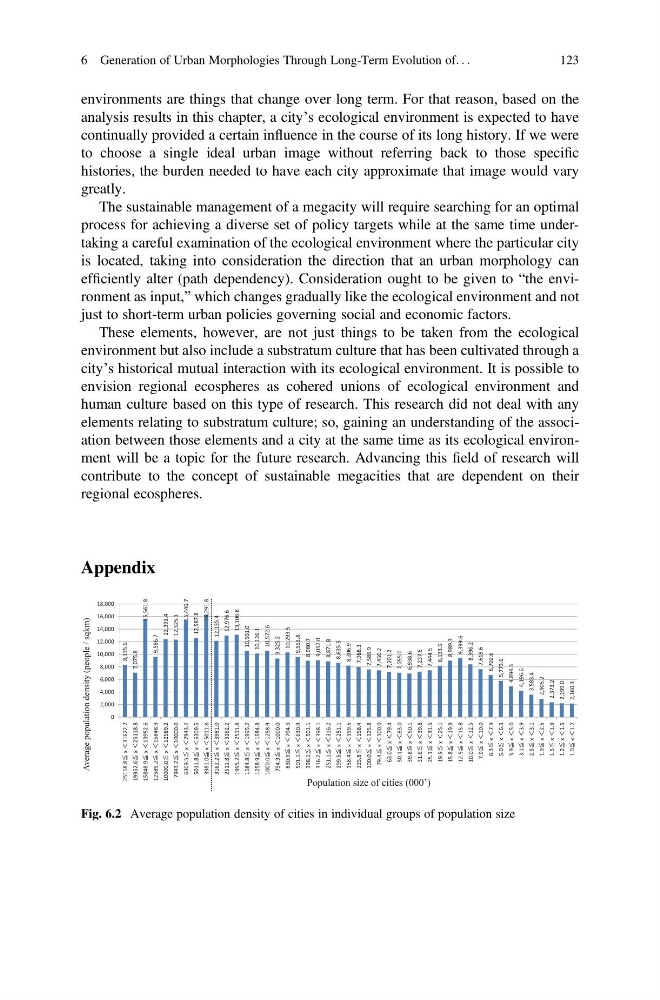
Fig. 6.2 Average population density of cities in individual groups of population size
6 Generation of Urban Morphologies Through Long-Term Evolution of. . .
123
analysis results in this chapter, a city’s ecological environment is expected to have
continually provided a certain influence in the course of its long history. If we were
to choose a single ideal urban image without referring back to those specific
histories, the burden needed to have each city approximate that image would vary
greatly.
The sustainable management of a megacity will require searching for an optimal
process for achieving a diverse set of policy targets while at the same time undertaking a careful examination of the ecological environment where the particular city
is located, taking into consideration the direction that an urban morphology can
efficiently alter (path dependency). Consideration ought to be given to “the environment as input,” which changes gradually like the ecological environment and not
just to short-term urban policies governing social and economic factors.
These elements, however, are not just things to be taken from the ecological
environment but also include a substratum culture that has been cultivated through a
city’s historical mutual interaction with its ecological environment. It is possible to
envision regional ecospheres as cohered unions of ecological environment and
human culture based on this type of research. This research did not deal with any
elements relating to substratum culture; so, gaining an understanding of the association between those elements and a city at the same time as its ecological environment will be a topic for the future research. Advancing this field of research will
contribute to the concept of sustainable megacities that are dependent on their
regional ecospheres.
Appendix
Fig. 6.2 Average population density of cities in individual groups of population size
6 Generation of Urban Morphologies Through Long-Term Evolution of. . .
123