

4 Japanese Implementation of the United Nations Convention …
67
Continental shelf
Baseline
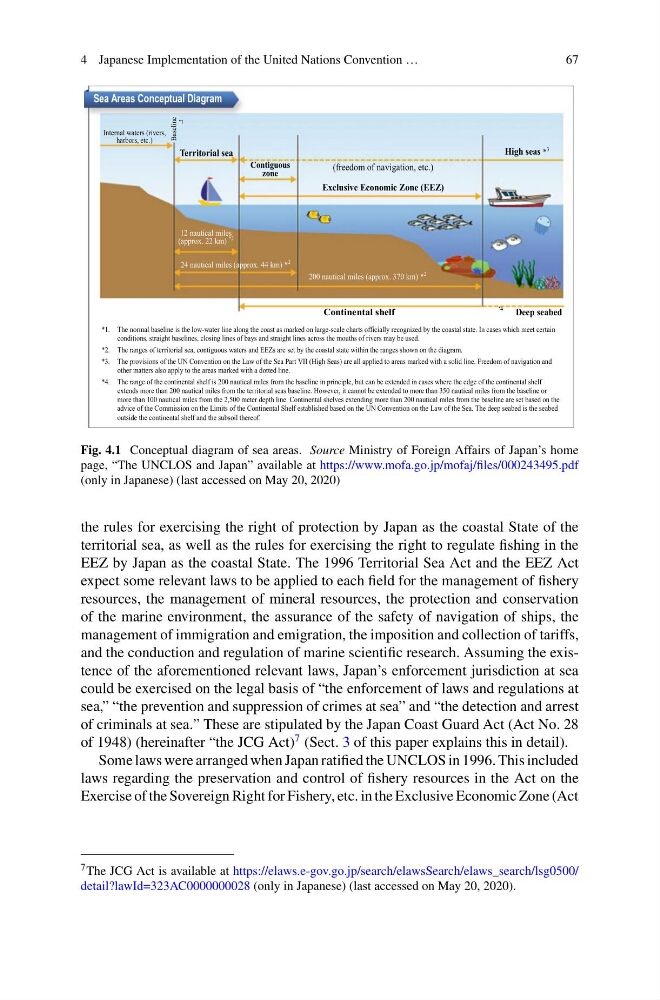
Fig. 4.1 Conceptual diagram of sea areas. Source Ministry of Foreign Affairs of Japan’s home
page, “The UNCLOS and Japan” available at https://www.mofa.go.jp/mofaj/files/000243495.pdf
(only in Japanese) (last accessed on May 20, 2020)
the rules for exercising the right of protection by Japan as the coastal State of the
territorial sea, as well as the rules for exercising the right to regulate fishing in the
EEZ by Japan as the coastal State. The 1996 Territorial Sea Act and the EEZ Act
expect some relevant laws to be applied to each field for the management of fishery
resources, the management of mineral resources, the protection and conservation
of the marine environment, the assurance of the safety of navigation of ships, the
management of immigration and emigration, the imposition and collection of tariffs,
and the conduction and regulation of marine scientific research. Assuming the existence of the aforementioned relevant laws, Japan’s enforcement jurisdiction at sea
could be exercised on the legal basis of “the enforcement of laws and regulations at
sea,” “the prevention and suppression of crimes at sea” and “the detection and arrest
of criminals at sea.” These are stipulated by the Japan Coast Guard Act (Act No. 28
of 1948) (hereinafter “the JCG Act)
7 (Sect. 3 of this paper explains this in detail).
Some laws were arranged when Japan ratified the UNCLOS in 1996. This included
laws regarding the preservation and control of fishery resources in the Act on the
Exercise of the Sovereign Right for Fishery, etc. in the Exclusive Economic Zone (Act
7 The JCG Act is available at https://elaws.e-gov.go.jp/search/elawsSearch/elaws_search/lsg0500/
detail?lawId=323AC0000000028 (only in Japanese) (last accessed on May 20, 2020).
67
Continental shelf
Baseline
Fig. 4.1 Conceptual diagram of sea areas. Source Ministry of Foreign Affairs of Japan’s home
page, “The UNCLOS and Japan” available at https://www.mofa.go.jp/mofaj/files/000243495.pdf
(only in Japanese) (last accessed on May 20, 2020)
the rules for exercising the right of protection by Japan as the coastal State of the
territorial sea, as well as the rules for exercising the right to regulate fishing in the
EEZ by Japan as the coastal State. The 1996 Territorial Sea Act and the EEZ Act
expect some relevant laws to be applied to each field for the management of fishery
resources, the management of mineral resources, the protection and conservation
of the marine environment, the assurance of the safety of navigation of ships, the
management of immigration and emigration, the imposition and collection of tariffs,
and the conduction and regulation of marine scientific research. Assuming the existence of the aforementioned relevant laws, Japan’s enforcement jurisdiction at sea
could be exercised on the legal basis of “the enforcement of laws and regulations at
sea,” “the prevention and suppression of crimes at sea” and “the detection and arrest
of criminals at sea.” These are stipulated by the Japan Coast Guard Act (Act No. 28
of 1948) (hereinafter “the JCG Act)
7 (Sect. 3 of this paper explains this in detail).
Some laws were arranged when Japan ratified the UNCLOS in 1996. This included
laws regarding the preservation and control of fishery resources in the Act on the
Exercise of the Sovereign Right for Fishery, etc. in the Exclusive Economic Zone (Act
7 The JCG Act is available at https://elaws.e-gov.go.jp/search/elawsSearch/elaws_search/lsg0500/
detail?lawId=323AC0000000028 (only in Japanese) (last accessed on May 20, 2020).