

49
Year Celebrations and then rise again in February when factories start production up
again. In 2020 the levels did not rebound (Fig. 3.7).
3.4.2 Atmospheric Ozone
The atmosphere wraps the earth, and its currents are in constant motion, protecting
all life from the vacuum of space and from multiple forms of radiation. It dampens
the extreme temperature fluctuations between day and night. Temperatures on our
own airless moon can swing more than 500 degrees Fahrenheit from a freezing
night of minus 250 degrees to a boiling 250 degrees plus during the day.
The different layers of our atmosphere provide different kinds of utility and protection to the biosphere. Winds blow in three-dimensional currents reaching 10 miles
above the earth’s surface. Most weather activity occurs within the lower two-thirds
of that region called the troposphere. Above that height is the next layer of the atmosphere called the stratosphere where the thin dry air is relatively still but stratospheric clouds occasionally form. For the next 10 or so miles up, oxygen gas
molecules (O 2 ) are hit by ultraviolet radiation, breaking the bonds between the two
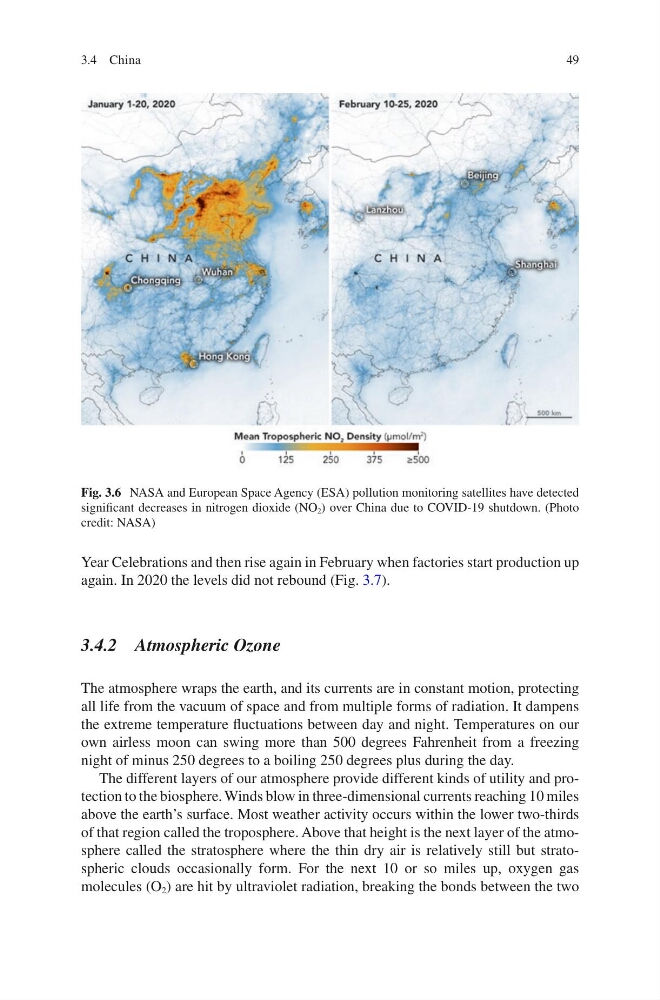
Fig. 3.6 NASA and European Space Agency (ESA) pollution monitoring satellites have detected
significant decreases in nitrogen dioxide (NO 2 ) over China due to COVID-19 shutdown. (Photo
credit: NASA)
3.4 China
Year Celebrations and then rise again in February when factories start production up
again. In 2020 the levels did not rebound (Fig. 3.7).
3.4.2 Atmospheric Ozone
The atmosphere wraps the earth, and its currents are in constant motion, protecting
all life from the vacuum of space and from multiple forms of radiation. It dampens
the extreme temperature fluctuations between day and night. Temperatures on our
own airless moon can swing more than 500 degrees Fahrenheit from a freezing
night of minus 250 degrees to a boiling 250 degrees plus during the day.
The different layers of our atmosphere provide different kinds of utility and protection to the biosphere. Winds blow in three-dimensional currents reaching 10 miles
above the earth’s surface. Most weather activity occurs within the lower two-thirds
of that region called the troposphere. Above that height is the next layer of the atmosphere called the stratosphere where the thin dry air is relatively still but stratospheric clouds occasionally form. For the next 10 or so miles up, oxygen gas
molecules (O 2 ) are hit by ultraviolet radiation, breaking the bonds between the two
Fig. 3.6 NASA and European Space Agency (ESA) pollution monitoring satellites have detected
significant decreases in nitrogen dioxide (NO 2 ) over China due to COVID-19 shutdown. (Photo
credit: NASA)
3.4 China