

5.1 Representing Scenarios
73
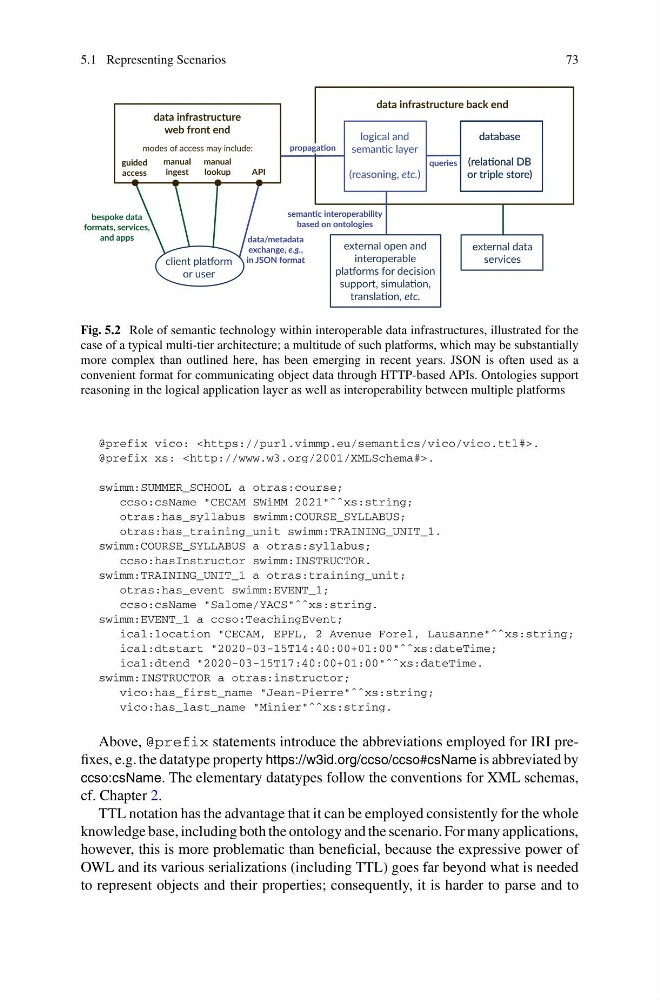
Fig. 5.2 Role of semantic technology within interoperable data infrastructures, illustrated for the
case of a typical multi-tier architecture; a multitude of such platforms, which may be substantially
more complex than outlined here, has been emerging in recent years. JSON is often used as a
convenient format for communicating object data through HTTP-based APIs. Ontologies support
reasoning in the logical application layer as well as interoperability between multiple platforms
@prefix vico:.
@prefix xs:.
swimm:SUMMER_SCHOOL a otras:course;
ccso:csName "CECAM SWiMM 2021"ˆˆxs:string;
otras:has_syllabus swimm:COURSE_SYLLABUS;
otras:has_training_unit swimm:TRAINING_UNIT_1.
swimm:COURSE_SYLLABUS a otras:syllabus;
ccso:hasInstructor swimm:INSTRUCTOR.
swimm:TRAINING_UNIT_1 a otras:training_unit;
otras:has_event swimm:EVENT_1;
ccso:csName "Salome/YACS"ˆˆxs:string.
swimm:EVENT_1 a ccso:TeachingEvent;
ical:location "CECAM, EPFL, 2 Avenue Forel, Lausanne"ˆˆxs:string;
ical:dtstart "2020-03-15T14:40:00+01:00"ˆˆxs:dateTime;
ical:dtend "2020-03-15T17:40:00+01:00"ˆˆxs:dateTime.
swimm:INSTRUCTOR a otras:instructor;
vico:has_first_name "Jean-Pierre"ˆˆxs:string;
vico:has_last_name "Minier"ˆˆxs:string.
Above, @prefix statements introduce the abbreviations employed for IRI prefixes, e.g. the datatype property https://w3id.org/ccso/ccso#csName is abbreviated by
ccso:csName. The elementary datatypes follow the conventions for XML schemas,
cf. Chapter 2.
TTL notation has the advantage that it can be employed consistently for the whole
knowledge base, including both the ontology and the scenario. For many applications,
however, this is more problematic than beneficial, because the expressive power of
OWL and its various serializations (including TTL) goes far beyond what is needed
to represent objects and their properties; consequently, it is harder to parse and to
73
Fig. 5.2 Role of semantic technology within interoperable data infrastructures, illustrated for the
case of a typical multi-tier architecture; a multitude of such platforms, which may be substantially
more complex than outlined here, has been emerging in recent years. JSON is often used as a
convenient format for communicating object data through HTTP-based APIs. Ontologies support
reasoning in the logical application layer as well as interoperability between multiple platforms
@prefix vico:
@prefix xs:
swimm:SUMMER_SCHOOL a otras:course;
ccso:csName "CECAM SWiMM 2021"ˆˆxs:string;
otras:has_syllabus swimm:COURSE_SYLLABUS;
otras:has_training_unit swimm:TRAINING_UNIT_1.
swimm:COURSE_SYLLABUS a otras:syllabus;
ccso:hasInstructor swimm:INSTRUCTOR.
swimm:TRAINING_UNIT_1 a otras:training_unit;
otras:has_event swimm:EVENT_1;
ccso:csName "Salome/YACS"ˆˆxs:string.
swimm:EVENT_1 a ccso:TeachingEvent;
ical:location "CECAM, EPFL, 2 Avenue Forel, Lausanne"ˆˆxs:string;
ical:dtstart "2020-03-15T14:40:00+01:00"ˆˆxs:dateTime;
ical:dtend "2020-03-15T17:40:00+01:00"ˆˆxs:dateTime.
swimm:INSTRUCTOR a otras:instructor;
vico:has_first_name "Jean-Pierre"ˆˆxs:string;
vico:has_last_name "Minier"ˆˆxs:string.
Above, @prefix statements introduce the abbreviations employed for IRI prefixes, e.g. the datatype property https://w3id.org/ccso/ccso#csName is abbreviated by
ccso:csName. The elementary datatypes follow the conventions for XML schemas,
cf. Chapter 2.
TTL notation has the advantage that it can be employed consistently for the whole
knowledge base, including both the ontology and the scenario. For many applications,
however, this is more problematic than beneficial, because the expressive power of
OWL and its various serializations (including TTL) goes far beyond what is needed
to represent objects and their properties; consequently, it is harder to parse and to