

1.3 Semantic Assets and Metadata Categories
7
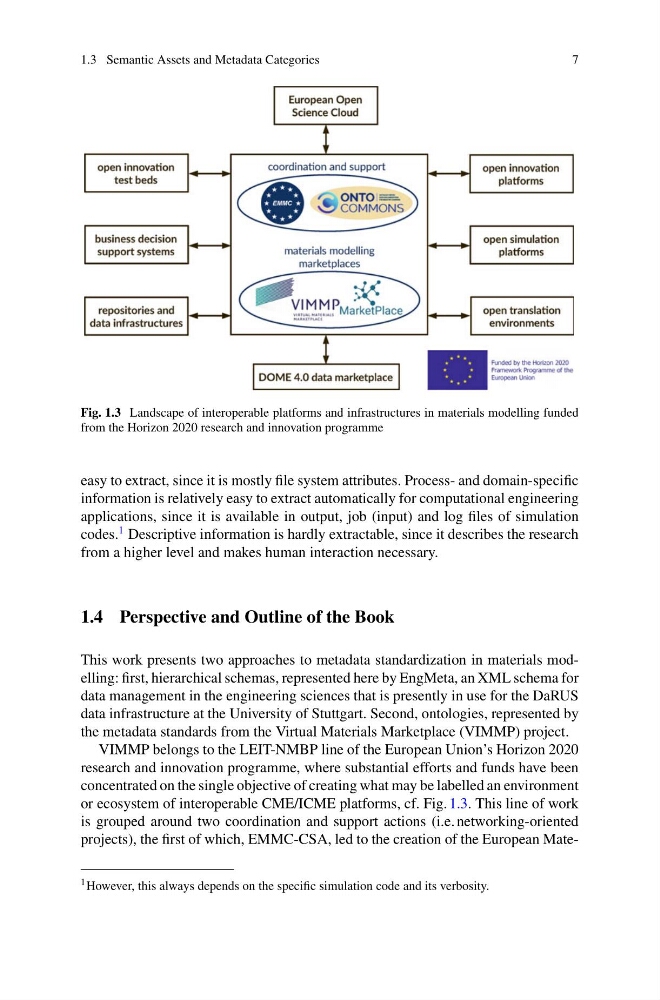
Fig. 1.3 Landscape of interoperable platforms and infrastructures in materials modelling funded
from the Horizon 2020 research and innovation programme
easy to extract, since it is mostly file system attributes. Process- and domain-specific
information is relatively easy to extract automatically for computational engineering
applications, since it is available in output, job (input) and log files of simulation
codes.
1 Descriptive information is hardly extractable, since it describes the research
from a higher level and makes human interaction necessary.
1.4 Perspective and Outline of the Book
This work presents two approaches to metadata standardization in materials modelling: first, hierarchical schemas, represented here by EngMeta, an XML schema for
data management in the engineering sciences that is presently in use for the DaRUS
data infrastructure at the University of Stuttgart. Second, ontologies, represented by
the metadata standards from the Virtual Materials Marketplace (VIMMP) project.
VIMMP belongs to the LEIT-NMBP line of the European Union’s Horizon 2020
research and innovation programme, where substantial efforts and funds have been
concentrated on the single objective of creating what may be labelled an environment
or ecosystem of interoperable CME/ICME platforms, cf. Fig. 1.3. This line of work
is grouped around two coordination and support actions (i.e. networking-oriented
projects), the first of which, EMMC-CSA, led to the creation of the European Mate1 However, this always depends on the specific simulation code and its verbosity.
7
Fig. 1.3 Landscape of interoperable platforms and infrastructures in materials modelling funded
from the Horizon 2020 research and innovation programme
easy to extract, since it is mostly file system attributes. Process- and domain-specific
information is relatively easy to extract automatically for computational engineering
applications, since it is available in output, job (input) and log files of simulation
codes.
1 Descriptive information is hardly extractable, since it describes the research
from a higher level and makes human interaction necessary.
1.4 Perspective and Outline of the Book
This work presents two approaches to metadata standardization in materials modelling: first, hierarchical schemas, represented here by EngMeta, an XML schema for
data management in the engineering sciences that is presently in use for the DaRUS
data infrastructure at the University of Stuttgart. Second, ontologies, represented by
the metadata standards from the Virtual Materials Marketplace (VIMMP) project.
VIMMP belongs to the LEIT-NMBP line of the European Union’s Horizon 2020
research and innovation programme, where substantial efforts and funds have been
concentrated on the single objective of creating what may be labelled an environment
or ecosystem of interoperable CME/ICME platforms, cf. Fig. 1.3. This line of work
is grouped around two coordination and support actions (i.e. networking-oriented
projects), the first of which, EMMC-CSA, led to the creation of the European Mate1 However, this always depends on the specific simulation code and its verbosity.