

30
G. Benckiser
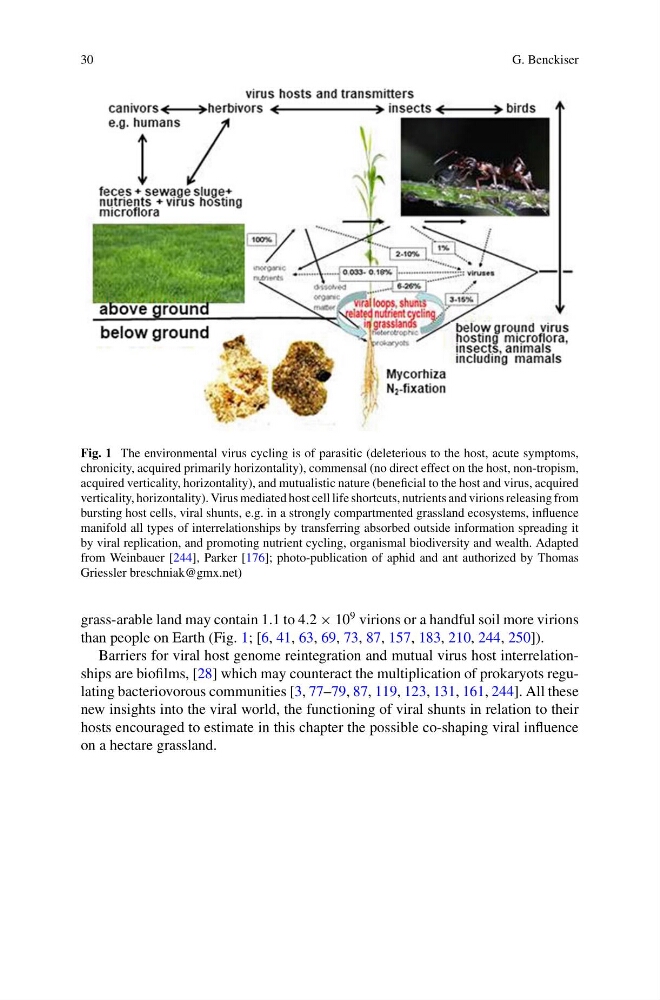
Fig. 1 The environmental virus cycling is of parasitic (deleterious to the host, acute symptoms,
chronicity, acquired primarily horizontality), commensal (no direct effect on the host, non-tropism,
acquired verticality, horizontality), and mutualistic nature (beneficial to the host and virus, acquired
verticality, horizontality). Virus mediated host cell life shortcuts, nutrients and virions releasing from
bursting host cells, viral shunts, e.g. in a strongly compartmented grassland ecosystems, influence
manifold all types of interrelationships by transferring absorbed outside information spreading it
by viral replication, and promoting nutrient cycling, organismal biodiversity and wealth. Adapted
from Weinbauer [244], Parker [176]; photo-publication of aphid and ant authorized by Thomas
Griessler breschniak@gmx.net)
grass-arable land may contain 1.1 to 4.2 × 10
9 virions or a handful soil more virions
than people on Earth (Fig. 1; [6, 41, 63, 69, 73, 87, 157, 183, 210, 244, 250]).
Barriers for viral host genome reintegration and mutual virus host interrelationships are biofilms, [28] which may counteract the multiplication of prokaryots regulating bacteriovorous communities [3, 77–79, 87, 119, 123, 131, 161, 244]. All these
new insights into the viral world, the functioning of viral shunts in relation to their
hosts encouraged to estimate in this chapter the possible co-shaping viral influence
on a hectare grassland.
G. Benckiser
Fig. 1 The environmental virus cycling is of parasitic (deleterious to the host, acute symptoms,
chronicity, acquired primarily horizontality), commensal (no direct effect on the host, non-tropism,
acquired verticality, horizontality), and mutualistic nature (beneficial to the host and virus, acquired
verticality, horizontality). Virus mediated host cell life shortcuts, nutrients and virions releasing from
bursting host cells, viral shunts, e.g. in a strongly compartmented grassland ecosystems, influence
manifold all types of interrelationships by transferring absorbed outside information spreading it
by viral replication, and promoting nutrient cycling, organismal biodiversity and wealth. Adapted
from Weinbauer [244], Parker [176]; photo-publication of aphid and ant authorized by Thomas
Griessler breschniak@gmx.net)
grass-arable land may contain 1.1 to 4.2 × 10
9 virions or a handful soil more virions
than people on Earth (Fig. 1; [6, 41, 63, 69, 73, 87, 157, 183, 210, 244, 250]).
Barriers for viral host genome reintegration and mutual virus host interrelationships are biofilms, [28] which may counteract the multiplication of prokaryots regulating bacteriovorous communities [3, 77–79, 87, 119, 123, 131, 161, 244]. All these
new insights into the viral world, the functioning of viral shunts in relation to their
hosts encouraged to estimate in this chapter the possible co-shaping viral influence
on a hectare grassland.