

Plant Demand Adapted Fertilization in Organic and Precision …
143
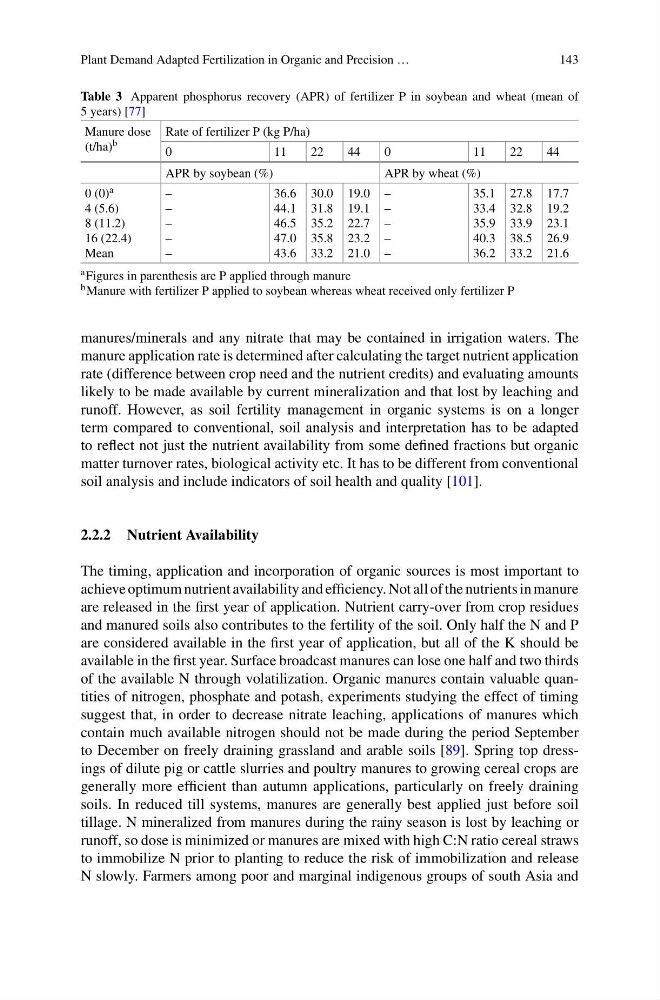
Table 3 Apparent phosphorus recovery (APR) of fertilizer P in soybean and wheat (mean of
5 years) [77]
Manure dose
(t/ha) b
Rate of fertilizer P (kg P/ha)
0
11
22
44
0
11
22
44
APR by soybean (%)
APR by wheat (%)
0 (0) a
4 (5.6)
8 (11.2)
16 (22.4)
Mean
–
–
–
–
–
36.6
44.1
46.5
47.0
43.6
30.0
31.8
35.2
35.8
33.2
19.0
19.1
22.7
23.2
21.0
–
–
–
–
–
35.1
33.4
35.9
40.3
36.2
27.8
32.8
33.9
38.5
33.2
17.7
19.2
23.1
26.9
21.6
a Figures in parenthesis are P applied through manure
b Manure with fertilizer P applied to soybean whereas wheat received only fertilizer P
manures/minerals and any nitrate that may be contained in irrigation waters. The
manure application rate is determined after calculating the target nutrient application
rate (difference between crop need and the nutrient credits) and evaluating amounts
likely to be made available by current mineralization and that lost by leaching and
runoff. However, as soil fertility management in organic systems is on a longer
term compared to conventional, soil analysis and interpretation has to be adapted
to reflect not just the nutrient availability from some defined fractions but organic
matter turnover rates, biological activity etc. It has to be different from conventional
soil analysis and include indicators of soil health and quality [101].
2.2.2 Nutrient Availability
The timing, application and incorporation of organic sources is most important to
achieve optimum nutrient availability and efficiency. Not all of the nutrients in manure
are released in the first year of application. Nutrient carry-over from crop residues
and manured soils also contributes to the fertility of the soil. Only half the N and P
are considered available in the first year of application, but all of the K should be
available in the first year. Surface broadcast manures can lose one half and two thirds
of the available N through volatilization. Organic manures contain valuable quantities of nitrogen, phosphate and potash, experiments studying the effect of timing
suggest that, in order to decrease nitrate leaching, applications of manures which
contain much available nitrogen should not be made during the period September
to December on freely draining grassland and arable soils [89]. Spring top dressings of dilute pig or cattle slurries and poultry manures to growing cereal crops are
generally more efficient than autumn applications, particularly on freely draining
soils. In reduced till systems, manures are generally best applied just before soil
tillage. N mineralized from manures during the rainy season is lost by leaching or
runoff, so dose is minimized or manures are mixed with high C:N ratio cereal straws
to immobilize N prior to planting to reduce the risk of immobilization and release
N slowly. Farmers among poor and marginal indigenous groups of south Asia and
143
Table 3 Apparent phosphorus recovery (APR) of fertilizer P in soybean and wheat (mean of
5 years) [77]
Manure dose
(t/ha) b
Rate of fertilizer P (kg P/ha)
0
11
22
44
0
11
22
44
APR by soybean (%)
APR by wheat (%)
0 (0) a
4 (5.6)
8 (11.2)
16 (22.4)
Mean
–
–
–
–
–
36.6
44.1
46.5
47.0
43.6
30.0
31.8
35.2
35.8
33.2
19.0
19.1
22.7
23.2
21.0
–
–
–
–
–
35.1
33.4
35.9
40.3
36.2
27.8
32.8
33.9
38.5
33.2
17.7
19.2
23.1
26.9
21.6
a Figures in parenthesis are P applied through manure
b Manure with fertilizer P applied to soybean whereas wheat received only fertilizer P
manures/minerals and any nitrate that may be contained in irrigation waters. The
manure application rate is determined after calculating the target nutrient application
rate (difference between crop need and the nutrient credits) and evaluating amounts
likely to be made available by current mineralization and that lost by leaching and
runoff. However, as soil fertility management in organic systems is on a longer
term compared to conventional, soil analysis and interpretation has to be adapted
to reflect not just the nutrient availability from some defined fractions but organic
matter turnover rates, biological activity etc. It has to be different from conventional
soil analysis and include indicators of soil health and quality [101].
2.2.2 Nutrient Availability
The timing, application and incorporation of organic sources is most important to
achieve optimum nutrient availability and efficiency. Not all of the nutrients in manure
are released in the first year of application. Nutrient carry-over from crop residues
and manured soils also contributes to the fertility of the soil. Only half the N and P
are considered available in the first year of application, but all of the K should be
available in the first year. Surface broadcast manures can lose one half and two thirds
of the available N through volatilization. Organic manures contain valuable quantities of nitrogen, phosphate and potash, experiments studying the effect of timing
suggest that, in order to decrease nitrate leaching, applications of manures which
contain much available nitrogen should not be made during the period September
to December on freely draining grassland and arable soils [89]. Spring top dressings of dilute pig or cattle slurries and poultry manures to growing cereal crops are
generally more efficient than autumn applications, particularly on freely draining
soils. In reduced till systems, manures are generally best applied just before soil
tillage. N mineralized from manures during the rainy season is lost by leaching or
runoff, so dose is minimized or manures are mixed with high C:N ratio cereal straws
to immobilize N prior to planting to reduce the risk of immobilization and release
N slowly. Farmers among poor and marginal indigenous groups of south Asia and