

140
D. L. N. Rao et al.
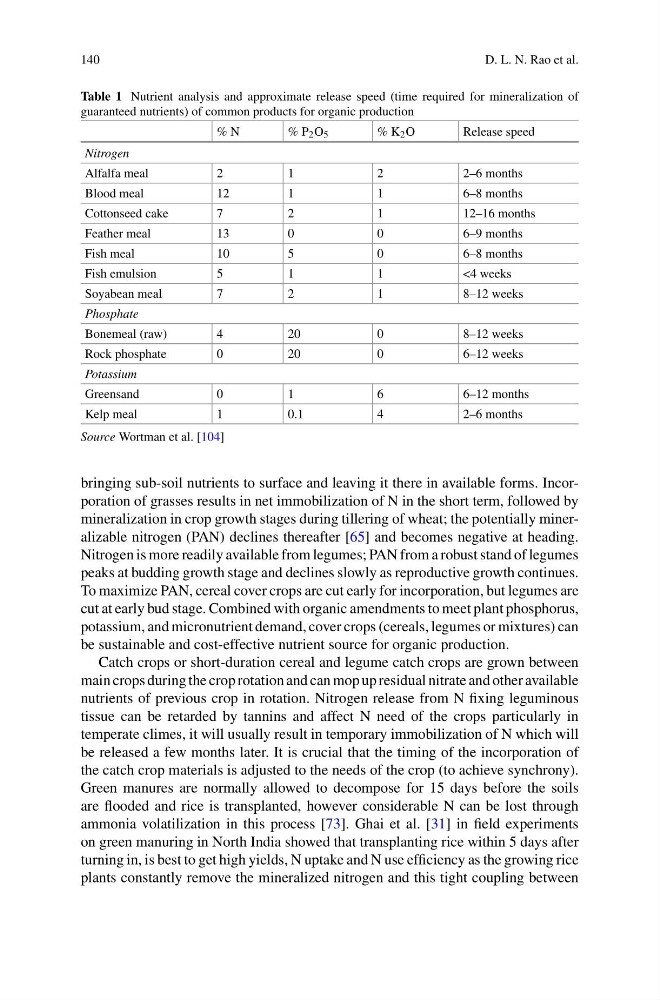
Table 1 Nutrient analysis and approximate release speed (time required for mineralization of
guaranteed nutrients) of common products for organic production
% N
% P 2 O 5
% K 2 O
Release speed
Nitrogen
Alfalfa meal
2
1
2
2–6 months
Blood meal
12
1
1
6–8 months
Cottonseed cake
7
2
1
12–16 months
Feather meal
13
0
0
6–9 months
Fish meal
10
5
0
6–8 months
Fish emulsion
5
1
1
<4 weeks
Soyabean meal
7
2
1
8–12 weeks
Phosphate
Bonemeal (raw)
4
20
0
8–12 weeks
Rock phosphate
0
20
0
6–12 weeks
Potassium
Greensand
0
1
6
6–12 months
Kelp meal
1
0.1
4
2–6 months
Source Wortman et al. [104]
bringing sub-soil nutrients to surface and leaving it there in available forms. Incorporation of grasses results in net immobilization of N in the short term, followed by
mineralization in crop growth stages during tillering of wheat; the potentially mineralizable nitrogen (PAN) declines thereafter [65] and becomes negative at heading.
Nitrogen is more readily available from legumes; PAN from a robust stand of legumes
peaks at budding growth stage and declines slowly as reproductive growth continues.
To maximize PAN, cereal cover crops are cut early for incorporation, but legumes are
cut at early bud stage. Combined with organic amendments to meet plant phosphorus,
potassium, and micronutrient demand, cover crops (cereals, legumes or mixtures) can
be sustainable and cost-effective nutrient source for organic production.
Catch crops or short-duration cereal and legume catch crops are grown between
main crops during the crop rotation and can mop up residual nitrate and other available
nutrients of previous crop in rotation. Nitrogen release from N fixing leguminous
tissue can be retarded by tannins and affect N need of the crops particularly in
temperate climes, it will usually result in temporary immobilization of N which will
be released a few months later. It is crucial that the timing of the incorporation of
the catch crop materials is adjusted to the needs of the crop (to achieve synchrony).
Green manures are normally allowed to decompose for 15 days before the soils
are flooded and rice is transplanted, however considerable N can be lost through
ammonia volatilization in this process [73]. Ghai et al. [31] in field experiments
on green manuring in North India showed that transplanting rice within 5 days after
turning in, is best to get high yields, N uptake and N use efficiency as the growing rice
plants constantly remove the mineralized nitrogen and this tight coupling between
D. L. N. Rao et al.
Table 1 Nutrient analysis and approximate release speed (time required for mineralization of
guaranteed nutrients) of common products for organic production
% N
% P 2 O 5
% K 2 O
Release speed
Nitrogen
Alfalfa meal
2
1
2
2–6 months
Blood meal
12
1
1
6–8 months
Cottonseed cake
7
2
1
12–16 months
Feather meal
13
0
0
6–9 months
Fish meal
10
5
0
6–8 months
Fish emulsion
5
1
1
<4 weeks
Soyabean meal
7
2
1
8–12 weeks
Phosphate
Bonemeal (raw)
4
20
0
8–12 weeks
Rock phosphate
0
20
0
6–12 weeks
Potassium
Greensand
0
1
6
6–12 months
Kelp meal
1
0.1
4
2–6 months
Source Wortman et al. [104]
bringing sub-soil nutrients to surface and leaving it there in available forms. Incorporation of grasses results in net immobilization of N in the short term, followed by
mineralization in crop growth stages during tillering of wheat; the potentially mineralizable nitrogen (PAN) declines thereafter [65] and becomes negative at heading.
Nitrogen is more readily available from legumes; PAN from a robust stand of legumes
peaks at budding growth stage and declines slowly as reproductive growth continues.
To maximize PAN, cereal cover crops are cut early for incorporation, but legumes are
cut at early bud stage. Combined with organic amendments to meet plant phosphorus,
potassium, and micronutrient demand, cover crops (cereals, legumes or mixtures) can
be sustainable and cost-effective nutrient source for organic production.
Catch crops or short-duration cereal and legume catch crops are grown between
main crops during the crop rotation and can mop up residual nitrate and other available
nutrients of previous crop in rotation. Nitrogen release from N fixing leguminous
tissue can be retarded by tannins and affect N need of the crops particularly in
temperate climes, it will usually result in temporary immobilization of N which will
be released a few months later. It is crucial that the timing of the incorporation of
the catch crop materials is adjusted to the needs of the crop (to achieve synchrony).
Green manures are normally allowed to decompose for 15 days before the soils
are flooded and rice is transplanted, however considerable N can be lost through
ammonia volatilization in this process [73]. Ghai et al. [31] in field experiments
on green manuring in North India showed that transplanting rice within 5 days after
turning in, is best to get high yields, N uptake and N use efficiency as the growing rice
plants constantly remove the mineralized nitrogen and this tight coupling between