

96
E. Vavoulidou et al.
certain insecticides, and soil tillage, survive between 0–35 °C, ingest soil minerals
and sand grains for aiding matter grinding in their gizzard, and stabilize the burrow
walls with mucus (Table 2; [119, 120]). Earthworm mucus is a valuable nutrient
source for microbes as well as the earthworm faeces, deposited on the soil surface
and in the burrows. Lumbricus terrestris (Fig. 2) forms deep vertical burrows of up
to 3 m with several branched entrances at the surface and near the soil surface living
earthworms build horizontal burrows with occasional shafts into the soil to vertical
burrows (Fig. 4). The deposited earthworm casts in burrows are rich in nutrients and
contain a large number of bacteria, archaea, and viable propagules of mycorrhizal
fungi, which after regaining activity produce more plant available nutrients than the
surrounding soil [121]. Over a year, earthworms, which can ingest between 8.9 and
182 tons soil and organic material/ha, withstand dry or cold periods in the mucus
stabilized burrows, which they leave actively or forced by heavy rains, waterlogging
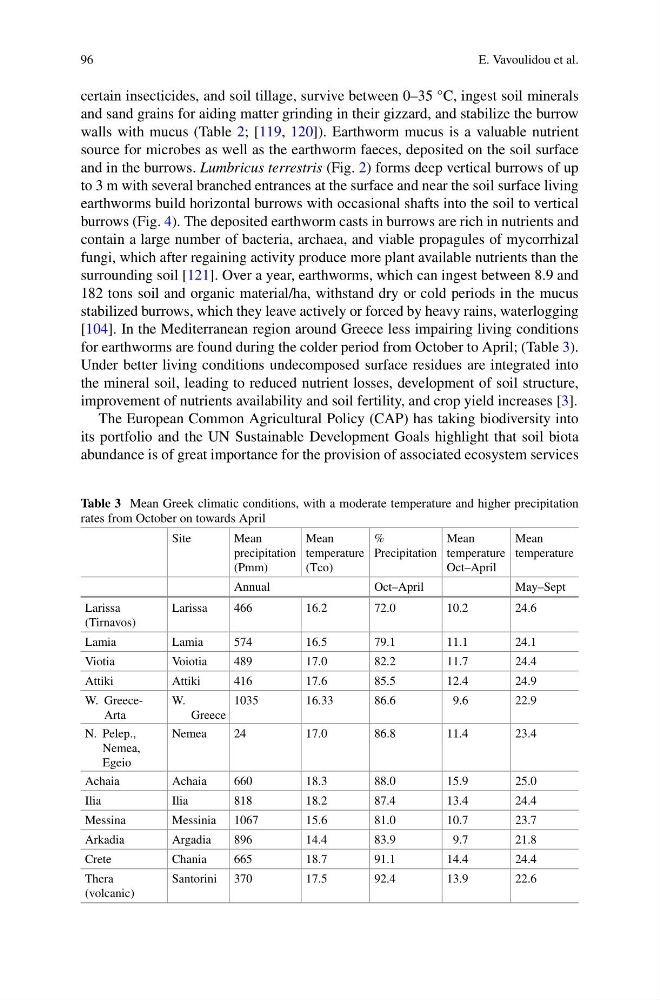
[104]. In the Mediterranean region around Greece less impairing living conditions
for earthworms are found during the colder period from October to April; (Table 3).
Under better living conditions undecomposed surface residues are integrated into
the mineral soil, leading to reduced nutrient losses, development of soil structure,
improvement of nutrients availability and soil fertility, and crop yield increases [3].
The European Common Agricultural Policy (CAP) has taking biodiversity into
its portfolio and the UN Sustainable Development Goals highlight that soil biota
abundance is of great importance for the provision of associated ecosystem services
Table 3 Mean Greek climatic conditions, with a moderate temperature and higher precipitation
rates from October on towards April
Site
Mean
precipitation
(Pmm)
Mean
temperature
(Tco)
%
Precipitation
Mean
temperature
Oct–April
Mean
temperature
Annual
Oct–April
May–Sept
Larissa
(Tirnavos)
Larissa
466
16.2
72.0
10.2
24.6
Lamia
Lamia
574
16.5
79.1
11.1
24.1
Viotia
Voiotia
489
17.0
82.2
11.7
24.4
Attiki
Attiki
416
17.6
85.5
12.4
24.9
W. GreeceArta
W.
Greece
1035
16.33
86.6
9.6
22.9
N. Pelep.,
Nemea,
Egeio
Nemea
24
17.0
86.8
11.4
23.4
Achaia
Achaia
660
18.3
88.0
15.9
25.0
Ilia
Ilia
818
18.2
87.4
13.4
24.4
Messina
Messinia 1067
15.6
81.0
10.7
23.7
Arkadia
Argadia
896
14.4
83.9
9.7
21.8
Crete
Chania
665
18.7
91.1
14.4
24.4
Thera
(volcanic)
Santorini 370
17.5
92.4
13.9
22.6
E. Vavoulidou et al.
certain insecticides, and soil tillage, survive between 0–35 °C, ingest soil minerals
and sand grains for aiding matter grinding in their gizzard, and stabilize the burrow
walls with mucus (Table 2; [119, 120]). Earthworm mucus is a valuable nutrient
source for microbes as well as the earthworm faeces, deposited on the soil surface
and in the burrows. Lumbricus terrestris (Fig. 2) forms deep vertical burrows of up
to 3 m with several branched entrances at the surface and near the soil surface living
earthworms build horizontal burrows with occasional shafts into the soil to vertical
burrows (Fig. 4). The deposited earthworm casts in burrows are rich in nutrients and
contain a large number of bacteria, archaea, and viable propagules of mycorrhizal
fungi, which after regaining activity produce more plant available nutrients than the
surrounding soil [121]. Over a year, earthworms, which can ingest between 8.9 and
182 tons soil and organic material/ha, withstand dry or cold periods in the mucus
stabilized burrows, which they leave actively or forced by heavy rains, waterlogging
[104]. In the Mediterranean region around Greece less impairing living conditions
for earthworms are found during the colder period from October to April; (Table 3).
Under better living conditions undecomposed surface residues are integrated into
the mineral soil, leading to reduced nutrient losses, development of soil structure,
improvement of nutrients availability and soil fertility, and crop yield increases [3].
The European Common Agricultural Policy (CAP) has taking biodiversity into
its portfolio and the UN Sustainable Development Goals highlight that soil biota
abundance is of great importance for the provision of associated ecosystem services
Table 3 Mean Greek climatic conditions, with a moderate temperature and higher precipitation
rates from October on towards April
Site
Mean
precipitation
(Pmm)
Mean
temperature
(Tco)
%
Precipitation
Mean
temperature
Oct–April
Mean
temperature
Annual
Oct–April
May–Sept
Larissa
(Tirnavos)
Larissa
466
16.2
72.0
10.2
24.6
Lamia
Lamia
574
16.5
79.1
11.1
24.1
Viotia
Voiotia
489
17.0
82.2
11.7
24.4
Attiki
Attiki
416
17.6
85.5
12.4
24.9
W. GreeceArta
W.
Greece
1035
16.33
86.6
9.6
22.9
N. Pelep.,
Nemea,
Egeio
Nemea
24
17.0
86.8
11.4
23.4
Achaia
Achaia
660
18.3
88.0
15.9
25.0
Ilia
Ilia
818
18.2
87.4
13.4
24.4
Messina
Messinia 1067
15.6
81.0
10.7
23.7
Arkadia
Argadia
896
14.4
83.9
9.7
21.8
Crete
Chania
665
18.7
91.1
14.4
24.4
Thera
(volcanic)
Santorini 370
17.5
92.4
13.9
22.6