

mobile nitrate ions from which plants benefit enables the soil bacteria, archaea, fungi
consortium to respire at developing anaerobic environments with NO 3
- by gaining
energy and reducing NO 3
- over NO 2
-
, NO and N 2 O to N 2 . Has the nitrate respiring
soil consortium surplus NO 3
- available it starts stopping the reduction process at the
N 2 O level, despite N 2 O has a highly positive redox potential (Chap. 2). NO 3
-
reduction occurs less economically and less N 2 O converts under energy gaining
aspects and by accepting NH 3 derived electrons and protons to climate neutral N 2 .
World’s atmosphere becomes susceptible to warm up. In this context of interest is
that not only denitrifying bacteria and archaea possess the nosZ gene that is
responsible for the reduction of N 2 O to N 2 under energy gain (Chaps. 2 and 3; [4]).
Almost contemporaneous to the Haber–Bosch invention Heinrich Dreyer
invented 1915 the drum caster (Fig. 2).
The patented TNF and drum-caster inventions were starting points for a steadily
increasing TNF fertilizer spreading by reaching plant demand surpassing dimensions and over the past 100 years agriculturally used soils have received millions
tonnes of N in form of urea, ammonium, nitrate (Fig. 3), forcing the long term on N
shortage adapted soil biodiversity to change the living style [17].
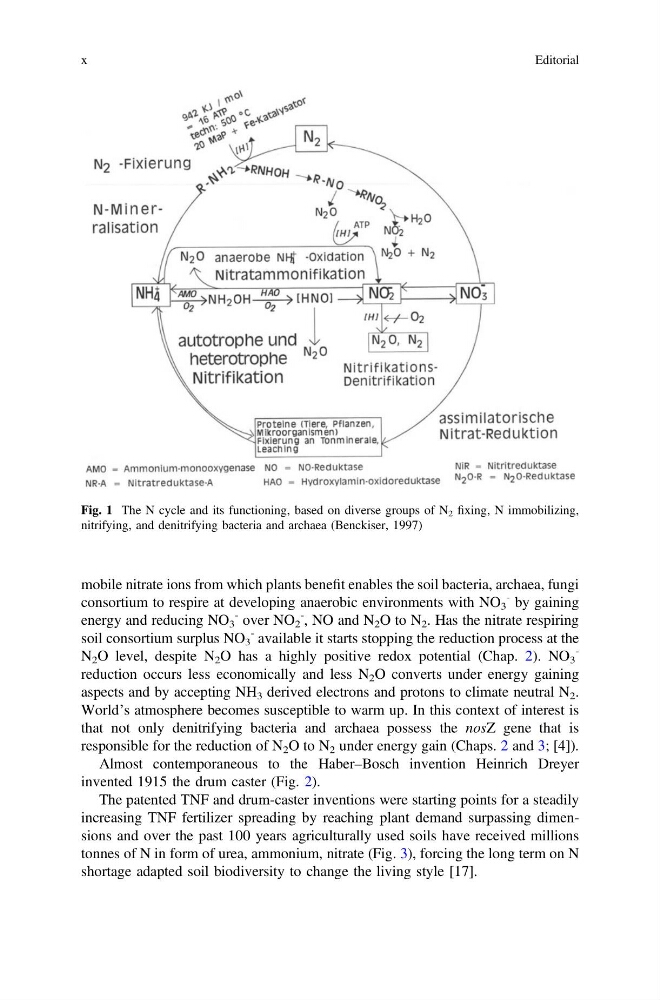
Fig. 1 The N cycle and its functioning, based on diverse groups of N 2 fixing, N immobilizing,
nitrifying, and denitrifying bacteria and archaea (Benckiser, 1997)
x
Editorial
consortium to respire at developing anaerobic environments with NO 3
- by gaining
energy and reducing NO 3
- over NO 2
-
, NO and N 2 O to N 2 . Has the nitrate respiring
soil consortium surplus NO 3
- available it starts stopping the reduction process at the
N 2 O level, despite N 2 O has a highly positive redox potential (Chap. 2). NO 3
-
reduction occurs less economically and less N 2 O converts under energy gaining
aspects and by accepting NH 3 derived electrons and protons to climate neutral N 2 .
World’s atmosphere becomes susceptible to warm up. In this context of interest is
that not only denitrifying bacteria and archaea possess the nosZ gene that is
responsible for the reduction of N 2 O to N 2 under energy gain (Chaps. 2 and 3; [4]).
Almost contemporaneous to the Haber–Bosch invention Heinrich Dreyer
invented 1915 the drum caster (Fig. 2).
The patented TNF and drum-caster inventions were starting points for a steadily
increasing TNF fertilizer spreading by reaching plant demand surpassing dimensions and over the past 100 years agriculturally used soils have received millions
tonnes of N in form of urea, ammonium, nitrate (Fig. 3), forcing the long term on N
shortage adapted soil biodiversity to change the living style [17].
Fig. 1 The N cycle and its functioning, based on diverse groups of N 2 fixing, N immobilizing,
nitrifying, and denitrifying bacteria and archaea (Benckiser, 1997)
x
Editorial