

12
Internet of Things (IoT)
area will be isolated out distinctly. The algorithm proposed in the present work contains four parts: image enhancement, vertical edge extraction, background curve and
noise removal.
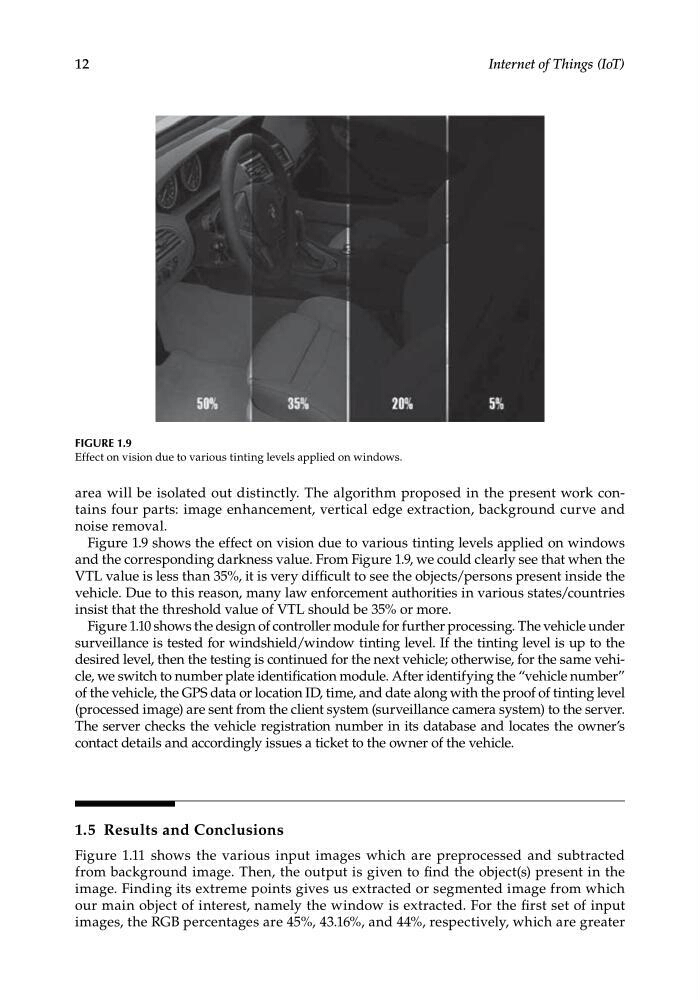
Figure 1.9 shows the effect on vision due to various tinting levels applied on windows
and the corresponding darkness value. From Figure 1.9, we could clearly see that when the
VTL value is less than 35%, it is very difficult to see the objects/persons present inside the
vehicle. Due to this reason, many law enforcement authorities in various states/countries
insist that the threshold value of VTL should be 35% or more.
Figure 1.10 shows the design of controller module for further processing. The vehicle under
surveillance is tested for windshield/window tinting level. If the tinting level is up to the
desired level, then the testing is continued for the next vehicle; otherwise, for the same vehicle, we switch to number plate identification module. After identifying the “vehicle number”
of the vehicle, the GPS data or location ID, time, and date along with the proof of tinting level
(processed image) are sent from the client system (surveillance camera system) to the server.
The server checks the vehicle registration number in its database and locates the owner’s
contact details and accordingly issues a ticket to the owner of the vehicle.
1.5 Results and Conclusions
Figure 1.11 shows the various input images which are preprocessed and subtracted
from background image. Then, the output is given to find the object(s) present in the
image. Finding its extreme points gives us extracted or segmented image from which
our main object of interest, namely the window is extracted. For the first set of input
images, the RGB percentages are 45%, 43.16%, and 44%, respectively, which are greater
FIGURE 1.9
Effect on vision due to various tinting levels applied on windows.
Internet of Things (IoT)
area will be isolated out distinctly. The algorithm proposed in the present work contains four parts: image enhancement, vertical edge extraction, background curve and
noise removal.
Figure 1.9 shows the effect on vision due to various tinting levels applied on windows
and the corresponding darkness value. From Figure 1.9, we could clearly see that when the
VTL value is less than 35%, it is very difficult to see the objects/persons present inside the
vehicle. Due to this reason, many law enforcement authorities in various states/countries
insist that the threshold value of VTL should be 35% or more.
Figure 1.10 shows the design of controller module for further processing. The vehicle under
surveillance is tested for windshield/window tinting level. If the tinting level is up to the
desired level, then the testing is continued for the next vehicle; otherwise, for the same vehicle, we switch to number plate identification module. After identifying the “vehicle number”
of the vehicle, the GPS data or location ID, time, and date along with the proof of tinting level
(processed image) are sent from the client system (surveillance camera system) to the server.
The server checks the vehicle registration number in its database and locates the owner’s
contact details and accordingly issues a ticket to the owner of the vehicle.
1.5 Results and Conclusions
Figure 1.11 shows the various input images which are preprocessed and subtracted
from background image. Then, the output is given to find the object(s) present in the
image. Finding its extreme points gives us extracted or segmented image from which
our main object of interest, namely the window is extracted. For the first set of input
images, the RGB percentages are 45%, 43.16%, and 44%, respectively, which are greater
FIGURE 1.9
Effect on vision due to various tinting levels applied on windows.