

5.3.7 Whaling and US Law: International Dimensions
of Domestic Law
Although but one actor of the IWC, the US has developed powerful means to
substantiate its long-standing anti-whaling policies both domestically and internationally. In fact, US domestic law relating to marine mammals and particularly to
whales has been designed in a way in that it has an important external, international
dimension.
The foundation for this dimension can be found in the 1970s and is a combination
of several laws relating to fisheries conservation. The most important of these
instruments is the so-called Pelly-Amendment to the Fishermen’s Protective Act of
1967, which was adopted in 1971. The Pelly Amendment aimed at the imposition of
trade barriers relating to marine products for those countries that undermine the
effectiveness of an international fisheries conservation regime. Although initially
aiming only at European countries that cooperated little in the protection of salmon
stocks under the Northwest Atlantic Fisheries Convention,
19 with the overall discourse on whaling and the increasing calls for a moratorium on commercial whaling,
the Amendment was also to cover the Whaling Convention. The Pelly Amendment
allowed the Secretary of Commerce or the Interior to notify the US President of a
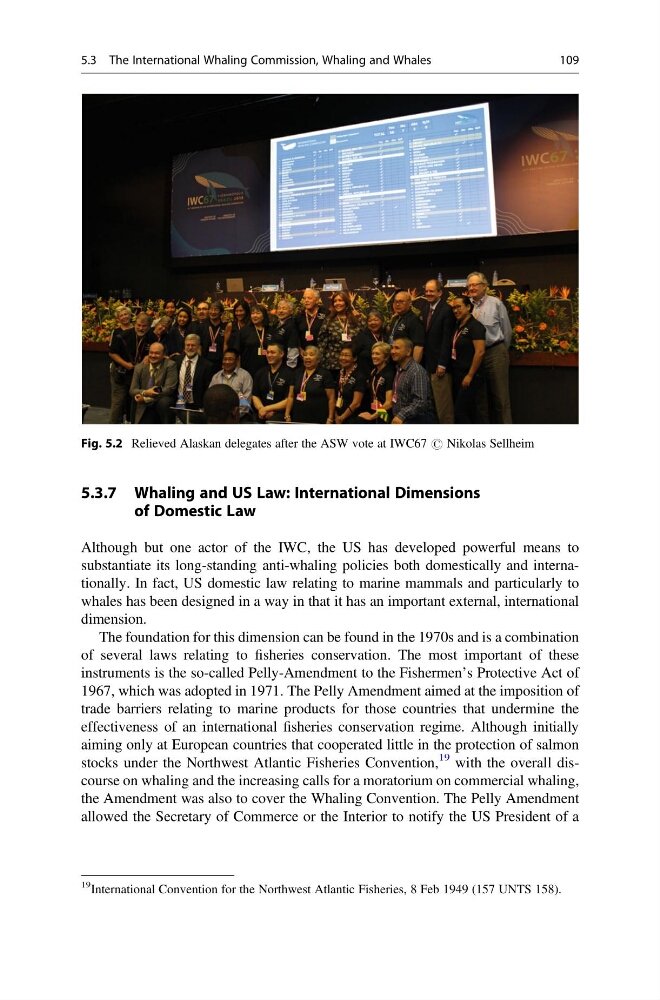
Fig. 5.2 Relieved Alaskan delegates after the ASW vote at IWC67 # Nikolas Sellheim
19 International Convention for the Northwest Atlantic Fisheries, 8 Feb 1949 (157 UNTS 158).
5.3 The International Whaling Commission, Whaling and Whales
109
of Domestic Law
Although but one actor of the IWC, the US has developed powerful means to
substantiate its long-standing anti-whaling policies both domestically and internationally. In fact, US domestic law relating to marine mammals and particularly to
whales has been designed in a way in that it has an important external, international
dimension.
The foundation for this dimension can be found in the 1970s and is a combination
of several laws relating to fisheries conservation. The most important of these
instruments is the so-called Pelly-Amendment to the Fishermen’s Protective Act of
1967, which was adopted in 1971. The Pelly Amendment aimed at the imposition of
trade barriers relating to marine products for those countries that undermine the
effectiveness of an international fisheries conservation regime. Although initially
aiming only at European countries that cooperated little in the protection of salmon
stocks under the Northwest Atlantic Fisheries Convention,
19 with the overall discourse on whaling and the increasing calls for a moratorium on commercial whaling,
the Amendment was also to cover the Whaling Convention. The Pelly Amendment
allowed the Secretary of Commerce or the Interior to notify the US President of a
Fig. 5.2 Relieved Alaskan delegates after the ASW vote at IWC67 # Nikolas Sellheim
19 International Convention for the Northwest Atlantic Fisheries, 8 Feb 1949 (157 UNTS 158).
5.3 The International Whaling Commission, Whaling and Whales
109