

whose citizens go after whales that would fall under the purview of the Commission,
but who are not member states are thus not bound to IWC rules. A good example in
this regard is Indonesia, where small numbers of sperm whales are taken each year
on the small island of Lembata. Also blue whale migration takes place in the waters
surrounding the island, but the islanders consider them sacred and thus do not
engage in any hunt. The point to make here is that even though the IWC has had
strict no-take quotas for blue whales in place, it is up to the Indonesian government,
and not the IWC, to allow or prohibit the Lembatan hunts since Indonesia is not a
member of the Commission.
The IWC itself is an organisation whose mandate is to “(a) encourage, recommend, or if necessary, organize studies and investigations relating to whales and
whaling; (b) collect and analyze statistical information concerning the current
condition and trend of the whale stocks and the effects of whaling activities thereon;
(c) study, appraise, and disseminate information concerning methods of maintaining
and increasing the populations of whale stocks.”
5 In order to do so, since 2012 the
IWC meets every 2 years to discuss the way forward. Prior to 2012, meetings were
held on an annual basis, but in order to reduce costs particularly for developing
states, meetings are now conducted biannually.
The work of the Commission is conducted by several committees and working
groups. Permanent committees are the Scientific Committee, which provides for
scientific advice; the Finance and Administration Committee; the controversial
Conservation Committee (see Sect. 5.3.4); the Aboriginal Subsistence Whaling
Sub-Committee; the Infractions Sub-Committee; and the Working Group on
Whale Killing Methods and Welfare Issues. Apart from the Commission meetings
themselves, these committees have developed their own rules of procedure and have
generated different subgroups and working groups.
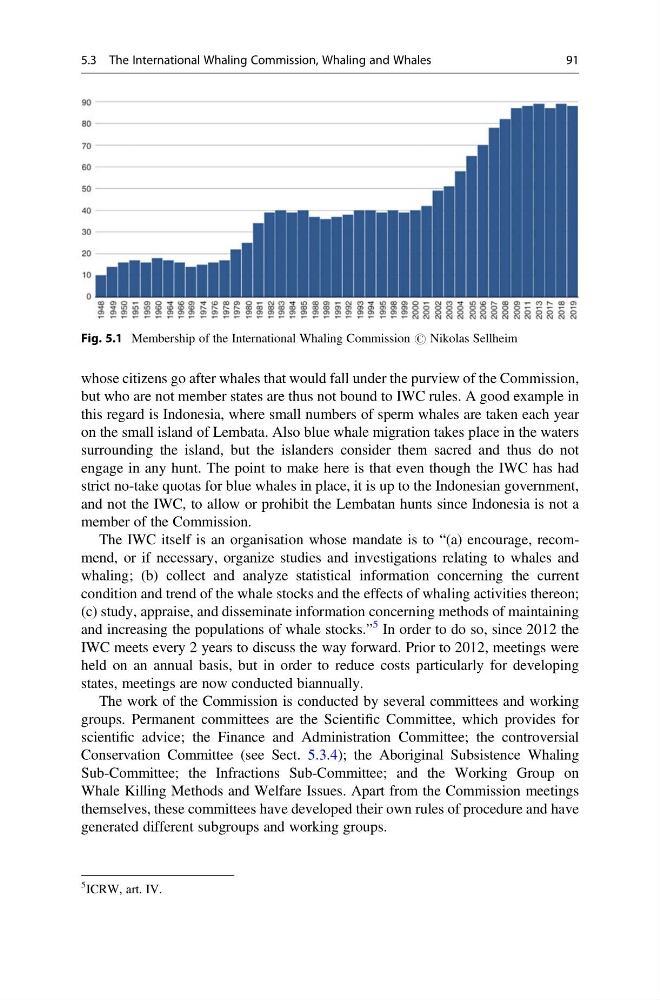
Fig. 5.1 Membership of the International Whaling Commission # Nikolas Sellheim
5 ICRW, art. IV.
5.3 The International Whaling Commission, Whaling and Whales
91
but who are not member states are thus not bound to IWC rules. A good example in
this regard is Indonesia, where small numbers of sperm whales are taken each year
on the small island of Lembata. Also blue whale migration takes place in the waters
surrounding the island, but the islanders consider them sacred and thus do not
engage in any hunt. The point to make here is that even though the IWC has had
strict no-take quotas for blue whales in place, it is up to the Indonesian government,
and not the IWC, to allow or prohibit the Lembatan hunts since Indonesia is not a
member of the Commission.
The IWC itself is an organisation whose mandate is to “(a) encourage, recommend, or if necessary, organize studies and investigations relating to whales and
whaling; (b) collect and analyze statistical information concerning the current
condition and trend of the whale stocks and the effects of whaling activities thereon;
(c) study, appraise, and disseminate information concerning methods of maintaining
and increasing the populations of whale stocks.”
5 In order to do so, since 2012 the
IWC meets every 2 years to discuss the way forward. Prior to 2012, meetings were
held on an annual basis, but in order to reduce costs particularly for developing
states, meetings are now conducted biannually.
The work of the Commission is conducted by several committees and working
groups. Permanent committees are the Scientific Committee, which provides for
scientific advice; the Finance and Administration Committee; the controversial
Conservation Committee (see Sect. 5.3.4); the Aboriginal Subsistence Whaling
Sub-Committee; the Infractions Sub-Committee; and the Working Group on
Whale Killing Methods and Welfare Issues. Apart from the Commission meetings
themselves, these committees have developed their own rules of procedure and have
generated different subgroups and working groups.
Fig. 5.1 Membership of the International Whaling Commission # Nikolas Sellheim
5 ICRW, art. IV.
5.3 The International Whaling Commission, Whaling and Whales
91