

degradation to bring it to a hydrolyzable form (Kennedy
et al. 1999; Zhou et al. 2008; Grohmann et al. 1994; Wilkins
et al. 2007).
A few examples of whey and lignocellulosic-based biomasses are given below.
3.1 Whey: A Cheese Processing Waste
The major by-product of cheese-manufacturing industries is
cheese whey which is produced in significant amounts,
resulting in waste-management problems as their disposal is
a serious issue. Studies depict that environmental pollution
arising from discarding 4000L of whey is equivalent to feces
discharge of 1900 humans (Akbas and Stark 2016; Tunick
2008). Currently, the production rate of cheese whey is 10
8
ton/year (Zotta et al. 2020), most of which is utilized as a
food ingredient. The unutilized portion is either disposed off
or utilized as a fertilizer.
Whey is composed of 5–6% lactose, 1% protein, 0.06%
fat, and 0.1–0.8% lactic acid (Akbas and Stark 2016). Based
on the pH value, whey is classified into two categories:
sweet whey (pH ! 5.6) and acid whey (pH
5.1). The
compositional analysis shows that acid whey has a higher
content of calcium, phosphate, lactic acid, and lactate than
sweet whey.
Comparative studies between different yeasts and bacteria
show that low ethanol titer value at the end of fermentation is
a common problem that researchers are continually trying to
find solutions for (Porro et al. 1992; Guimaraes et al. 1992;
Leite et al. 2000). On using cheese whey as the carbon
source for ethanol production, the major limitation for Saccharomyces cerevisiae (S. cerevisiae) is its inability to utilize
lactose, which comprises glucose and galactose, and lacks
the b-galactosidase enzyme and thus lactose cannot be
transported into the cell (Domingues et al. 2010). Unlike S.
cerevisiae, yeasts like Kluyveromyces fragilis are capable of
utilizing lactose, up to a concentration of 20%, but experience inhibition by the presence of sugar and salt in whey
and have a negligible ethanol tolerance.
Researchers have adopted techniques like mutagenesis
for the simultaneous utilization of glucose and galactose by
S. cerevisiae (Bailey et al. 1982). Treating the cheese whey
with b-galactosidase for easy conversion of lactose to glucose and galactose is yet another approach other than
hydrolysis of cheese whey before its fermentation by the
yeast. However, this method has its limitations of carbon
catabolite repression (CCR) because of which galactose
utilization by the yeast takes place only after glucose utilization (Gancedo 1998; Mehaia and Cheryan 1990).
Economics of the process show that production of 2–3%
(v/v) ethanol from whey comprising 5–6% lactose are not
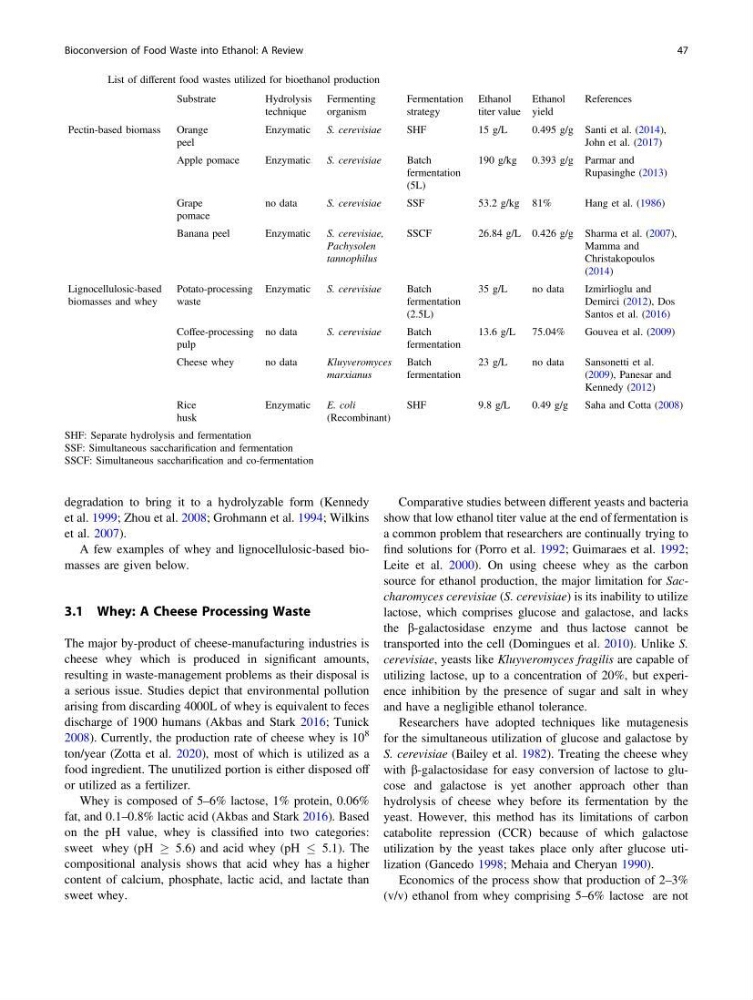
Table 1 List of different food wastes utilized for bioethanol production
Substrate
Hydrolysis
technique
Fermenting
organism
Fermentation
strategy
Ethanol
titer value
Ethanol
yield
References
Pectin-based biomass
Orange
peel
Enzymatic
S. cerevisiae
SHF
15 g/L
0.495 g/g Santi et al. (2014),
John et al. (2017)
Apple pomace
Enzymatic
S. cerevisiae
Batch
fermentation
(5L)
190 g/kg 0.393 g/g Parmar and
Rupasinghe (2013)
Grape
pomace
no data
S. cerevisiae
SSF
53.2 g/kg 81%
Hang et al. (1986)
Banana peel
Enzymatic
S. cerevisiae,
Pachysolen
tannophilus
SSCF
26.84 g/L 0.426 g/g Sharma et al. (2007),
Mamma and
Christakopoulos
(2014)
Lignocellulosic-based
biomasses and whey
Potato-processing
waste
Enzymatic
S. cerevisiae
Batch
fermentation
(2.5L)
35 g/L
no data
Izmirlioglu and
Demirci (2012), Dos
Santos et al. (2016)
Coffee-processing
pulp
no data
S. cerevisiae
Batch
fermentation
13.6 g/L
75.04%
Gouvea et al. (2009)
Cheese whey
no data
Kluyveromyces
marxianus
Batch
fermentation
23 g/L
no data
Sansonetti et al.
(2009), Panesar and
Kennedy (2012)
Rice
husk
Enzymatic
E. coli
(Recombinant)
SHF
9.8 g/L
0.49 g/g
Saha and Cotta (2008)
SHF: Separate hydrolysis and fermentation
SSF: Simultaneous saccharification and fermentation
SSCF: Simultaneous saccharification and co-fermentation
Bioconversion of Food Waste into Ethanol: A Review
47
et al. 1999; Zhou et al. 2008; Grohmann et al. 1994; Wilkins
et al. 2007).
A few examples of whey and lignocellulosic-based biomasses are given below.
3.1 Whey: A Cheese Processing Waste
The major by-product of cheese-manufacturing industries is
cheese whey which is produced in significant amounts,
resulting in waste-management problems as their disposal is
a serious issue. Studies depict that environmental pollution
arising from discarding 4000L of whey is equivalent to feces
discharge of 1900 humans (Akbas and Stark 2016; Tunick
2008). Currently, the production rate of cheese whey is 10
8
ton/year (Zotta et al. 2020), most of which is utilized as a
food ingredient. The unutilized portion is either disposed off
or utilized as a fertilizer.
Whey is composed of 5–6% lactose, 1% protein, 0.06%
fat, and 0.1–0.8% lactic acid (Akbas and Stark 2016). Based
on the pH value, whey is classified into two categories:
sweet whey (pH ! 5.6) and acid whey (pH
5.1). The
compositional analysis shows that acid whey has a higher
content of calcium, phosphate, lactic acid, and lactate than
sweet whey.
Comparative studies between different yeasts and bacteria
show that low ethanol titer value at the end of fermentation is
a common problem that researchers are continually trying to
find solutions for (Porro et al. 1992; Guimaraes et al. 1992;
Leite et al. 2000). On using cheese whey as the carbon
source for ethanol production, the major limitation for Saccharomyces cerevisiae (S. cerevisiae) is its inability to utilize
lactose, which comprises glucose and galactose, and lacks
the b-galactosidase enzyme and thus lactose cannot be
transported into the cell (Domingues et al. 2010). Unlike S.
cerevisiae, yeasts like Kluyveromyces fragilis are capable of
utilizing lactose, up to a concentration of 20%, but experience inhibition by the presence of sugar and salt in whey
and have a negligible ethanol tolerance.
Researchers have adopted techniques like mutagenesis
for the simultaneous utilization of glucose and galactose by
S. cerevisiae (Bailey et al. 1982). Treating the cheese whey
with b-galactosidase for easy conversion of lactose to glucose and galactose is yet another approach other than
hydrolysis of cheese whey before its fermentation by the
yeast. However, this method has its limitations of carbon
catabolite repression (CCR) because of which galactose
utilization by the yeast takes place only after glucose utilization (Gancedo 1998; Mehaia and Cheryan 1990).
Economics of the process show that production of 2–3%
(v/v) ethanol from whey comprising 5–6% lactose are not
Table 1 List of different food wastes utilized for bioethanol production
Substrate
Hydrolysis
technique
Fermenting
organism
Fermentation
strategy
Ethanol
titer value
Ethanol
yield
References
Pectin-based biomass
Orange
peel
Enzymatic
S. cerevisiae
SHF
15 g/L
0.495 g/g Santi et al. (2014),
John et al. (2017)
Apple pomace
Enzymatic
S. cerevisiae
Batch
fermentation
(5L)
190 g/kg 0.393 g/g Parmar and
Rupasinghe (2013)
Grape
pomace
no data
S. cerevisiae
SSF
53.2 g/kg 81%
Hang et al. (1986)
Banana peel
Enzymatic
S. cerevisiae,
Pachysolen
tannophilus
SSCF
26.84 g/L 0.426 g/g Sharma et al. (2007),
Mamma and
Christakopoulos
(2014)
Lignocellulosic-based
biomasses and whey
Potato-processing
waste
Enzymatic
S. cerevisiae
Batch
fermentation
(2.5L)
35 g/L
no data
Izmirlioglu and
Demirci (2012), Dos
Santos et al. (2016)
Coffee-processing
pulp
no data
S. cerevisiae
Batch
fermentation
13.6 g/L
75.04%
Gouvea et al. (2009)
Cheese whey
no data
Kluyveromyces
marxianus
Batch
fermentation
23 g/L
no data
Sansonetti et al.
(2009), Panesar and
Kennedy (2012)
Rice
husk
Enzymatic
E. coli
(Recombinant)
SHF
9.8 g/L
0.49 g/g
Saha and Cotta (2008)
SHF: Separate hydrolysis and fermentation
SSF: Simultaneous saccharification and fermentation
SSCF: Simultaneous saccharification and co-fermentation
Bioconversion of Food Waste into Ethanol: A Review
47