

environment. This risk can be reduced by the utilization of
bio-wastes for extraction of large amounts of useful products
and proper management of pollution. If we cannot use these
wastes, we have no viable alternatives and consequently
discarded them straightway into the surrounding environment. Apart from a substantial and gradual decline of
valuable materials, the large amount of different agro-wastes
generated through agro-industries causes serious management problems, both from environmental and economic
points of view (Mirabella et al. 2014). The viable and sustainable applications of the waste by-products include production of animal feeds, organic fertilizers, essential oils,
ethanol, enzymes, and additives in various biotechnological
processes (Ferrari et al. 2004; Kobori and Jorge 2005;
Alexandrino et al. 2007; Rodrigues 2009; Liu et al. 2012).
There has been an explosion of scientific interest to use
agro-industrial wastes as potential raw materials for the
development of value-added products to promote the
bio-based economy. There are a number of different
advantages associated with bioenergy production including
local energy safety, a decrease in energy cost, extenuating
global climate change, getting better carbon balances, and
the utilization of local technologies ultimately leading
toward improved economic growth (Maes and Van Passel
2014). Despite the well-known potentialities of economic
and environmental transformation, the generation of organic
energy is not as easy as it seems and has several different
challenges as a possible tool for sustainable development
(Yuan et al. 2008). Factors that influence the sustainability of
organic matter for energy generation systems include land,
soil, water, biodiversity, and overall productivity (Pollesch
and Dale 2016). The number of different industrial
applications of biomass and bioenergy has been discussed in
the later sections.
3.1 Bioactive Compounds Recovery from Plant
Wastes Are Valuable for Antibacterial
and Antioxidant
Bioactives are defined as ingredients with biological activity
and are able to moderate metabolic processes substantially in
the promotion of healthier health conditions. The benefits
revealed by these compounds comprise antioxidant activity,
inhibition or induction of enzymes, inhibition of receptor
activities, induction, and inhibition of gene expression
(Correia et al. 2012). The agro-wastes including waste of
grains, vegetables, and fruits are potential sources of
bioactive, which comprise a diverse class of compounds
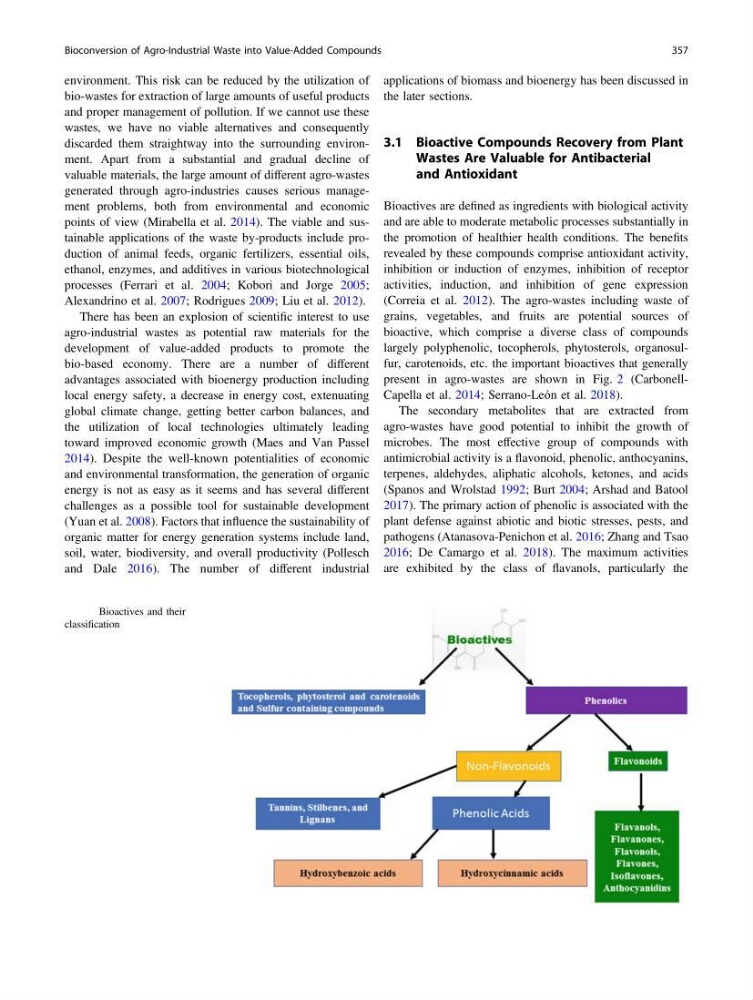
largely polyphenolic, tocopherols, phytosterols, organosulfur, carotenoids, etc. the important bioactives that generally
present in agro-wastes are shown in Fig. 2 (CarbonellCapella et al. 2014; Serrano-León et al. 2018).
The secondary metabolites that are extracted from
agro-wastes have good potential to inhibit the growth of
microbes. The most effective group of compounds with
antimicrobial activity is a flavonoid, phenolic, anthocyanins,
terpenes, aldehydes, aliphatic alcohols, ketones, and acids
(Spanos and Wrolstad 1992; Burt 2004; Arshad and Batool
2017). The primary action of phenolic is associated with the
plant defense against abiotic and biotic stresses, pests, and
pathogens (Atanasova-Penichon et al. 2016; Zhang and Tsao
2016; De Camargo et al. 2018). The maximum activities
are exhibited by the class of flavanols, particularly the
Fig. 2 Bioactives and their
classification
Bioconversion of Agro-Industrial Waste into Value-Added Compounds
357
bio-wastes for extraction of large amounts of useful products
and proper management of pollution. If we cannot use these
wastes, we have no viable alternatives and consequently
discarded them straightway into the surrounding environment. Apart from a substantial and gradual decline of
valuable materials, the large amount of different agro-wastes
generated through agro-industries causes serious management problems, both from environmental and economic
points of view (Mirabella et al. 2014). The viable and sustainable applications of the waste by-products include production of animal feeds, organic fertilizers, essential oils,
ethanol, enzymes, and additives in various biotechnological
processes (Ferrari et al. 2004; Kobori and Jorge 2005;
Alexandrino et al. 2007; Rodrigues 2009; Liu et al. 2012).
There has been an explosion of scientific interest to use
agro-industrial wastes as potential raw materials for the
development of value-added products to promote the
bio-based economy. There are a number of different
advantages associated with bioenergy production including
local energy safety, a decrease in energy cost, extenuating
global climate change, getting better carbon balances, and
the utilization of local technologies ultimately leading
toward improved economic growth (Maes and Van Passel
2014). Despite the well-known potentialities of economic
and environmental transformation, the generation of organic
energy is not as easy as it seems and has several different
challenges as a possible tool for sustainable development
(Yuan et al. 2008). Factors that influence the sustainability of
organic matter for energy generation systems include land,
soil, water, biodiversity, and overall productivity (Pollesch
and Dale 2016). The number of different industrial
applications of biomass and bioenergy has been discussed in
the later sections.
3.1 Bioactive Compounds Recovery from Plant
Wastes Are Valuable for Antibacterial
and Antioxidant
Bioactives are defined as ingredients with biological activity
and are able to moderate metabolic processes substantially in
the promotion of healthier health conditions. The benefits
revealed by these compounds comprise antioxidant activity,
inhibition or induction of enzymes, inhibition of receptor
activities, induction, and inhibition of gene expression
(Correia et al. 2012). The agro-wastes including waste of
grains, vegetables, and fruits are potential sources of
bioactive, which comprise a diverse class of compounds
largely polyphenolic, tocopherols, phytosterols, organosulfur, carotenoids, etc. the important bioactives that generally
present in agro-wastes are shown in Fig. 2 (CarbonellCapella et al. 2014; Serrano-León et al. 2018).
The secondary metabolites that are extracted from
agro-wastes have good potential to inhibit the growth of
microbes. The most effective group of compounds with
antimicrobial activity is a flavonoid, phenolic, anthocyanins,
terpenes, aldehydes, aliphatic alcohols, ketones, and acids
(Spanos and Wrolstad 1992; Burt 2004; Arshad and Batool
2017). The primary action of phenolic is associated with the
plant defense against abiotic and biotic stresses, pests, and
pathogens (Atanasova-Penichon et al. 2016; Zhang and Tsao
2016; De Camargo et al. 2018). The maximum activities
are exhibited by the class of flavanols, particularly the
Fig. 2 Bioactives and their
classification
Bioconversion of Agro-Industrial Waste into Value-Added Compounds
357