

various inhibitors formed during acid hydrolysis and their
source. Hydroxylmethylfurfural originates from degradation
of glucose, mannose and galactose while furfural originates
from degradation of xylose and arabinose. These inhibitors
that are formed need to be detoxified to increase easy fermentation of hydrolysates (Laopaiboon et al. 2010; Chandel
et al. 2011; Canilha et al. 2013). It is a proven process for
treating wood chips, rice straw, sugar beet pulp and wheat
straw (Silva 1995; Chamy et al. 1994; Pessoa et al. 1997).
Concentrated acid and dilute acid have been used in this
method. Research shows that acid hydrolysis of hemicellulose from sugarcane bagasse using sulfuric acid resulted in
83.3% of xylose obtained using semi-pilot reactor (Pessoa
et al. 1997). Under concentrated acid usage, which occurs at
70% acid content, low temperature (100%) and pressure
follow two steps to achieve sugar production. The first step
involves decrystallization at about 70 wt% H 2 SO 4 at temperature below 60 °C and the second step consists of
hydrolysis at approximate 20–30 wt% H 2 SO 4 at temperature
range of 80–100 °C (Kanchanalai et al. 2016). It has high
cellulose recovery and conversion rate when compared with
dilute acid hydrolysis. During this process cellulose and
hemicellulose are removed leaving behind a lignin-rich
product. Soluble phase is attained under different levels of
acid concentration. Acids utilized in this process are sulfuric,
phosphoric, hydrochloric, nitric, oxalic (Carvalho et al.
2004) and trifluoracetic acid but sulfuric acid is usually used
even though hydrochloric and trifluoracetic are easy to
recover. This process can be carried out under low/medium
pressure and temperature resulting in a small amount of
degradation products. However, it has faced drawbacks like
equipment corrosion issues and high operational cost
(Hamelinck et al. 2005; Ogier et al. 1999; Carvalheiro et al.
2008). Increasing the temperature and acid concentration
increases the hydrolysis and sugar decomposition rates as
documented by Kanchanalai et al. (2016). Increasing the
temperatures and decreasing the pretreatment times usually
improve the recovery of xylose and enhance the accessibility
of enzymes to hydrolyze cellulose (Balat et al. 2008). The
utilization of concentrated acid hydrolysis is scanty in the
literature. Several studies have documented the effective use
of acid hydrolysis in pretreatment of lignocellulosic biomass
(Świątek et al. 2020).
3.2 Alkaline Treatment
This method is more concerned with solubilization and
removal of hemicellulose and lignin from biomass unlike
acid treatment that aims at cellulose and hemicellulose
removal. This treatment results in cell wall swelling and
hydrogen bond disruption between cellulose and hemicellulose. It also breaks ester linkages between hydroxycinnamic acid and hemicellulose (Flórez-Pardo et al. 2018).
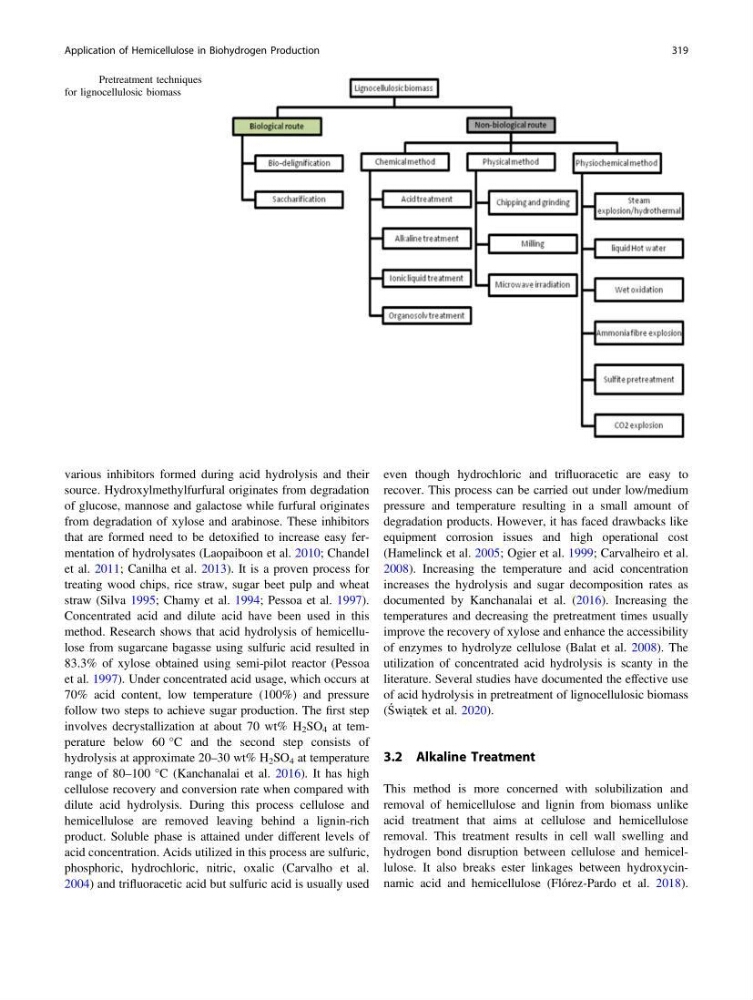
Fig. 3 Pretreatment techniques
for lignocellulosic biomass
Application of Hemicellulose in Biohydrogen Production
319
source. Hydroxylmethylfurfural originates from degradation
of glucose, mannose and galactose while furfural originates
from degradation of xylose and arabinose. These inhibitors
that are formed need to be detoxified to increase easy fermentation of hydrolysates (Laopaiboon et al. 2010; Chandel
et al. 2011; Canilha et al. 2013). It is a proven process for
treating wood chips, rice straw, sugar beet pulp and wheat
straw (Silva 1995; Chamy et al. 1994; Pessoa et al. 1997).
Concentrated acid and dilute acid have been used in this
method. Research shows that acid hydrolysis of hemicellulose from sugarcane bagasse using sulfuric acid resulted in
83.3% of xylose obtained using semi-pilot reactor (Pessoa
et al. 1997). Under concentrated acid usage, which occurs at
70% acid content, low temperature (100%) and pressure
follow two steps to achieve sugar production. The first step
involves decrystallization at about 70 wt% H 2 SO 4 at temperature below 60 °C and the second step consists of
hydrolysis at approximate 20–30 wt% H 2 SO 4 at temperature
range of 80–100 °C (Kanchanalai et al. 2016). It has high
cellulose recovery and conversion rate when compared with
dilute acid hydrolysis. During this process cellulose and
hemicellulose are removed leaving behind a lignin-rich
product. Soluble phase is attained under different levels of
acid concentration. Acids utilized in this process are sulfuric,
phosphoric, hydrochloric, nitric, oxalic (Carvalho et al.
2004) and trifluoracetic acid but sulfuric acid is usually used
even though hydrochloric and trifluoracetic are easy to
recover. This process can be carried out under low/medium
pressure and temperature resulting in a small amount of
degradation products. However, it has faced drawbacks like
equipment corrosion issues and high operational cost
(Hamelinck et al. 2005; Ogier et al. 1999; Carvalheiro et al.
2008). Increasing the temperature and acid concentration
increases the hydrolysis and sugar decomposition rates as
documented by Kanchanalai et al. (2016). Increasing the
temperatures and decreasing the pretreatment times usually
improve the recovery of xylose and enhance the accessibility
of enzymes to hydrolyze cellulose (Balat et al. 2008). The
utilization of concentrated acid hydrolysis is scanty in the
literature. Several studies have documented the effective use
of acid hydrolysis in pretreatment of lignocellulosic biomass
(Świątek et al. 2020).
3.2 Alkaline Treatment
This method is more concerned with solubilization and
removal of hemicellulose and lignin from biomass unlike
acid treatment that aims at cellulose and hemicellulose
removal. This treatment results in cell wall swelling and
hydrogen bond disruption between cellulose and hemicellulose. It also breaks ester linkages between hydroxycinnamic acid and hemicellulose (Flórez-Pardo et al. 2018).
Fig. 3 Pretreatment techniques
for lignocellulosic biomass
Application of Hemicellulose in Biohydrogen Production
319