

bacteria including Clostridium sp., Caldicellulosiruptor
saccharolyticus, Thermoanaerobacterium sp., Thermotogamaritima sp. Pyrococcusfuriosus sp., etc. can produce
hydrogen directly from various plant polymers (Cao et al.
2014; Ren et al. 2008; Willquist et al. 2011; Verhaart et al.
2010). When grown in polymeric biomass, these bacteria
utilize various hydrolytic enzymes and hydrogenases for
hydrogen production (Oh et al. 2013). Based on the literature
reviewed (Rollin et al. 2015; Reginatto and Antônio 2015;
Yu and Takahashi 2007), we reconstruct the potential
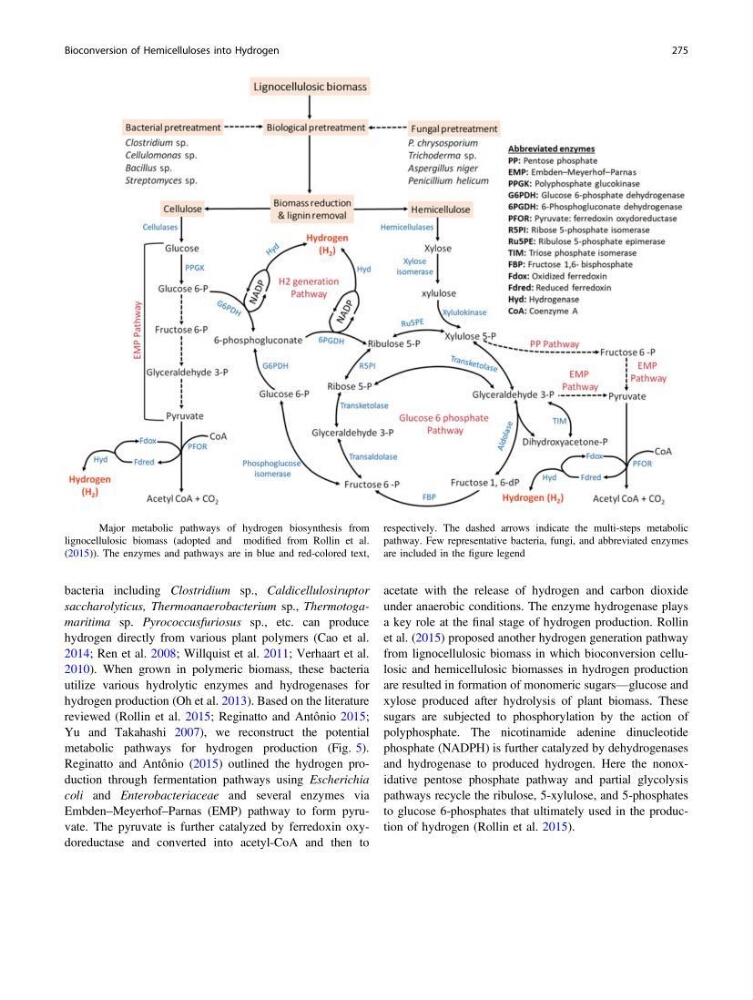
metabolic pathways for hydrogen production (Fig. 5).
Reginatto and Antônio (2015) outlined the hydrogen production through fermentation pathways using Escherichia
coli and Enterobacteriaceae and several enzymes via
Embden–Meyerhof–Parnas (EMP) pathway to form pyruvate. The pyruvate is further catalyzed by ferredoxin oxydoreductase and converted into acetyl-CoA and then to
acetate with the release of hydrogen and carbon dioxide
under anaerobic conditions. The enzyme hydrogenase plays
a key role at the final stage of hydrogen production. Rollin
et al. (2015) proposed another hydrogen generation pathway
from lignocellulosic biomass in which bioconversion cellulosic and hemicellulosic biomasses in hydrogen production
are resulted in formation of monomeric sugars—glucose and
xylose produced after hydrolysis of plant biomass. These
sugars are subjected to phosphorylation by the action of
polyphosphate. The nicotinamide adenine dinucleotide
phosphate (NADPH) is further catalyzed by dehydrogenases
and hydrogenase to produced hydrogen. Here the nonoxidative pentose phosphate pathway and partial glycolysis
pathways recycle the ribulose, 5-xylulose, and 5-phosphates
to glucose 6-phosphates that ultimately used in the production of hydrogen (Rollin et al. 2015).
Fig. 5 Major metabolic pathways of hydrogen biosynthesis from
lignocellulosic biomass (adopted and modified from Rollin et al.
(2015)). The enzymes and pathways are in blue and red-colored text,
respectively. The dashed arrows indicate the multi-steps metabolic
pathway. Few representative bacteria, fungi, and abbreviated enzymes
are included in the figure legend
Bioconversion of Hemicelluloses into Hydrogen
275
saccharolyticus, Thermoanaerobacterium sp., Thermotogamaritima sp. Pyrococcusfuriosus sp., etc. can produce
hydrogen directly from various plant polymers (Cao et al.
2014; Ren et al. 2008; Willquist et al. 2011; Verhaart et al.
2010). When grown in polymeric biomass, these bacteria
utilize various hydrolytic enzymes and hydrogenases for
hydrogen production (Oh et al. 2013). Based on the literature
reviewed (Rollin et al. 2015; Reginatto and Antônio 2015;
Yu and Takahashi 2007), we reconstruct the potential
metabolic pathways for hydrogen production (Fig. 5).
Reginatto and Antônio (2015) outlined the hydrogen production through fermentation pathways using Escherichia
coli and Enterobacteriaceae and several enzymes via
Embden–Meyerhof–Parnas (EMP) pathway to form pyruvate. The pyruvate is further catalyzed by ferredoxin oxydoreductase and converted into acetyl-CoA and then to
acetate with the release of hydrogen and carbon dioxide
under anaerobic conditions. The enzyme hydrogenase plays
a key role at the final stage of hydrogen production. Rollin
et al. (2015) proposed another hydrogen generation pathway
from lignocellulosic biomass in which bioconversion cellulosic and hemicellulosic biomasses in hydrogen production
are resulted in formation of monomeric sugars—glucose and
xylose produced after hydrolysis of plant biomass. These
sugars are subjected to phosphorylation by the action of
polyphosphate. The nicotinamide adenine dinucleotide
phosphate (NADPH) is further catalyzed by dehydrogenases
and hydrogenase to produced hydrogen. Here the nonoxidative pentose phosphate pathway and partial glycolysis
pathways recycle the ribulose, 5-xylulose, and 5-phosphates
to glucose 6-phosphates that ultimately used in the production of hydrogen (Rollin et al. 2015).
Fig. 5 Major metabolic pathways of hydrogen biosynthesis from
lignocellulosic biomass (adopted and modified from Rollin et al.
(2015)). The enzymes and pathways are in blue and red-colored text,
respectively. The dashed arrows indicate the multi-steps metabolic
pathway. Few representative bacteria, fungi, and abbreviated enzymes
are included in the figure legend
Bioconversion of Hemicelluloses into Hydrogen
275