

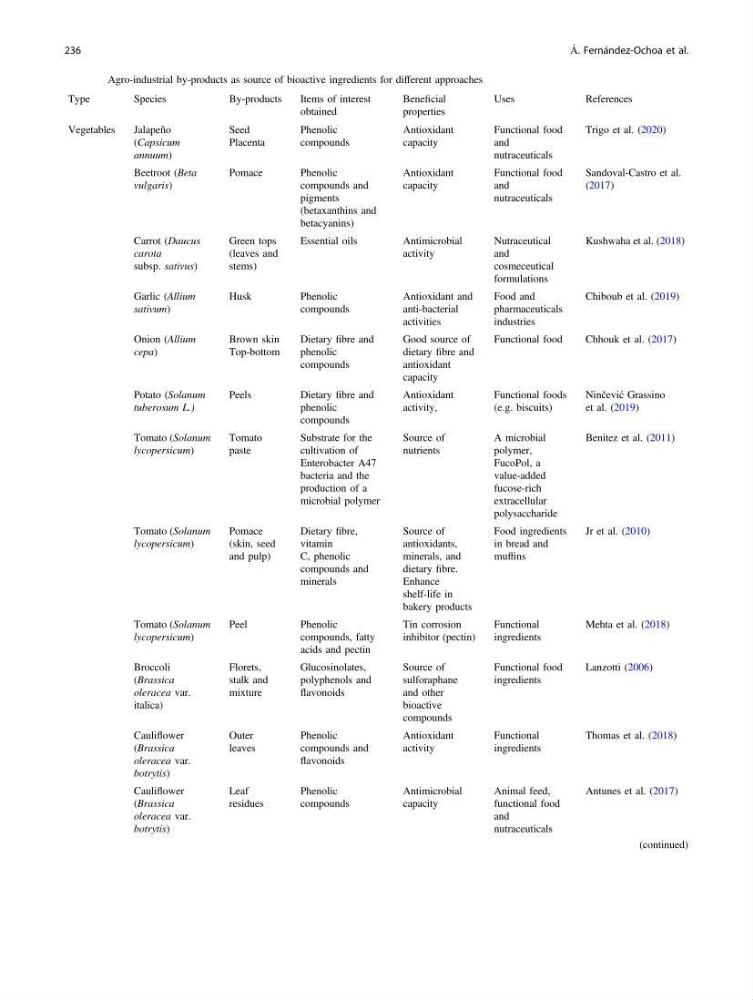
Table 2 Agro-industrial by-products as source of bioactive ingredients for different approaches
Type
Species
By-products
Items of interest
obtained
Beneficial
properties
Uses
References
Vegetables
Jalapeño
(Capsicum
annuum)
Seed
Placenta
Phenolic
compounds
Antioxidant
capacity
Functional food
and
nutraceuticals
Trigo et al. (2020)
Beetroot (Beta
vulgaris)
Pomace
Phenolic
compounds and
pigments
(betaxanthins and
betacyanins)
Antioxidant
capacity
Functional food
and
nutraceuticals
Sandoval-Castro et al.
(2017)
Carrot (Daucus
carota
subsp. sativus)
Green tops
(leaves and
stems)
Essential oils
Antimicrobial
activity
Nutraceutical
and
cosmeceutical
formulations
Kushwaha et al. (2018)
Garlic (Allium
sativum)
Husk
Phenolic
compounds
Antioxidant and
anti-bacterial
activities
Food and
pharmaceuticals
industries
Chiboub et al. (2019)
Onion (Allium
cepa)
Brown skin
Top-bottom
Dietary fibre and
phenolic
compounds
Good source of
dietary fibre and
antioxidant
capacity
Functional food
Chhouk et al. (2017)
Potato (Solanum
tuberosum L.)
Peels
Dietary fibre and
phenolic
compounds
Antioxidant
activity,
Functional foods
(e.g. biscuits)
Ninčević Grassino
et al. (2019)
Tomato (Solanum
lycopersicum)
Tomato
paste
Substrate for the
cultivation of
Enterobacter A47
bacteria and the
production of a
microbial polymer
Source of
nutrients
A microbial
polymer,
FucoPol, a
value-added
fucose-rich
extracellular
polysaccharide
Benítez et al. (2011)
Tomato (Solanum
lycopersicum)
Pomace
(skin, seed
and pulp)
Dietary fibre,
vitamin
C, phenolic
compounds and
minerals
Source of
antioxidants,
minerals, and
dietary fibre.
Enhance
shelf-life in
bakery products
Food ingredients
in bread and
muffins
Jr et al. (2010)
Tomato (Solanum
lycopersicum)
Peel
Phenolic
compounds, fatty
acids and pectin
Tin corrosion
inhibitor (pectin)
Functional
ingredients
Mehta et al. (2018)
Broccoli
(Brassica
oleracea var.
italica)
Florets,
stalk and
mixture
Glucosinolates,
polyphenols and
flavonoids
Source of
sulforaphane
and other
bioactive
compounds
Functional food
ingredients
Lanzotti (2006)
Cauliflower
(Brassica
oleracea var.
botrytis)
Outer
leaves
Phenolic
compounds and
flavonoids
Antioxidant
activity
Functional
ingredients
Thomas et al. (2018)
Cauliflower
(Brassica
oleracea var.
botrytis)
Leaf
residues
Phenolic
compounds
Antimicrobial
capacity
Animal feed,
functional food
and
nutraceuticals
Antunes et al. (2017)
(continued)
236
Á. Fernández-Ochoa et al.
Type
Species
By-products
Items of interest
obtained
Beneficial
properties
Uses
References
Vegetables
Jalapeño
(Capsicum
annuum)
Seed
Placenta
Phenolic
compounds
Antioxidant
capacity
Functional food
and
nutraceuticals
Trigo et al. (2020)
Beetroot (Beta
vulgaris)
Pomace
Phenolic
compounds and
pigments
(betaxanthins and
betacyanins)
Antioxidant
capacity
Functional food
and
nutraceuticals
Sandoval-Castro et al.
(2017)
Carrot (Daucus
carota
subsp. sativus)
Green tops
(leaves and
stems)
Essential oils
Antimicrobial
activity
Nutraceutical
and
cosmeceutical
formulations
Kushwaha et al. (2018)
Garlic (Allium
sativum)
Husk
Phenolic
compounds
Antioxidant and
anti-bacterial
activities
Food and
pharmaceuticals
industries
Chiboub et al. (2019)
Onion (Allium
cepa)
Brown skin
Top-bottom
Dietary fibre and
phenolic
compounds
Good source of
dietary fibre and
antioxidant
capacity
Functional food
Chhouk et al. (2017)
Potato (Solanum
tuberosum L.)
Peels
Dietary fibre and
phenolic
compounds
Antioxidant
activity,
Functional foods
(e.g. biscuits)
Ninčević Grassino
et al. (2019)
Tomato (Solanum
lycopersicum)
Tomato
paste
Substrate for the
cultivation of
Enterobacter A47
bacteria and the
production of a
microbial polymer
Source of
nutrients
A microbial
polymer,
FucoPol, a
value-added
fucose-rich
extracellular
polysaccharide
Benítez et al. (2011)
Tomato (Solanum
lycopersicum)
Pomace
(skin, seed
and pulp)
Dietary fibre,
vitamin
C, phenolic
compounds and
minerals
Source of
antioxidants,
minerals, and
dietary fibre.
Enhance
shelf-life in
bakery products
Food ingredients
in bread and
muffins
Jr et al. (2010)
Tomato (Solanum
lycopersicum)
Peel
Phenolic
compounds, fatty
acids and pectin
Tin corrosion
inhibitor (pectin)
Functional
ingredients
Mehta et al. (2018)
Broccoli
(Brassica
oleracea var.
italica)
Florets,
stalk and
mixture
Glucosinolates,
polyphenols and
flavonoids
Source of
sulforaphane
and other
bioactive
compounds
Functional food
ingredients
Lanzotti (2006)
Cauliflower
(Brassica
oleracea var.
botrytis)
Outer
leaves
Phenolic
compounds and
flavonoids
Antioxidant
activity
Functional
ingredients
Thomas et al. (2018)
Cauliflower
(Brassica
oleracea var.
botrytis)
Leaf
residues
Phenolic
compounds
Antimicrobial
capacity
Animal feed,
functional food
and
nutraceuticals
Antunes et al. (2017)
(continued)
236
Á. Fernández-Ochoa et al.